Kalshi Closes Two Insider Trading Cases, Refers Both to CFTC
Kalshi has publicly disclosed the closure of two insider trading cases while referring both matters to the CFTC amid growing scrutiny of prediction markets.

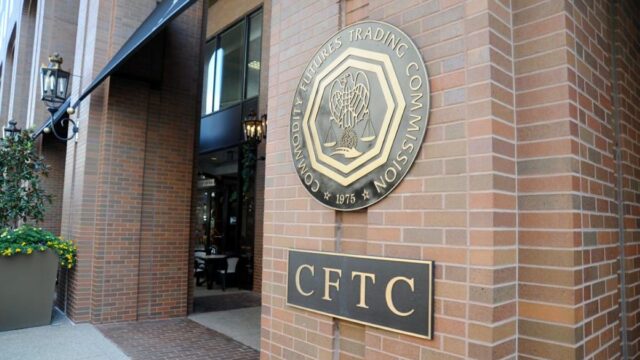
Kalshi has closed two insider trading cases, marking the first time the CFTC-regulated prediction market platform has publicly disclosed completed enforcement actions for misuse of non-public information.
In a Feb. 25 announcement, Kalshi said it has opened more than 200 insider trading investigations over the past year, with 12 still ongoing. Two cases have now concluded, both resulting in suspensions, financial penalties, and referrals to the U.S. Commodity Futures Trading Commission (CFTC).
On the same day, the CFTC issued an advisory reinforcing its authority to police insider trading on designated contract markets, including prediction markets like Kalshi.
Case One: California Gubernatorial Candidate Bets on Himself
One of the cases involved former California gubernatorial candidate Kyle Langford, who publicly posted on X in May 2025 that he had wagered on himself to win and encouraged others to do the same.
According to Kalshi’s enforcement notice, Langford traded approximately $200 on his own candidacy. In the notice of disciplinary action, Kalshi said:
“As a candidate, Langford qualified as a direct decision maker for this contract and had direct influence on the outcome of the underlying event.”
Kalshi stated that on the same day, during a phone call with its Compliance and Legal departments, Langford acknowledged that his trades were “improper and in violation of the Kalshi Rules.”
The prediction market platform banned Langford for five years and imposed a $2,200 fine, equal to 10× his trade size. Addressing the issue, Kalshi Head of Enforcement Robert DeNault said:
“As a candidate in a race, you can (and probably should) follow and use Kalshi’s market forecast, but you should not trade on it.”
The CFTC’s advisory noted the conduct “potentially violated” Section 6(c)(1) of the Commodity Exchange Act, which prohibits fraud and manipulation in commodity markets.
Industry commentator Dustin Gouker criticized the timeline of the investigation, writing on X:
“Understated in all this about the California candidate betting on himself at Kalshi is the investigation took nine months… when he literally recorded himself doing it and put it on Twitter.”
Case Two: MrBeast Editor Suspended for Insider Trading
The second case involved Artem Kaptur, an editor working on content for YouTube creator MrBeast.
According to Kalshi, Kaptur traded roughly $4,000 in MrBeast-related markets and had “near-perfect trading success” in low-probability markets, triggering internal compliance scrutiny. Kalshi said in regulatory filings that the trader “likely had access to material non-public information connected to his trading.”
The platform froze the account, imposed a two-year suspension, and fined Kaptur $20,397.58. That includes $5,397.58 in profits and $15,000 in penalties. It referred the matter to the CFTC.
Industry Growth Driving Compliance Scrutiny
Prediction markets have expanded rapidly over the past year. Kalshi now lists more than 200,000 active contracts. That growth has intensified scrutiny around insider trading, particularly in markets tied to elections, geopolitics, and corporate events — areas where information gaps can emerge quickly.
The concern extends beyond Kalshi. In January, a Polymarket user netted an 1108% return after staking $33,933 on markets tied to the removal of Venezuelan President Nicolás Maduro, profiting $409,882.
Transaction data showed that the trader placed large trades shortly before President Trump ordered U.S. forces to apprehend Maduro. That prompted speculation about access to non-public information.
Other incidents have raised similar questions. Examples include profitable bets tied to Google search trends, Taylor Swift’s engagement, the Nobel Prize markets, and arrests in Israel of individuals suspected of using classified military information to place trades.
Unlike regulated sportsbooks, which share suspicious wagering data with state regulators and integrity monitoring bodies, the CFTC oversees anti-fraud enforcement under commodity law. Insider trading standards in commodities law are narrower than those in securities markets, and no formal external integrity-monitoring framework exists.
The Coalition for Prediction Markets, in which Kalshi is a member, distanced itself from the suspected insider activity on Polymarket. It said suspected insider activity on one platform should not define the broader sector. It also emphasized that regulated platforms must continue strengthening compliance as the market matures.
DeNault acknowledged the challenge:
“No system is perfect. No financial exchange is immune from bad actors. Not stock exchanges, not banks, not prediction markets. We’re committed to deterring and finding the bad actors, manipulators, and those who willingly cheat.”
Kalshi said fines from the two cases will be donated to a derivatives market education nonprofit.


Gambling Insider delivers the latest industry news, in-depth features, and operator reviews that you can trust. Our team combines rigorous editorial standards with decades of specialized expertise to ensure accuracy and fairness. We are committed to delivering clear, impartial, and dependable coverage across the global gambling sector.