Ohio Class Action Labels Stake.us as “Illegal Casino,” Adds to Growing Legal Storm
An Ohio class action alleges Stake.us runs an unlicensed online casino, adding to a growing wave of lawsuits targeting sweepstakes gaming platforms nationwide.

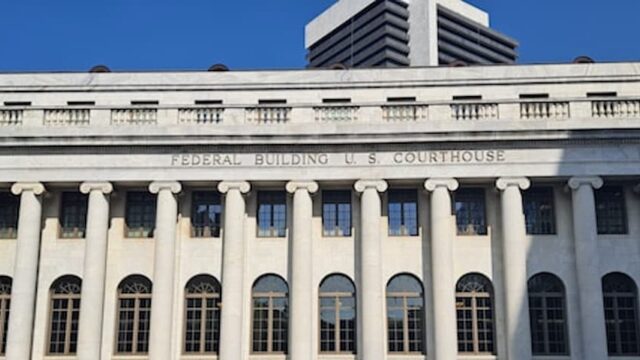
A proposed class action filed in the U.S. District Court for the Southern District of Ohio alleges that Stake.us operates an unlicensed online casino in the state. Plaintiff Brenda Krivatch seeks damages and court orders on behalf of Ohio residents who paid money and lost on the platform.
The complaint, filed Feb. 3, says Stake.us markets itself as a “legal sweepstakes” site. According to the lawsuit, that branding led players to believe the platform was legal in Ohio. Stake.us lacks the licenses needed to operate in the state and doesn’t list Ohio as an excluded territory.
Players on Stake.us can play slots and table games using free credits called “Gold Coins.” But the real action centers on something called “Stake Cash,” which players can redeem for cryptocurrency.
The lawsuit describes Stake Cash as a near 1:1 substitute for real money, while the free-play Gold Coins function primarily as a promotional decoy.
Users can buy coin bundles with real money, starting at $20 and going up to $300. That $20 package comes with 200,000 Gold Coins and 20.05 Stake Cash.
The complaint argues this structure satisfies Ohio’s three elements of gambling — consideration, chance, and prize — despite being packaged as a sweepstakes.
An Age-Old Sweepstakes Workaround
The complaint compares Stake.us to the old “internet café sweepstakes” setups that courts have repeatedly labeled illegal gambling. The lawsuit argues that Stake simply modernized the same workaround for an online audience.
Back in the early 2010s, sweepstakes cafés popped up everywhere in Ohio. Operators sold phone minutes or internet time for sweepstakes entries but used slot-style terminals that paid out cash or cash-equivalent prizes.
Citing Ohio precedent, the complaint quotes an appellate court rejecting similar models, writing that “the justice system is not some lumbering oaf who must ignore the patently obvious gambling scheme … simply because of a contrived separation between consideration and the scheme of chance.”
Ohio shut that model down in 2013 by banning cash payouts. Many operators tried to survive by adding skill elements. In 2018, the Ohio Casino Control Commission stepped in with rules for these so-called “skill game parlors.”
Demanding a Stop to Ohio Operations
The Feb. 3 lawsuit also challenges Stake’s terms and conditions, including arbitration clauses and class action waivers. It argues that Ohio law voids any contracts tied to gambling losses.
The plaintiffs want the court to declare Stake.us illegal in Ohio, shut down its operations in the state, and force refunds for player losses. They also seek statutory and punitive damages, restitution, disgorgement, and attorney fees.
A Litany of Lawsuits for Stake.us
Federal court dockets show at least nine lawsuits filed against Sweepstakes Limited — the company behind Stake.us — across Illinois, California, Minnesota, Missouri, Mississippi, New Mexico, Utah, Virginia, and now Ohio. Many assert similar claims that the platform operates unlawful gambling under the guise of a sweepstakes model.
Krivatch is also pursuing parallel litigation. Court filings show she filed a separate lawsuit against Social Gaming LLC, the operator of the Fortune Coins sweepstakes casino, in the U.S. District Court for the Southern District of Ohio in October. That complaint cites comparable allegations that the platform markets an illegal gambling scheme to Ohio residents.
Some of the complaints also name high-profile promoters, including rapper Drake, a Stake ambassador.
In October, separate complaints in Missouri and New Mexico accuse Stake.us, Drake, and streamer Adin Ross of pushing illegal gambling disguised as a social casino. The lawsuits claim Drake and Ross promoted the platform using “house money,” making losses look risk-free on social media.
Another lawsuit filed in Virginia on Dec.31 repeats those claims. It also alleges Drake and Ross used Stake’s internal tipping feature to move money between parties and artificially boost music streaming numbers on platforms like Spotify. That case seeks class-action status, at least $5 million in damages.
More broadly, more than 100 class-action lawsuits now target sweepstakes casinos nationwide.
With multiple similar suits now pending in federal courts and plaintiffs targeting sweepstakes operators state by state, the Ohio case adds to mounting legal pressure on Stake.us. It signals broader challenges for the sweepstakes casino model nationwide.
Many sweepstakes platforms rely on arbitration clauses that can slow or divert civil lawsuits. At the same time, enforcement actions by regulators or attorneys general have historically posed the greater immediate threat to operators’ ability to continue serving a state.


Gambling Insider delivers the latest industry news, in-depth features, and operator reviews that you can trust. Our team combines rigorous editorial standards with decades of specialized expertise to ensure accuracy and fairness. We are committed to delivering clear, impartial, and dependable coverage across the global gambling sector.