Polymarket and Kalshi Restrict Ireland as GRAI Threatens Court Orders
Ireland's gambling regulator says prediction markets must block local users or risk High Court enforcement, as Polymarket and Kalshi add the country to their restricted jurisdictions.

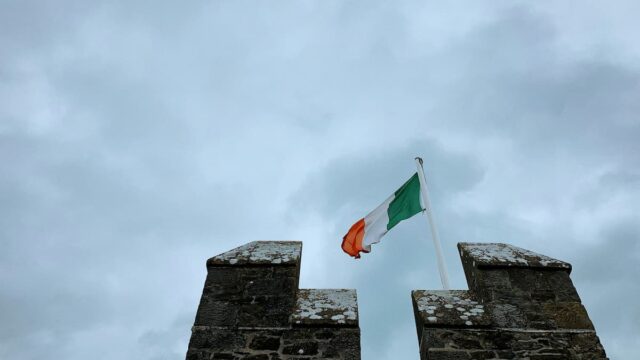
The Gambling Regulatory Authority of Ireland (GRAI) has confirmed to Gambling Insider that it warned major prediction market platforms operating without a license that they must restrict access for Irish users or face enforcement, including High Court blocking orders.
As of July 21, both Polymarket and Kalshi restricted access to users in Ireland. Polymarket updated its Geographic Restrictions list that day, while Kalshi already listed Ireland as a restricted jurisdiction in its Member Agreement.
The Irish action follows France and Czechia, both of which last week ordered internet service providers to block access to Polymarket. Meanwhile, in Canada, Polymarket quietly withdrew from several additional provinces.
Taken together, these actions illustrate a broader international trend. Regulators increasingly are treating prediction markets as unlicensed gambling operators rather than financial trading platforms.
GRAI Lays Out the Consequences of Non-Compliance
In a statement via email to Gambling Insider, the GRAI set out its position in unambiguous terms.
As of 1 July 2026, any operator that provides a remote betting or remote betting intermediary service to consumers in Ireland must have a Gambling Regulatory Authority of Ireland (GRAI) license,” the regulator said, adding that “prediction markets that provide betting activities fall within the definition of remote betting intermediary under Irish law.”
Under the Gambling Regulation Act 2024, prediction market operators offering betting services must obtain a GRAI license.
The GRAI warned that:
Those who do not have a license should take appropriate steps to prevent access to their platforms by consumers in Ireland. Failure to do so may result in enforcement action.”
The authority left no doubt about where prediction markets sit in its priorities.
Black market gambling is an area of major focus for GRAI, and that includes unlicensed prediction markets that provide betting activities,” it said.
The GRAI also disclosed the concrete steps already taken regarding the one major prediction market platform that had moved voluntarily. Those include preventing new account registrations and restricting accounts already opened in Ireland from depositing funds or opening new positions.
The regulator confirmed that one major prediction market had already geoblocked Ireland following its intervention. It added that a second platform agreed to implement a geoblock by July 21.
If voluntary compliance falls short, the regulator said it will “seek orders in the High Court to enforce compliance.”
GRAI also said that it has several ongoing investigations relating to black market gambling, “with a view to potential prosecutions in due course.”
Previous Concerns From Irish Lawmakers About Suspicious Bets
The Irish scrutiny isn’t new.
In May, Finance Minister Simon Harris raised concerns about unregulated betting on platforms like Polymarket, calling it the “Wild West.” He said the Irish authorities were investigating “suspicious bets” made on the platform and possible cases of money laundering.
Those Irish concerns coincided with a similar crackdown in India. The Indian Ministry of Electronics and Information Technology issued an advisory naming Polymarket and Kalshi and warned that VPN providers facilitating access to blocked platforms could face legal exposure.
France Pulls the Plug
The Irish warning came the same week as France escalated its efforts.
The Autorité Nationale des Jeux (ANJ) ordered on July 16 that the country’s internet service providers block access to Polymarket. The regulator classified the platform as an illegal gambling site and cited its addictive mechanics, a lack of self-exclusion tools, and a high level of French users circumventing earlier restrictions.
ANJ also cited an incident in which a person allegedly altered one of France’s official weather probes to influence a Polymarket weather-related market. Despite a ban dating back to November 2024, the ANJ said Polymarket still attracted 578,751 visits from 205,057 unique French users in June.
The order came just days before the World Cup final. The match was set to resolve Polymarket’s biggest-ever single market, with more than $4 billion in trading volume.
Polymarket Exits Three More Canadian Provinces
Polymarket also blocked access in several more Canadian provinces. On July 6, it added Alberta, British Columbia, and Quebec to the list, which already included Ontario.
The actions in countries such as Ireland, France, Czechia, Canada and India underscore a growing willingness by regulators to treat prediction markets as gambling products subject to domestic licensing requirements.
The sector is now firmly drawn into national gambling frameworks, regardless of how operators try to characterize their event contracts. They can either obtain a license or stay out of these countries.


Gambling Insider delivers the latest industry news, in-depth features, and operator reviews that you can trust. Our team combines rigorous editorial standards with decades of specialized expertise to ensure accuracy and fairness. We are committed to delivering clear, impartial, and dependable coverage across the global gambling sector.