New Jersey Takes Kalshi Sports Betting Fight to Supreme Court
The Garden State says Kalshi’s legal theory could have consequences far beyond prediction markets, potentially reaching traditional sportsbooks and casinos.

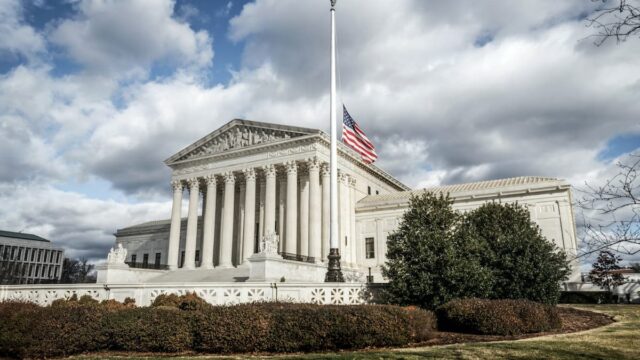
New Jersey has asked the U.S. Supreme Court to decide whether prediction markets can offer sports event contracts without complying with state gambling laws, seeking to resolve a direct split between federal appeals courts over Kalshi’s business model.
The state filed a petition for a writ of certiorari on Sept. 2, asking “whether the 2010 Dodd-Frank Wall Street Reform and Consumer Protection Act preempted States from regulating sports bets that occur within their jurisdictions if those bets are offered on markets registered with the Commodity Futures Trading Commission.”
The Third Circuit ruled 2-1 in April that Kalshi’s sports contracts qualify as swaps and that federal commodities law preempts New Jersey’s gambling rules. The state’s filing follows the Ninth Circuit reaching the opposite conclusion last week in Kalshi’s Nevada litigation. That court held that Kalshi’s sports contracts are not swaps under federal derivatives law and that Nevada’s gambling laws are not preempted.
New Jersey calls the disagreement a “direct, acknowledged, and irreconcilable split” and argues that Supreme Court intervention is now necessary.
“Companies like Kalshi claim to offer legal sports betting in all 50 States, but they refuse to follow the gambling laws of any State,” New Jersey Attorney General Jennifer Davenport wrote in the petition.
“We’re calling on the Supreme Court to resolve this issue and recognize that Congress did not silently make the sports-betting industry immune from state law.”
New Jersey Says Kalshi Theory Could Reach Traditional Sportsbooks
Beyond the circuit split, New Jersey argues that Kalshi’s interpretation of federal law could have consequences that extend to sportsbooks and casinos.
The Third Circuit concluded that Kalshi’s sports event contracts fall within the Commodity Exchange Act’s definition of swaps. The Dodd-Frank Act also prohibits companies from offering swaps outside CFTC-regulated markets.
The state said that if Kalshi is correct that Dodd-Frank federalized the regulation of sports wagering, sportsbooks operating legally since the Supreme Court in 2018 overturned the federal sports betting ban in Murphy v. NCAA, including brick-and-mortar casino sportsbooks, “have apparently been violating Dodd-Frank all along.”
Judge Jane Roth raised the same concern in her dissent from the Third Circuit ruling. She wrote that treating sports bets as swaps would take the definition to its “logical extreme” because swaps traded outside CFTC-registered markets are generally unlawful.
New Jersey also argues that the Third Circuit’s interpretation could disrupt the tribal gaming framework under the Indian Gaming Regulatory Act and federal laws such as the Wire Act.
Legal Pressure on Prediction Markets Builds
The dispute has expanded significantly since Kalshi began offering sports contracts in January 2025.
Kalshi, other prediction market companies and the CFTC have become involved in litigation with 20 states, New Jersey’s petition notes. The state also points to broader opposition from 44 states, as well as hundreds of tribes, casinos and public officials.
A separate tally shared by gaming attorney Daniel Wallach identified 39 judicial decisions in prediction market disputes. Thirty-three favored states and six sided with prediction market interests. Including Michigan’s Sept. 1 preliminary injunction against Kalshi, the total has since risen to 40 decisions, with 34 favoring states.
The count spans preliminary injunctions, temporary restraining orders, appellate stays and other rulings rather than 40 separate final judgments.
Kalshi has pushed back on New Jersey’s petition. Company representatives told multiple media outlets that it views itself as a nationwide financial exchange that cannot be subject to 50 different state regulatory regimes.
“Kalshi is an open, nationwide financial exchange. It cannot be regulated by 50 different regulators,” said Kalshi Head of Strategic Communications Dani Lever. “We remain confident in the lower courts’ rulings, and nothing in New Jersey’s filing today changes our view.”
Kalshi has also argued that the Ninth Circuit did not reject the principle of the CFTC’s exclusive jurisdiction. Instead, it reached a different conclusion based on a federal regulation that the agency is in the process of rewriting.
Supreme Court Review Is Not Guaranteed – or Quick
Filing the petition does not guarantee that the Supreme Court will hear the case. The justices must first decide whether to grant certiorari, and that process can take months.
New Jersey’s last major sports betting case, Murphy v. NCAA, illustrates the potential timeline. The state filed its Supreme Court petition challenging the federal sports betting ban in October 2016. The Court granted review in June 2017, heard arguments that December and issued its decision in May 2018.
A similar timeline could push a final decision in the Kalshi dispute well into 2027 or potentially 2028. Even if the Court grants New Jersey’s petition during the current term, briefing and arguments would still have to take place before a ruling.
If the Court does take the case, its eventual decision could provide the first nationwide answer to the central question driving the litigation: whether CFTC-registered exchanges can offer sports contracts regardless of state gambling law.


Gambling Insider delivers the latest industry news, in-depth features, and operator reviews that you can trust. Our team combines rigorous editorial standards with decades of specialized expertise to ensure accuracy and fairness. We are committed to delivering clear, impartial, and dependable coverage across the global gambling sector.