Virginia iGaming Bill Advances After Committee Adds Enforceable Responsible Gaming Controls
Virginia lawmakers advanced an amended online casino (iGaming) legalization bill after adopting statutory responsible-gaming requirements that one committee member said exceed those adopted by other states.


Senate Bill 118, sponsored by Sen. Mamie Locke, cleared the Senate General Laws and Technology Committee following the adoption of a committee substitute that significantly expanded statutory problem gambling controls.
Last week, the gaming subcommittee voted down the bill, with lawmakers citing concerns about player protections and enforcement.
McPike: Illegal Market Is “Incredibly Predatory”
During the meeting, Sen. Jeremy McPike said the growth of unregulated gambling was key in his support for advancing the bill.
“Indeed, the illegal market is incredibly predatory and must be reined in,” McPike said.
He added that he believes legalization is “the best way to eradicate that.”
McPike acknowledged that he abstained during the earlier subcommittee vote because he was uncomfortable with the level of consumer protections and responsible gaming language in the bill at that time.
McPike said he then worked with Locke and other committee members over the weekend to draft a new committee amendment.
Amendment Makes Responsible Gaming Enforceable by Law
McPike said the revised language makes problem gambling controls “more prescriptive in the statute — probably more than any other state in the United States at this point.”
Rather than leaving implementation to regulators or voluntary operator policies, as in some other states, the committee amendment establishes enforceable statutory duties for both regulators and licensees.
“It draws from New York’s framework,” McPike said, “but it goes beyond that.”
He noted that while many states encourage the use of player data for responsible gaming, SB 118 would mandate its use.
The amendment also removes prepaid cards as a permitted payment method, following the earlier exclusion of credit cards.
What the Law Would Require
The committee substitute adds detailed responsible gaming requirements to § 58.1-4148 of the Virginia Code.
Under the amended bill, the Virginia Lottery Board must promulgate regulations to promote the prevention, identification, and curtailment of problem gaming. That includes education and awareness initiatives, self-limitation and self-exclusion tools, and advertising standards designed to avoid targeting minors or at-risk individuals.
One requirement for operators is to implement responsible gaming programs that include a strategic implementation plan detailing:
- Use of player data and technology to identify potential problem gamblers.
- Automated triggers tied to player behavior.
- Defined levels of intervention and education for identified at-risk players.
The statute establishes a three-phase intervention process. It requires proactive player communications, mandatory tutorials on responsible gaming resources, and, when warranted, access to a responsible gaming professional provided by the operator.
The Lottery Board would be required to publish annual reports summarizing problem-gambling activities, program participation, and outcomes.
Additional Consumer Safeguards
Beyond intervention requirements, SB 118 mandates several platform-level consumer protections, including:
- Break-in-play notifications track time spent on gaming platforms.
- Account statements detailing deposits, withdrawals, and win-loss activity for at least 12 months
- Prominent display of the message: “If you or someone you know has a gambling problem and wants help, call 1-800-GAMBLER.”
- Restrictions on electronic marketing to players whose accounts are under suspension.
- Tools that allow players to set deposit and session limits or request temporary account suspensions.
Sweepstakes Casino Prohibition
In addition to legalizing online casinos, SB 118 targets sweepstakes casinos. In § 58.1-4155, the bill defines “sweepstakes” broadly as:
“a promotional, advertising, or marketing event, contest, or game… in which a prize or prize equivalent is awarded,” including through dual-currency mechanisms.
The bill prohibits unlicensed sweepstakes gambling. Violators face civil penalties of up to $100,000 for the first offense and $250,000 for subsequent offenses. Each day of continued violation is treated as a separate offense.
Committee Advances Broader Gambling Package — Including Skill Games
In addition to SB 118, the committee advanced several other gambling-related bills discussed during the earlier subcommittee meeting. That includes SB 661, a proposal to regulate skill games. The Gaming Subcommittee had voted it down alongside the original version of SB 118.
The committee also advanced bills creating a centralized Virginia Gaming Commission, tightening oversight of daily fantasy sports, authorizing a potential Fairfax County casino subject to referendum, and making technical updates to existing gaming statutes.
What’s Next and Parallel House Effort
SB 118 now moves to the Senate Finance and Appropriations Committee, where budget and revenue implications will be examined.
Virginia has another active iGaming measure in the House, House Bill 161 (HB 161), which also seeks to authorize internet gaming under the Virginia Lottery Board. That bill has not yet received a committee hearing.
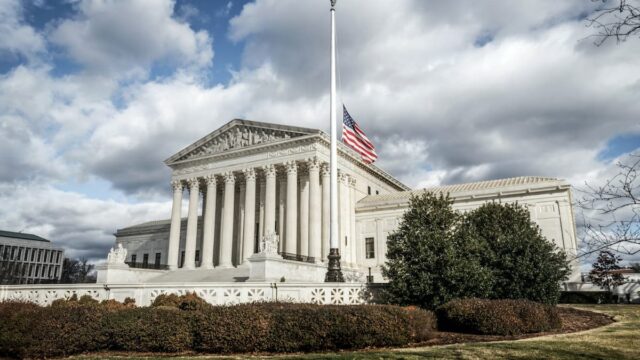
Image credit: Morgan Riley via Wikimedia Commons (license)


Gambling Insider delivers the latest industry news, in-depth features, and operator reviews that you can trust. Our team combines rigorous editorial standards with decades of specialized expertise to ensure accuracy and fairness. We are committed to delivering clear, impartial, and dependable coverage across the global gambling sector.