NCAA Denies Brendan Sorsby Reinstatement as Quarterback Takes “Responsibility” for Gambling Addiction
The NCAA ruled Sorsby permanently ineligible over gambling violations as the Texas Tech quarterback completed treatment and publicly addressed his addiction recovery.

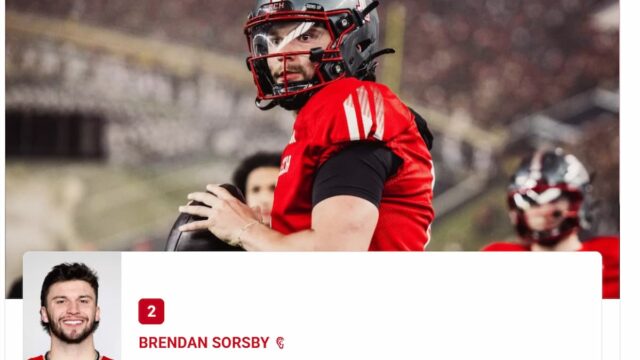
The NCAA has denied Texas Tech quarterback Brendan Sorsby’s request for reinstatement for the 2026 college football season. The decision rules him permanently ineligible over gambling violations tied to bets placed on Indiana football games in 2022 while he was a member of the Hoosiers.
Sorsby separately filed a lawsuit against the NCAA earlier this month. The complaint seeks a temporary injunction that would grant him eligibility for the upcoming season.
Sorsby: “No Longer Fully at the Mercy” of Gambling Addiction
Amid the NCAA’s decision, Sorsby posted a statement on social media, confirming he’s completed a residential treatment program for a diagnosed gambling addiction and anxiety disorder while addressing his recovery.
While I accept responsibility for my behavior and know that I have a lot of work ahead of me, for the first time in many years I feel more free and no longer fully at the mercy of my addiction,” Sorsby wrote.
Sorsby also apologized to those impacted by the situation while discussing his hopes of continuing his football career at Texas Tech.
I am deeply sorry to everyone I’ve disappointed and am committed to the hard and necessary work ahead,” he wrote.
“With the support of my coaches, teammates and the university, I’m looking forward to returning to campus in Lubbock. If I’m blessed and fortunate enough to have the opportunity to continue my college career at Texas Tech, I know I will get the support I need.”
Texas Tech Plans to Appeal NCAA Decision
Texas Tech President Lawrence Schovanec publicly defended Sorsby in a letter addressed to the Texas Tech community. Schovanec also confirmed the university intends to appeal the NCAA’s ruling.
Recently, the NCAA issued an initial ruling that Brendan is permanently ineligible to compete,” Schovanec wrote. “Texas Tech will be appealing that decision. We believe that given the facts and the context of Brendan’s case, the NCAA’s ruling should be reversed or modified.”
The letter framed Sorsby’s case around addiction recovery, mental health, and the realities of modern legalized sports betting.
Brendan himself has been open about his struggle with severe gambling addiction, and we believe his vulnerability deserves to be met with the full weight of this institution’s support,” Schovanec wrote.
Texas Tech also detailed a recovery and monitoring plan that will reportedly remain in place as Sorsby returns to campus. That includes outpatient care, therapy, financial oversight, device monitoring, and software designed to block betting sites.
Schovanec also argued that the NCAA’s current rules have failed to keep pace with the rapid expansion of legalized sports betting in the U.S. He wrote that gambling addiction “is rising to the point of epidemic among college-aged men in particular.”
The university president also cited the NCAA’s own reinstatement policies, which reference “reaching an outcome that considers the well-being of the involved student-athlete.”
We are asking that the NCAA follow their own stated principles in this case,” Schovanec added. “Ignoring these facts in this ruling puts the letter of their rules ahead of the spirit of their mission.”
NCAA Maintains Integrity Position
The NCAA defended the ruling in statements provided to The Athletic. The organization emphasized that betting on one’s own team remains among the most serious gambling violations under association rules.
When it comes to betting on one’s own team, these rules must be enforced in every case for the simple reason that the integrity of the game is at risk,” the NCAA stated.
According to Sorsby’s lawsuit, he admitted to placing thousands of wagers. Those include bets on Indiana football games while he was a member of the program. However, the lawsuit argues he never bet on games in which he played and never manipulated the outcome of any contest.
In the past year, the NCAA has taken an active stance against gambling-related integrity issues. Last fall, it banned several college basketball players for betting-related game manipulation.
In January, federal prosecutors unsealed an indictment that included 15 college basketball players accused of participating in a point-shaving scheme to fix nearly 30 Division I games. One person has already pleaded guilty in the case.
The NCAA also introduced public player availability reports for March Madness. According to the organization, the reports aim to address growing concerns about the impact of sports betting on student-athletes and team personnel.


Gambling Insider delivers the latest industry news, in-depth features, and operator reviews that you can trust. Our team combines rigorous editorial standards with decades of specialized expertise to ensure accuracy and fairness. We are committed to delivering clear, impartial, and dependable coverage across the global gambling sector.