Jalen Smith Pleads Guilty in NCAA Point-Shaving Scheme Involving Dozens of Players
A fixer at the center of a major point-shaving scheme has pleaded guilty after recruiting dozens of NCAA players to manipulate games for betting profits.
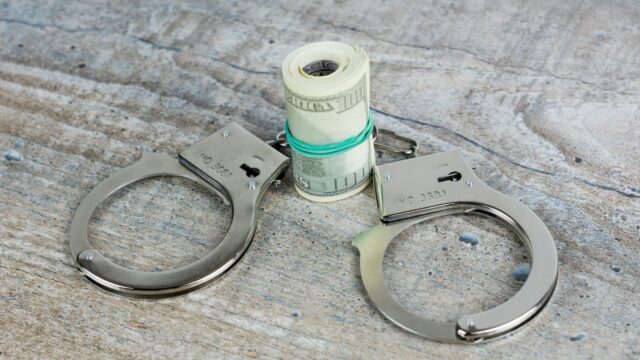
A key figure in a wide-ranging basketball point-shaving scheme has pleaded guilty in federal court. Jalen Smith admitted that he acted as a fixer to recruit and pay college players, usually between $10,000 and $30,000 per game, to deliberately underperform so their teams wouldn’t cover the spread.
He and other conspirators then placed large wagers against those teams through sportsbooks and intermediaries. The scheme involved more than 39 players across at least 17 NCAA teams and impacted over 29 games.
The scheme began with games in the Chinese Basketball Association (CBA), where members of the fixing group first arranged point shaving before expanding the operation to NCAA men’s basketball. Prosecutors say the operation ran from at least September 2022 through February 2025.
On March 9, Smith pleaded guilty to several counts of bribery in sporting contests, conspiracy to commit wire fraud, aiding and abetting, and possession of a firearm by a felon.
Smith now faces potentially lengthy prison time and a fine. The bribery in sporting contests charge carries a maximum sentence of 5 years, while the wire fraud charges carry a maximum sentence of 20 years.
Targeting Specific Types of Players
One detail that stands out in the indictment is how Smith avoided approaching star players with lucrative endorsement deals.
Instead, Smith and his team of fixers specifically targeted players who didn’t earn much through ‘Name-Image-Likeness’ (NIL) compensation. They usually played for underdog teams. Lawmakers legalized NIL compensation in 2021 so college athletes could earn money from the value they generate for their schools and the NCAA.
Star players with large social media followings have benefited the most. However, most Division I players still earn modest or non-existent NIL income. A walk-on at a mid-major program rarely receives sponsorship deals.
For a player earning little to nothing from NIL, $15,000+ in untaxed, almost immediate, in-person cash can be hard to refuse. Prosecutors say the conspirators specifically targeted players whose legitimate NIL opportunities were limited. They also paid players for information about the health and playing status of teammates.
Inside the Scheme
Smith maintained ongoing communication with recruited players. In a press release about the guilty plea, the U.S. Attorney’s Office for the Eastern District of Pennsylvania described a specific example of how Smith handled them.
During halftime of a tight game, Smith texted a player who had accepted a bribe, urging him to underperform in the second half. He wrote that the game “needed to be a blowout” and told the player he was costing him money because the team was supposed to be losing.
When bets succeeded, Smith traveled to college campuses and handed cash bribes to players. However, the scheme did not always succeed.
In one example involving a game between Buffalo and Kent State, fixers placed at least $424,000 in bets but lost most of it after missing the spread by half a point.
Kent State needed to win the first half by more than 8.5 points, but only won it by 8. At least three players involved in the scheme scored just one point between them in the final 13 minutes of the first half, missing layups and dunks.
The fixers also frequently targeted first-half spreads. That allowed them to influence only part of the game, not the final outcome. This revelation prompted NCAA President Charlie Baker to call on state regulators to ban certain betting markets, including individual player prop bets and first-half spreads.
Five Co-Conspirators
One of the most concerning aspects of the scandal is how long it operated. Dozens of players and games became involved over roughly two and a half years. Millions of dollars in wagers moved through sportsbooks without triggering early integrity alerts. Eventually, the FBI uncovered the operation and launched a formal investigation.
Smith did not operate alone. Investigators named five others as co-conspirators. Marves Fairley and Shane Hennen allegedly initiated the original point-shaving scheme in the CBA, a league featuring many American players.
Antonio Blakeney, one of the top scorers in the Chinese league, also joined the conspiracy. He accepted bribes to shave points and recruited teammates into the scheme.
According to the indictment, Fairley left a package containing at least $200,000 in cash in Blakeney’s Florida storage unit at the end of the CBA season. Blakeney later began approaching NCAA players.
His role involved proving to college players that they would actually receive cash for participating in the scheme. He often spoke with them on FaceTime. His credibility from playing two seasons in the NBA with the Chicago Bulls helped establish legitimacy.
Cases Involving Insider Information
Basketball has experienced several notable scandals involving point shaving. One of the most high-profile cases occurred in 2007 when NBA referee Tim Donaghy admitted that he passed inside information to gamblers and bet on games he officiated.
The revelation shocked the league and forced officials to review officiating practices and conflict-of-interest policies. The NBA later significantly strengthened its integrity protocols.
The parallels with the Smith case are striking. In both situations, insiders accessed information that the wider betting market did not have. Donaghy knew how he would call a game, while Smith knew which players had agreed to underperform. Both men used that advantage to profit from sportsbooks.
NBA Betting Investigations Add Context to NCAA Scandal
More recently, professional players have exited games early to help bettors win prop bets. The NBA banned former Toronto Raptors player Jontay Porter for life in April 2024 after investigators determined he had done exactly that. He’s now playing in the USBL for the Seattle SuperHawks.
The NCAA scandal also connects to a recent NBA controversy. Both Hennen and Fairley are also involved in a separate October 2025 investigation that led authorities to arrest 30 people in relation to an illegal poker ring and alleged illegal gambling activity tied to NBA games.
Investigators claim that someone sold information suggesting that Miami Heat guard Terry Rozier would exit a game in 2023 early so bettors could win prop bets. Rozier denies the allegations.
Meanwhile, Portland Trail Blazers head coach Chauncey Billups and former NBA player and coach Damon Jones allegedly participated in rigged poker games.
Jones has also been accused of selling insider information about injuries and lineup decisions to bettors, including Fairley, through intermediaries. Authorities say Hennen and Fairley also knew about Porter exiting games early.
The overlap with the separate NBA gambling investigation also raises concerns about how far the network may have spread across different levels of basketball. With several alleged co-conspirators still facing charges, prosecutors have indicated that the case may not be finished.
The scandal has also renewed scrutiny of the betting integrity monitoring systems used by sportsbooks and regulators, which are designed to flag suspicious wagering patterns. Despite millions of dollars in wagers moving through sportsbooks, the scheme continued for more than two years before investigators uncovered it.


Gambling Insider delivers the latest industry news, in-depth features, and operator reviews that you can trust. Our team combines rigorous editorial standards with decades of specialized expertise to ensure accuracy and fairness. We are committed to delivering clear, impartial, and dependable coverage across the global gambling sector.