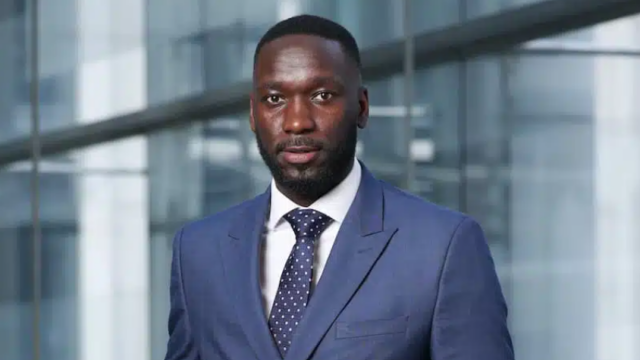
Sam Schwartz Shares His Journey to Prediction Market Newsletter Author in Gambling Insider Q&A
From Georgetown to investment banking to prediction market startup to industry newsletter, Sam Schwartz sits down for a wide-ranging conversation.


Prediction markets caught the eye of Sam Schwartz soon after he left his investment banking analyst position with HSBC in June 2024, not necessarily knowing what was next.
“I was excited about pursuing different opportunities or different industries that I was really interested and passionate about,” Schwartz says. “Shortly after that, I came across Kalshi leading up to the presidential election in the fall of 2024. This was my first time hearing about this new topic of prediction markets.”
With a keen interest in markets ranging from stocks to sports, Schwartz’s curiosity piqued when Kalshi announced in January 2025 that it was self-certifying sports event contracts.
His exploration led him to ProphetX and Novig, sports-focused exchanges that were both approved by the CFTC this year as DCMs (Designated Contract Market, an exchange where event contracts are listed and traded) and DCOs (Derivatives Clearing Organization, which guarantees trades are settled).
Schwartz, a 2022 Georgetown graduate, decided he wanted to work for one of these three companies – Kalshi, ProphetX or Novig – and after meeting founders Jake Benzaquen and Dean Sisun, Schwartz was hired as an operations associate at ProphetX in June 2025.
This past April, Schwartz struck out on his own, intent on launching a newsletter covering the booming prediction market space. With a background that includes investment banking, a prediction market startup and sports betting, he believes he’s uniquely positioned to create an industry-leading publication.
The first edition of The PM Pulse was published on Substack on July 14, 2026.
Gambling Insider got to know Sam over a 60-minute phone call last Thursday, July 30. We discussed his professional journey, the complex regulatory and competitive prediction market environments, and his approach to betting/trading.
Gambling Insider: What did you do on the operations team at ProphetX?
Schwartz: We were responsible for a number of different daily tasks when we were on our operation shifts. Beyond that, we worked closely with the product team and the engineering team on a lot of things that were brand new to this prediction market or peer-to-peer exchange world, with RFQ parlays at the top of the list. ProphetX launched a beta version of their RFQ parlay product early fall in 2025, a couple months after I joined.
This is the first time it’s being introduced into the sport trading or sport betting world, and that was an ongoing top priority – talk to customers, talk to other people in the industry and find ways to improve that product. Talking to different liquidity providers and market makers was a high priority for ProphetX, as well as trying to onboard them, integrate them, think about the best way that ProphetX as an exchange can work with these third-parties.
GI: Why did you decide to leave ProphetX and start a prediction markets newsletter?
Schwartz: The idea with The PM Pulse is I’m building a layer of market intelligence for the prediction market industry, and my number one focus right now is building the number one daily newsletter for prediction markets. … The core audience that I’m targeting are the people at the frontier of the industry that are pushing this industry forward, and that is founders, traders, investors, other key figures in the space.
I am also very focused on the Spotlight series [a companion series featuring conversations with key prediction market figures]. The first one I posted was last Tuesday [July 21] with Novig CEO Jacob Fortinsky. I have a strong pipeline full of other founders that I’m looking forward to having a conversation with.
There’s an incredible amount of prediction market news every single day, and I think that the amount of daily or weekly news is only going to increase drastically as we get into the fall with the NFL and college football starting and midterm elections coming up. … There’s a lot to cover.
GI: How do you kind of sift through that? How do you prioritize the news? What makes something rise up to a level of importance where you’re really paying attention to it?
Schwartz: My main source is 100% X or Twitter. I’ve spent a lot of time the last two to three years trying to identify who I think the best thought leaders or the best content creators are within these industries of prediction markets and sports betting, and I also follow sports analytics individuals.
Twitter or X, just like any other social media platform, can be an absolutely huge waste of time if you’re not using it the right way. … However, Twitter is actually a very valuable resource if you use it the right way. If you are able to identify who are the best people talking about prediction markets [and those who are] pro traditional sportsbooks and casinos. It’s certainly important to get both perspectives.
So many of the founders or CEOs or chief product officers or engineers of the wide range of prediction market companies that are either fighting for market share in the CFTC-regulated space or maybe on the decentralized crypto-based side – it’s very obvious to me that these people who are pushing the industry forward are spending a ton of time on accessing Twitter themselves, connecting with their customers or directly communicating to their customers. A lot of them are very active, and I think that’s very validating that any given day, that’s an opportunity to stay close to prediction markets and learn new things. Twitter is where the most relevant news, the strong, most high-quality content, the best research is.
[Schwartz mentioned Daniel Wallach, Mick Bransfield, Dan Bernstein, Isaac Rose-Berman, Dustin Gouker, Rob Pizzola, Captain Jack Andrews and Rufus Peabody among his favorite follows, plus The Risk Takers and Novig’s Inside Prediction Markets as go-to podcasts].
Hot Topics
GI: Do you believe that the public comments are being heard by the CFTC [the agency received more than 1,400 submissions for its request for public comment on recent proposed rulemaking]?
Schwartz: That’s a great question and obviously an important one. I hope the answer is yes. That’s a common criticism that people have with the CFTC, that they’re understaffed and there’s only one commissioner on board. I hope that they’re being reviewed. … That’s a hard question. I don’t know if any of us know.
GI: There are court cases, court decisions every week, and it seems prediction markets, in the legal realm, take one step forward and a couple of steps back. … What’s your take on the legal landscape? All signs point to the Supreme Court. If you were making the market on that, what would the odds of whether prediction markets will be allowed, based on a Supreme Court decision, to continue offering sports contracts?
Schwartz: That’s one question I ask people who I’m talking to almost on a daily basis because I’m always interested in how they are taking in that news, forecasting what’s going to happen in the next one to two years. A lot of people do think, like you said, that it will end up in the hands of the Supreme Court, and a lot of people think it could be the summer of 2028, so nearly two full years from now. Hard to make a prediction on something when it seems like there’s huge, influential news breaking on a daily basis, and there’s a two-year period before this may go to the Supreme Court.
I hear a lot of people say it’s around 50/50 whether a Supreme Court ruling would favor prediction markets or traditional sportsbooks. I give a slight edge to prediction markets on that front. I think the CFTC and prediction markets have over a 50% chance of winning.
I’m not a legal expert. … Where my answer comes from is when you compare sports betting or sports trading products of a prediction market with a traditional sportsbook, there’s a number of things that make the prediction market product a better product for the consumer.
GI: You quoted Henry Kerins [formerly Exec VP of Trading Technology & Operations at Novig and now a market maker on the platform as saying on The Risk Takers podcast], “I don’t think it’d be crazy if we were beating Polymarket in daily notional sports volume by the end of this year. I think that’s a very realistic goal.” Is Polymarket’s position as the No. 2 in jeopardy?
Schwartz: I don’t even think [Polymarket is] the clear No. 2 right now. It depends [how the data is interpreted]. The way some of the data I’ve seen is presented, it looks like Robinhood is the clear No. 2. There’s different ways to look at it, but Novig is 100% focused on sports, where that’s not the case with the Polymarket or Kalshi.
But I think in general the No. 2 spot is very much up for grabs in the CFT-regulated space. That’s what I’ll say with conviction. Kalshi has 85 to 90% of this CFTC-regulated market share right now, and a lot of these different names are charging for that No. 2 spot, whether it is
Polymarket US, Novig, DraftKings, Rothera, ProphetX, FanDuel, Fanatics, Underdog.
I think if you ask the founders of any one of those companies, they’d say that they’re making a push for that second spot behind Kalshi. I’m sure some of them have plans be the No. 1 market leader beyond six months from now.
GI: I first became aware of you when I was preparing for an interview with Dean [Sisun], and I saw your tweet suggesting that Facebook, after news that they were looking to get into prediction markets, give ProphetX a look as an acquisition target. So you might have a take on this. How do you see mergers and acquisitions and consolidation shaping up in this industry over the next couple of years?
Schwartz: I’m really interested to see how it plays out. A lot of the key acquirers have already made that move, whether that has been DraftKings acquiring Railbird or this joint venture we’ve seen between Robinhood and Susquehanna, where they acquired an exchange and now the entity is called Rothera. Fanatics was in the news earlier this week [when they acquired BGC Group], now they have a DCM and DCO license. So there’s been a number of acquisitions or transactions already.
I think there will be more. … I agree with the sentiment that maybe two years from now or more – a lot of it is dependent on the legal and regulatory front – it will be much more consolidated with only a couple of key players. But how that consolidation happens could go a lot of different ways.
Someone like Mark Zuckerberg and Meta poses a really interesting position in this conversation. Any large tech company or any company with an existing huge customer base to acquire an exchange that has been developing this prediction market infrastructure for a long time and does have the necessary licenses sounds like a pretty strong complementary fit to me.
GI: When I talked to Dean, he said that the potential market size is so huge that a small piece of that market share can still make for a very successful company. I think you kind of presented a different point of view there, that consolidation kind of has to happen and there will only be a certain number of players that are really making an impact.
Schwartz: I think the answer to that question is dependent on the timeframe. Certainly it’s dependent if this does go to the Supreme Court a year or two years from now and what that ruling is. But that’s a strong point by Dean that I don’t disagree with. Even this year, the daily, weekly, monthly prediction market trading volume is growing at a rapid pace and seems to be breaking a record every day, every week, every month. The people who are most bullish on prediction markets talk beyond sports, These non-sports categories, which have seen growth lately, will continue to grow.
If there is a total addressable market that is 5, 10x more of what it is on an annualized basis right now, then that’s a good point by Dean – even if you only have single-digit market share, that would still make for a really strong opportunity for players.
It’s tough to predict what the landscape will look like a couple of years from now, when there are so many important factors like the legal and regulatory front, and we don’t know exactly which entrants are coming into the space.
Betting Talk
GI: Let’s talk about your trading. Tell me about your approach to trading. Are you making or taking generally? Are you modeling or are you using a more qualitative approach? What sports are you specializing in? Kind of all of that.
Schwartz: I started trying to take a very professional approach to sports betting, dating back to 2023, really that NFL season, with two of my close friends from home and my brother. The four of us were betting on the NFL, and we were looking to bet on moneylines and spreads early when lines were first released before markets moved to get positive EV or beat the closing line.
I definitely learned a ton now in hindsight, and there’s a lot of things that I was not doing well.
I started mostly with markets like the NFL, college basketball, the NBA and tennis in the sports betting sense, and then once I learned about prediction markets, the first one I started using was ProphetX early in 2025, which at the time had a 3% commission on your net winnings per market. That made for drastically better prices than someone like DraftKings or FanDuel, so it was a breakthrough moment for me, for someone who’s competing against very thin margins. …
There’s been a lot of opportunity to make money on the market-making front right now. That’s why you hear companies like Novig or DraftKings or FanDuel talking about that exact same opportunity and how their internal trading or market-making teams are looking to maximize that opportunity and not only provide liquidity on their own platform but market make across several platforms [editor’s note: The day after we spoke with Schwartz, the CFTC announced it is proposing new rules to address potential conflicts of interest related to vertically integrated exchanges].
GI: Are you done with sportsbooks? is 100% of your action on prediction markets these days?
Schwartz: It is, yeah, 100%. That’s primarily driven by the new tax rule that went into effect January 1, 2026. I know there’s ongoing efforts to get it repealed, whether that would be next year or the year after, and it’s also not 100% clear how prediction markets will be taxed by the IRS either, so there’s a lot to understand or a lot that needs to be cleared up on the tax front for both prediction markets and traditional sportsbooks.
But just given that I am prioritizing make orders instead of take orders, the opportunity to get better odds is larger around prediction markets, and with the tax implication, I keep 100% of my trading in prediction markets.
GI: LeBron James just signed with the 76ers. If you’ve been paying attention to those markets, have they overreacted, underreacted, or responded appropriately to LeBron joining the Sixers [odds on Kalshi at time of publication price Philadelphia as the second favorite to win the Eastern Conference, at 22%, just behind the Knicks at 23%]?
Schwartz: The Celtics missed out on an opportunity to add Giannis Antetokounmpo to their team. I thought that was going to happen for a second, and I think they would have been the clear favorites if they did land Giannis [Boston is 13% to win the East].
But between LeBron – and probably the bigger add for the 76ers is Jalen Brown – they make a very strong, compelling case to win the East this year. I’m excited to follow along.
GI: The NFL season is kicking off in six weeks. Give me one team that you think is underrated and one team you think is overrated at this point, very early in training camp.
Schwartz: My friends and family at home will kill me if they hear this answer because I’ve always been and still am a huge Detroit Lions fan, but I think the Chicago Bears are very underrated across just about every future markets I’m looking at, and that’s because Ben Johnson is as good of a play-caller as anyone else in the NFL. The ramp up that he had as the offensive coordinator for Detroit, the way the team progressed and became a stronger threat to win the Super Bowl every year was incredible – the amount of improvement they had year over year. He already showed that in year one with the Bears. They had a great year last year, and I think they’re going to have another great year this year. Super Bowl odds markets are only giving them like 12 to the 15th best chance to win the Super Bowl. I would definitely have them much higher, maybe in the five best range to win it all.
A team that’s overrated [thinks for a few seconds] … Both the Patriots and Seahawks come to mind, the two teams in the Super Bowl last season. I could see either one of those teams taking a step back.
GI: One last question. When you’re not trading on prediction markets or writing about prediction markets, what are you doing? How do you spend your time?
Schwartz: I’ve been living in New York City for 4+ years now. My younger sister is living here with me. I’ve got a number of friends who I went to Georgetown with that live in the city, so I like to spend time with them during my free time on the weekends, whether it’s going to new restaurants or doing other activities in the city.
I like to play tennis and golf, so I try to get as many rounds of golf or time on the tennis court as I can, especially here in the summer.
Had the chance to go back home to Michigan, where I’m from, for the 4th of July and spend some time out on the lake up north in Michigan with my extended family, so that was a great time as well.


Gambling Insider delivers the latest industry news, in-depth features, and operator reviews that you can trust. Our team combines rigorous editorial standards with decades of specialized expertise to ensure accuracy and fairness. We are committed to delivering clear, impartial, and dependable coverage across the global gambling sector.