Fanatics Fined $20K by Colorado for Pinging Self-Excluded Gambler. Stakeholders Say Size Doesn’t Matter
When it comes to regulatory violations like Fanatics' recent fine, stakeholders say the size matters less than the change that follows.

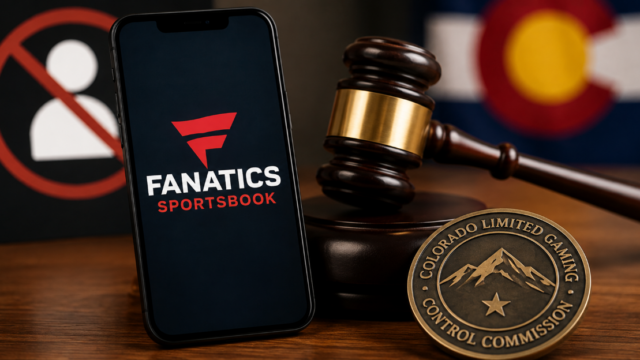
The Colorado Limited Gaming Control Commission fined Fanatics Sportsbook $20,000 last month for sending a self-excluded gambler a promotional offer on two separate occasions.
Fanatics’ revenues were close to $13 billion in 2025, with roughly $2 billion coming from gambling operations, according to a Forbes article citing CEO Michael Rubin. It’s valid to question whether a $20,000 fine is a stiff enough consequence.
Rather than focusing on the size of the fine, we should consider its impact, Problem Gambling Coalition of Colorado (PGCC) executive director Jamie Glick suggested in an email to Gambling Insider.
The most important question is not whether $20,000 is objectively large or small, according to Glick, but “whether the consequence is meaningful enough to change behavior and prevent the same thing from happening again.”
Self-exclusion, he said, is an important consumer protection. When someone decides to self-exclude, the systems “should reinforce that decision, not undermine it through promotional messaging.”
Glick wrote:
For an individual experiencing gambling-related harm, one promotional message can matter. That is why compliance should not simply become a cost of doing business. Consequences should create enough accountability that operators have a meaningful incentive to invest in the technology, procedures, and oversight necessary to prevent these failures.”
While the PGCC is not involved in determining regulatory penalties, Glick believes regulators should set the appropriate dollar amount based on the circumstances of each case.
But from a public health perspective, the measure of an effective consequence should ultimately be whether it protects consumers and reduces the likelihood of the behavior happening again.”
Fines Levied on Case-by-Case Basis
According to the stipulation agreement between the Colorado gaming commission and Fanatics, the customer, ‘T.M.,’ placed themself on the self-exclusion list on January 15, 2026.
Despite that exclusion, on Feb. 1, the customer received a promotional text from a member of Fanatics’ VIP team. Although Fanatics caught the mishap and distributed training materials to its VIP service representatives on Feb. 4, the customer received a second promotion on Feb. 17.
The Colorado Division of Gaming’s decision to levy a fine was determined under a “framework of progressive discipline,” Colorado Department of Revenue’s Derek Kuhn told Gambling Insider in an email.
Kuhn said the Division evaluates every infraction against statutory guidelines, published rules, and established precedent. This, he said, ensures an appropriate penalty that reflects its “commitment to enforcing responsible gaming requirements.”
For the amount, Kuhn said they calculated the fine based on the “specific number of violations,” which, in this case, was two. He also said the determination took into account “any proactive steps taken by the operator to rectify the issue.”
Under Colorado’s progressive framework, repeated violations could result in penalties of up to $25,000 per infraction.
Kuhn said:
Fines are proposed on a case-by-case basis, and consequences for operators escalate based on the nature and frequency of violations, with statutory maximums serving as the upper limit for penalties.”
He noted that the agreement also requires Fanatics to audit its self-exclusion program and implement corrective measures. Fanatics also agreed to “enhance ongoing training” for its VIP staff and submit those training materials as proof of compliance. The company also recommitted to complying with all regulations moving forward.
Fanatics, he said, has already confirmed it has retrained its VIP staff and “implemented product interface enhancements” to prevent similar breaches from recurring.
Fanatics: ‘Mistakes Happen’
In a statement provided to Gambling Insider, Fanatics VP of Communications Kevin Hennessy said that despite the protections it puts in place to ensure regulatory compliance, “unfortunately mistakes happen.”
The company also stressed that it self-reported the infraction to the gaming commission and noted that while the promotional offers reflect an obvious failure, the customer could not act on the prompt because the exclusion itself remained properly in place.
Fanatics said it views this, and any regulatory violation, as an opportunity to do better.
In this instance, Fanatics Betting & Gaming promptly identified the mistake, self-reported it to the regulators and took action to remedy. While the patron received an impermissible outreach, which is regrettable, the patron had been properly excluded and was unable to engage with our platform. As we do with any regulatory violation, we have used this as a learning experience.”


Gambling Insider delivers the latest industry news, in-depth features, and operator reviews that you can trust. Our team combines rigorous editorial standards with decades of specialized expertise to ensure accuracy and fairness. We are committed to delivering clear, impartial, and dependable coverage across the global gambling sector.