AGA’s Responsible Gaming Education Month Looks Different After Sportsbook Exodus
The biggest sportsbooks that left the AGA are absent from its September campaign, as a once-common industry-wide RG messaging moment becomes increasingly fragmented.

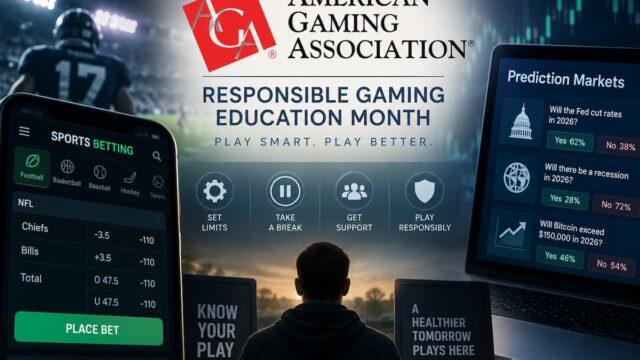
The American Gaming Association’s (AGA) Responsible Gaming Education Month (RGEM) returned this September with a noticeably different operator lineup, following the departure of four major sportsbooks from the trade group over the past year.
Retail casino-aligned operators such as BetMGM, Hard Rock International, Caesars Entertainment, and Penn Entertainment have all announced initiatives or messaging tied to RGEM this September.
DraftKings, FanDuel, Fanatics and bet365, meanwhile, have not produced comparable campaigns since leaving the AGA between November 2025 and March 2026.
RGEM never represented the entirety of the industry’s responsible-gaming work, much of which has always operated year-round. But September provided a common moment when sportsbooks, casino operators and industry groups promote that work under the same banner.
That alignment is less visible in 2026. Some AGA members continue to organize messaging and initiatives around RGEM, while several major sportsbooks that left the association increasingly follow their own calendars and align with brands and organizations such as the Responsible Online Gaming Association (ROGA).
AGA Exits Change the September Lineup
Three of the four departures were closely connected to the industry’s growing divide over prediction markets.
DraftKings and FanDuel resigned on Nov. 18, 2025, as both companies expanded into event contracts. FanDuel said its new direction was “not aligned with the American Gaming Association’s current priorities for its member operators.” In contrast, DraftKings said its plans “no longer fully align with the AGA’s direction in certain areas.”
Fanatics followed in early December, days after launching Fanatics Markets. Vice President of Communications Kevin Hennessy later said the company and the AGA had “a difference of opinion on what that means when it comes to prediction markets.”
Bet365’s March departure was different, with the operator citing its position as a “digital-first” business and the AGA’s focus on the retail casino industry.
All four nevertheless remain members of the Sports Betting Alliance and ROGA.
Former AGA Members Follow Their Own RG Calendars
The clearest evidence of that change is not what the departed operators failed to do during RGEM. It is what they did instead — and when.
DraftKings provides perhaps the clearest year-over-year comparison.
In 2025, the operator explicitly tied its September campaign to RGEM. It offered sweepstakes with prizes such as NFL tickets and a trip to Super Bowl 60 to customers who engaged with its responsible play tools. This year, DraftKings introduced a similar promotion around the PGA TOUR. Neither RGEM nor September is mentioned.
DraftKings also launched Gamalyze American Football with Mindway AI around the start of football season. The interactive tool uses football betting to help players assess their responses to wins and losses.
FanDuel’s approach has also changed.
The company held Play Well Day every September from 2022 to 2025. In January 2026, however, it replaced Play Well with Play with a Plan, positioning the program as year-round.
FanDuel said usage of its responsible-gaming tools had increased 41% year over year. It has continued promoting Play with a Plan but has not announced another Play Well Day so far this September.
Fanatics similarly operates its Play With Plan platform year-round, while bet365 has not produced an identifiable standalone September campaign.
The four also continue to work through ROGA. In August, the organization published a voluntary Marketing and Advertising Code adopted by all eight members, which it says represents approximately 90% of legal U.S. sports betting handle. The standards restrict “risk-free” claims, college-campus advertising and targeting customers identified for responsible-gaming concerns.
Casino-Aligned Operators Keep RGEM Visible
September nevertheless remains an active responsible-gaming period for companies that stayed within the AGA.
MGM Resorts and BetMGM announced a $320,000 contribution to RGEM’s responsible gaming initiatives. The companies said they now have more than 3,000 certified GameSense advisors.
Hard Rock International and Seminole Gaming issued their own RGEM announcement around new PlayersEdge initiatives, while Caesars has marked the month through its “Listen First. Support Always” campaign. Caesars also included RGEM messaging in its new advertising campaign centered on its updated app.
Penn Entertainment, meanwhile, used RGEM to highlight responsible gaming habits, such as setting limits, taking breaks, and playing with intention.
Prediction Markets Deepen the Responsible-Gaming Divide
Prediction markets also complicate the responsible-gaming picture. The sector contributed directly to three of the four major AGA departures while creating a separate debate over where responsible-gaming standards should apply.
At the same time, prediction markets have become a more prominent target of the AGA’s own responsible-gaming messaging.
The association has escalated its criticism of the sector, framing sports event contracts as a threat to the state-regulated gaming model and raising concerns about advertising, consumer protections and responsible gaming standards.
According to the AGA, prediction-market digital advertising through July had increased 232% compared with all of 2025. Yet only 34% of event-contract bettors recalled seeing a responsible-gaming message, compared with 78% of sportsbook users. Just 28% said responsible-gaming tools were easy to find on prediction platforms, compared with 58% on sportsbooks.
“I don’t think that these platforms are ever going to take [responsible gaming] seriously from a consumer protection angle because if you don’t believe your product is gambling, you can’t have an honest discussion with consumers about how to gamble responsibly,” AGA Vice President of Research David Forman told CDC Gaming.
The boundaries are becoming less clear as former AGA sportsbook members enter prediction markets themselves. DraftKings Predictions offers deposit limits, cooling-off periods and self-exclusion, while FanDuel extended deposit limits, alerts and self-exclusion to FanDuel Predicts.
Fanatics Markets similarly offers deposit and session limits, timeouts and self-exclusion, with some responsible-gaming restrictions on Fanatics Sportsbook also carrying over to its prediction-market platform.
At the same time, Kalshi has joined the National Council on Problem Gambling (NCPG) and committed $2 million over two years to support NCPG’s new Financial Trader Health and Safety Initiative.
Kalshi’s involvement has itself proved divisive.
The Michigan Gaming Control Board withdrew from the NCPG over the partnership and canceled its conference sponsorship, while the Nevada Council on Problem Gambling cut ties with the national organization.
September No Longer Brings the Industry Under One RG Banner
RGEM’s quieter presence among several major online operators does not suggest responsible-gaming work has declined. Those companies operated year-round programs long before leaving the AGA, just as casino operators maintained their own programs outside of September.
Prediction markets, changes in AGA membership and operators’ own responsible-gaming strategies have all contributed to a more fragmented landscape.
September still brings plenty of responsible-gaming activity. What it no longer does, at least to the same extent, is bring the industry together around it.


Gambling Insider delivers the latest industry news, in-depth features, and operator reviews that you can trust. Our team combines rigorous editorial standards with decades of specialized expertise to ensure accuracy and fairness. We are committed to delivering clear, impartial, and dependable coverage across the global gambling sector.