Supporters of Gambling Tax Fix Urge House Committee to Include Measure in Spending Bill
(UPDATED: Jan. 22 - The House of Representatives voted Thursday afternoon to pass HR 7148 341-88. It did not include a fix for the 90% cap on gambling losses. With the House having passed all of its spending bills for the 2026 fiscal year, any chance for the full deduction to be restored will have to come from the Senate. Congress faces a Jan. 30 deadline to pass all FY26 spending bills.)

Thursday could be a big day for American gamblers and the country’s gaming companies as House leaders in Washington continue their work on a spending bill that could restore the full deduction of gambling losses on this year’s federal taxes.
The House Rules Committee held a lengthy hearing Wednesday on HR 7148, a bill that includes appropriations for several government agencies.
Among the dozens of amendments presented by lawmakers were a pair that would undo the 90% deduction cap on gambling losses Congress approved when it passed the One Big Beautiful Bill more than six months ago.
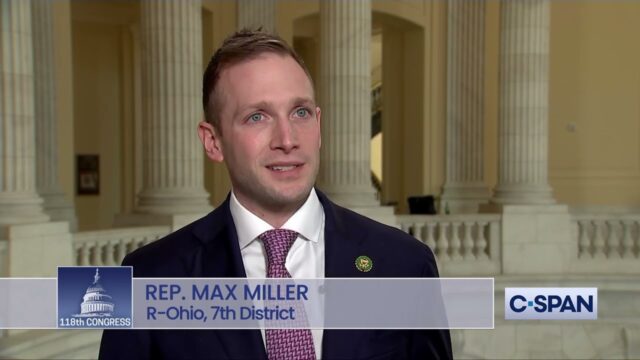
U.S. Rep. Dina Titus (D-Nev.) presented her FAIR BET Act for inclusion in the legislation, and U.S. Reps. Max Miller (R-Ohio) and Steven Horsford (D-Nev.) offered their solution. They urged their lawmakers to approve the fix, noting that the gambling industry is present in nearly every state.
“This is not a Las Vegas problem. This is a widespread issue,” said Titus, whose district includes a portion of the Las Vegas Strip.
While lawmakers have filed several bills in both the House and Senate to rectify the matter, proponents say adding the provision to a spending bill currently before Congress is the best approach.
Although gamblers who itemize their deductions will not have to file this year’s taxes until next year, concerns about paying additional taxes – especially on money they did not receive – may lead professional gamblers to curtail their wagering or take it elsewhere.
How We Got Here
When Republicans were trying to pass the One Big Beautiful Bill last year, they sought to meet President Trump’s July 4 deadline so he could sign it on the national holiday.
As the legislation made its way through the Senate, the Finance Committee amended the Internal Revenue Code language on gambling losses to allow the bill to take on additional spending priorities.
Few people in the gambling industry noticed that change, but it became public before the final bill passed. Pleas to strike the 90% limit were unsuccessful as the House concurred with the Senate’s changes.
Some leaders in the gambling industry noted that the bill contained other positive changes. They include increasing the reporting threshold for slot winnings to $2,000 and a provision that eliminated federal taxes on up to $25,000 in tipped income for some workers.
Still, lawmakers on both sides of the aisle promised to work on a fix.
Miller, in a Wednesday testimony, noted the no tax on tips provision “was a wonderful thing for people within the service industry.” However, he said casino workers will not get the chance to take full advantage if gamblers stay away from U.S. casinos.
He added that some gamblers are taking their money to casinos in Macau and elsewhere. That means the money won’t end up in American workers’ wallets.
“This bill that we are putting forward restores the original rule allowing losses from wagering transactions to be deducted to the full extent of gains, aligning tax liability with actual economic reality, which I believe we need to be at this current moment in time,” Miller said. “Americans should not be taxed on money they didn’t actually take home, and I’m a big believer in that.”
What’s the Difference
The proposal floated by Miller and Horsford would revert the Internal Revenue Code language on gambling losses to what Congress established 40 years ago, when lawmakers passed a tax reform bill.
That section reads:
“Losses from wagering transactions shall be allowed only to the extent of the gains from such transactions. For purposes of the preceding sentence, the term ‘losses from wagering transactions’ includes any deduction otherwise allowable under this chapter incurred in carrying on any wagering transaction.’”
The One Big Beautiful Bill struck that section. It replaced it with:
“For purposes of losses from wagering transactions, the amount allowed as a deduction for any taxable year— (A) shall be equal to 90 percent of the amount of such losses during such taxable year, and (B) shall be allowed only to the extent of the gains from such transactions during such taxable year.”
Titus’s bill keeps the existing language, but replaces the 90% with 100%.
Is there a difference? Perhaps, as one person on X pointed out last week.
Miller’s bill, which is identical in language to the FULL HOUSE Act in the Senate sponsored by U.S. Sen. Catherine Cortez Masto (D-Nev.), may have an advantage simply because of party affiliation. With Republicans in the majority in both the House and the Senate, Miller’s bill, also dubbed the FULL HOUSE Act, may stand a better chance of success.
Traders Bearish on Repeal
Meanwhile, traders at Kalshi spent Wednesday buying contracts on when, or if, Congress would repeal the 90% cap. Heading into Thursday, contracts to restore the full deduction before this April were trading at 26 cents.
That’s roughly the equivalent of 3-1 odds. Contracts that predict it would happen by the end of this calendar year were available at 41 cents. That’s about the same as 3-2 odds.
Traders could buy contracts on the 90% cap staying in place by April for 77 cents. That’s equivalent to odds shorter than 1-3. Meanwhile, contracts for a repeal not taking place in 2026 fetched 60 cents, the same as odds of 2-3.


Gambling Insider delivers the latest industry news, in-depth features, and operator reviews that you can trust. Our team combines rigorous editorial standards with decades of specialized expertise to ensure accuracy and fairness. We are committed to delivering clear, impartial, and dependable coverage across the global gambling sector.