Maryland Sets March 11 Hearings on iGaming, Multi-State Online Poker and Sweepstakes Ban
Maryland lawmakers will hold hearings on March 11 on a trio of bills to legalize online casinos and multistate poker, as well as a separate measure to shut down sweepstakes-style gambling platforms.

Lawmakers in Maryland will revisit online gambling expansion next month, with hearings scheduled for March 11 on three internet gaming bills introduced by Sen. Ron Watson, as well as a separate bipartisan sweepstakes enforcement bill.
Watson’s package would authorize full online casino gaming (iGaming), create a standalone framework for regulated online poker with potential multistate agreements, and place the issue before voters in a required statewide referendum.
At the same time, a parallel bill sponsored by Sen. Jeff Waldstreicher and Sen. Chris West would crack down on illegal gambling, including sweepstakes casinos.
iGaming and Multistate Poker
SB 885 — Online Casino Framework
SB 885 is the core iGaming authorization bill. It creates licenses and directs the Maryland State Lottery and Gaming Control Commission (the Commission) to regulate online casino play.
Key provisions:
- Authorizes online casino-style games (slots and table games)
- Eligible applicants include casino operators and sports wagering licensees
- License fee: $1 million ($500,000 live-dealer only). Reduced fees for qualifying minority and social equity applicants
- Term: five years
- Labor peace agreements required
- Revenue supports education funds
- Also includes online bingo
Notably, the bill does not set a tax rate.
Licenses would be available primarily to existing video lottery (casino) operators and sports wagering licensees, with certain Maryland-headquartered employers meeting specific thresholds also eligible to apply. Applicants can partner with one online operator (a single “skin”).
SB 885 also includes strict labor, consumer protection, and mitigation safeguards. Applicants, licensees, and live dealer studio operators must show “clear and convincing evidence” of a labor peace agreement that bars “picketing, work stoppages, boycotts, and any other economic interference” during the first five years.
To address cannibalization, regulators must publish annual impact studies, and the bill establishes an employee-displacement fund to support affected casino workers.
Responsible gaming measures include 24-hour delays on deposit-limit increases, marketing restrictions during self-suspensions, a voluntary exclusion list, and annual reporting on “erratic or increased gambling behavior.”
SB 884 — Multistate Online Poker and Skill-Based Gaming
Poker is not folded into casino gaming. Instead, Maryland treats it separately as “skill-based gaming,” creating a dedicated licensing regime.
Key provisions of SB 884:
- Creates standalone internet skill-based licenses
- Explicitly includes poker
- The Commission must permit poker
- License fee: $1 million ($500k minority-owned)
- Operator keeps: 70% of proceeds
- Deposit limits and responsible gaming controls
A key provision allows multistate online poker. It states that the governor, on the recommendation of the Commission, is authorized to:
“Enter into an agreement with other governments…that allows…multijurisdictional internet skill-based gaming.”
That compact language could allow Maryland to join the Multi-State Internet Gaming Agreement and shared poker pools with other states, which are widely viewed as critical for tournament liquidity.
SB 761 — Statewide Referendum
Maryland gambling expansions require voter approval, so no iGaming or poker can launch without this passing. SB 761 would send a referendum to voters if the other bills pass the Legislature.
Key provisions:
- Authorizes the General Assembly to legalize internet gaming
- Places the question on the November 2026 ballot
- Directs proceeds toward education
Voters would be asked:
“Do you favor the expansion of commercial gaming in the State of Maryland to authorize Internet gaming for dedicated purposes including the funding of public education?”
Previous Failed iGaming Attempts
This is not a new effort for Sen. Watson.
He has led the Senate’s iGaming push for four straight sessions. He sponsored internet casino legislation in 2023, 2024, and 2025, but prior attempts repeatedly stalled at different stages of the process.
In 2023, both House and Senate bills failed to advance out of committee, partly due to the referendum requirement, which would have occurred in 2024.
In 2024, there was significantly more movement as the House showed a greater appetite for expansion. A House iGaming bill cleared the chamber but stalled in the Senate, while the Senate companion never gained traction.
In 2025, momentum faded further. Both House and Senate versions failed to advance from committee.
Across all three years, opposition centered on:
- Labor unions warning of job displacement
- Land-based casino operators citing cannibalization concerns
- Hesitation among Senate leadership
This year’s proposals appear structured to address those criticisms directly, adding labor peace agreements, employee protections, and incumbent-friendly licensing to finally move the bills past the committee stage. Lawmakers will again weigh those concerns as the bills move through committee.
Sweepstakes Enforcement
SB 652 is a broad bill targeting illegal online gambling, including sweepstakes casinos.
Key provisions:
- Prohibits operating or promoting illegal online gambling
- Attorney General may issue cease-and-desist orders
- Payment processors and platforms must block activity
- Civil and criminal penalties, forfeiture of profits
According to the bill, the online gambling definition includes:
“Table games, slot machines, video poker, sweepstakes games, games of chance, and any other game typically offered in a casino.”
Under the definition of a sweepstakes game, it states:
“(1) Utilizes a dual-currency system of payment allowing the player to exchange the currency for any prize, award, cash or cash equivalents…
(2) Simulates any form of gambling, including…slot machines…video poker…table games…lottery…bingo…[and] sports wagering.”
Two Active Ban Bills Already Had Hearings
SB 652 is the latest attempt to target sweepstakes casinos in Maryland. In this session, lawmakers have already introduced two bills: SB 112 and HB 295.
Both proposals have already had a committee hearing. In the Senate, the Budget and Taxation Committee heard testimony from stakeholders, including the Commission, casino representatives, and sweepstakes casino operators.
Commission Director John Martin told lawmakers that the regulator has sent 75 cease-and-desist letters to sweepstakes casinos, with about 33% complying. He said SB 112 will help the Commission target illegal operators.
Industry representatives called for regulation and said their businesses comply with Maryland laws.
Similar arguments were made during the House Ways and Means Committee hearing. Lawmakers in both chambers did not vote on the proposals.
What’s Next
All four bills now sit in the Senate Budget and Taxation Committee and are set for a March 11 hearing.
Lawmakers will likely hear testimony from stakeholders for and against the proposals. If the committee advances one or more bills, they will likely move to a second committee before a full Senate vote.
Given the chamber’s past hesitation on iGaming, proponents must convince lawmakers that those concerns have been addressed. The Senate passed a sweepstakes casino bill last year, so there’s a chance it would do so again.
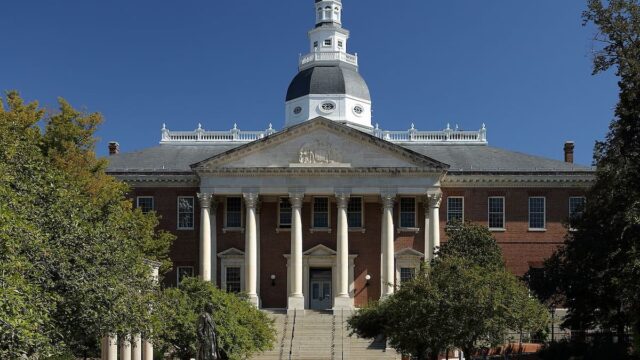
Image credit: Martin Falbisoner via Wikimedia Commons (license)


Gambling Insider delivers the latest industry news, in-depth features, and operator reviews that you can trust. Our team combines rigorous editorial standards with decades of specialized expertise to ensure accuracy and fairness. We are committed to delivering clear, impartial, and dependable coverage across the global gambling sector.