CFTC Files Amicus Brief in Nevada Prediction Market Case as Selig Defends Federal Authority
CFTC Chairman Michael Selig is no longer sitting on the sidelines. With a Nevada court filing and a Wall Street Journal op-ed, he’s escalating the agency’s direct defense of federal jurisdiction over prediction markets.

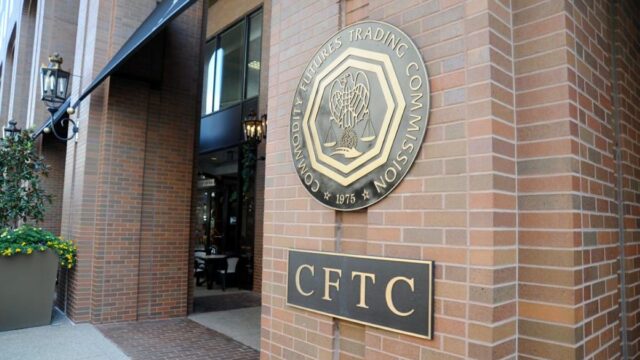
CFTC Chairman Michael Selig used a Wall Street Journal op-ed to defend prediction markets and announce that the agency would back Crypto.com in its Nevada litigation. In recent weeks, Selig has taken a more assertive public stance on these platforms, shifting from his initial cautious approach.
In the op-ed — and later in a post on X — Selig said the CFTC has regulated event contracts for decades. He pointed to 1992, when the agency first officially recognized event contracts. It granted Iowa Electronic Markets approval to trade contracts on corporate earnings and presidential elections.
CFTC Backs Crypto.com in Ninth Circuit Appeal
Selig announced that the CFTC is filing a friend-of-the-court brief with the Ninth U.S. Circuit Court of Appeals backing Crypto.com in its dispute against the Nevada Gaming Control Board.
Nevada regulators began the dispute in May 2025, issuing cease-and-desist letters and claiming that prediction markets like Crypto.com offered unlicensed sports betting.
Crypto.com responded by filing suit and seeking a preliminary injunction to allow it to continue operating while litigation continued. U.S. District Judge Andrew Gordon denied the request in October, prompting Crypto.com to suspend Nevada operations on Nov. 3 as its Ninth Circuit appeal continues.
The amicus filing marks the agency’s first direct litigation intervention after months of public commentary on the issue.
In an amicus brief, the CFTC tells the court it oversees prediction markets at the federal level and explains how the law applies. The filing introduces the agency’s interpretation of the Commodity Exchange Act into the appellate record and frames the dispute as a federal preemption question.
While the brief does not determine the outcome, courts frequently consider agency interpretations in complex financial disputes.
It remains unclear why the CFTC chose to start with Crypto.com in Nevada. Polymarket, Kalshi, Robinhood, and Coinbase are also facing ongoing legal action from state authorities.
Selig Frames Event Contracts as Legitimate Risk-Management Tools
To justify that intervention, Selig has emphasized that event contracts serve legitimate economic functions. They allow market participants to hedge risk, aggregate information, and test hypotheses.
He warned that if states succeed in stripping the CFTC of its authority, participants could lose access to federally regulated event-contract markets. He cited examples of small businesses hedging against energy price increases and farmers managing risks related to temperature change.
Selig said the CFTC will “no longer sit idly by” as “overzealous” states attempt to block the regulator’s oversight.
The Commodity Definition at the Center of the Dispute
Selig avoided mentioning sports in his Wall Street Journal op-ed. Instead, he explained why the CFTC controls event contract regulation.
He highlighted that these contracts qualify as “swaps” under the Commodity Exchange Act (CEA). He added that Congress granted the CFTC full authority over such contracts after the 2008 financial crisis.
Selig described the commodity definition as “extraordinarily broad.” He noted that only onions and movie ticket sales fall outside that scope.
Selig also said the CEA supports financial innovation and that the development of new derivatives does not justify reinterpreting or narrowing existing laws.
Skeptics Question the Scope of CFTC Authority
Selig’s op-ed has received significant attention on social media. Ross Gerber, CEO of Gerber Kawasaki Wealth and Investment Management, said he struggles to see how sports betting qualifies as a commodity.
Gaming attorney Daniel Wallach echoed that view and cited a recent case that challenges Selig’s claim about the breadth of the commodity definition.
Wallach pointed to an ongoing matter between the CFTC and TMTE, which operates Metals.com. In that case, a judge questioned whether precious metals qualify as commodities. Critics argue that the CFTC cannot rely on broad or catch-all language to expand its authority beyond what Congress clearly authorized.
Judges do not assume Congress makes major regulatory changes through unclear wording, a principle often summarized as Congress not “hid[ing] elephants in mouseholes.”
The opinion stated that the statute primarily lists agricultural products, so any catch-all language should remain within that category. Under that logic, sports prediction markets would fall outside the definition.
From Nominee Restraint to Chairman Activism
Monday’s Wall Street Journal op-ed appears to form part of a broader effort to legitimize prediction markets as financial products.
Selig has intensified his public comments since his November nomination hearing, when he avoided taking a firm position after senators questioned whether he would enforce a prohibition on sports event contracts. He said at the time that courts would decide the issue and promised to follow judicial rulings.
Since assuming the chairman role on Dec. 18, his tone has grown more forceful. He discussed prediction markets in a Jan. 20 Washington Post op-ed, noting their rapid growth in popularity.
He criticized the Biden administration for restricting digital innovation and pledged not to follow that approach. He closed the piece by predicting that modernizing CFTC regulation could usher in a new “golden age of American financial markets.”
At a CFTC-SEC Harmonization event on Jan. 29, Selig said the agency supports lawful innovation, such as prediction markets. He also announced the withdrawal of a 2024 proposal to ban political and sports contracts and confirmed the rollback of a 2025 advisory discouraging sports-related products.
Selig then appeared on CNBC’s Digital Finance Forum last week. He said the CFTC plans to take a different approach than the previous administration, which challenged election markets ahead of the 2024 presidential race. Selig reiterated the CFTC will exert its authority and ensure prediction markets “flourish in the U.S.”
Industry Launches Coordinated Advocacy Campaign
The prediction markets industry has simultaneously ramped up its own public advocacy efforts.
The Coalition for Prediction Markets, which includes Kalshi, Crypto.com, Coinbase, Robinhood, and Underdog, began a seven-figure campaign last month after the publication of a Washington Post ad.
The full-page spread highlighted differences between regulated and unregulated platforms, including bans on insider trading and customer vetting. Polymarket is not part of the coalition.
Kalshi also opened a Washington, D.C. office in January and appointed John Bivona, a former Biden administration official, to lead federal outreach. Before that move, Kalshi aligned more closely with right-leaning political figures, most notably Donald Trump Jr. He now serves as a paid adviser to Kalshi. He also holds an investment in Polymarket, where he serves as an unpaid advisor.
With the CFTC now stepping into the Nevada dispute and Selig publicly backing prediction markets, the regulatory standoff has entered a new phase.
The focus now shifts to the Ninth Circuit, where judges will confront the core jurisdictional question: whether federally regulated event contracts pre-empt state gambling enforcement when tied to sports outcomes.


Gambling Insider delivers the latest industry news, in-depth features, and operator reviews that you can trust. Our team combines rigorous editorial standards with decades of specialized expertise to ensure accuracy and fairness. We are committed to delivering clear, impartial, and dependable coverage across the global gambling sector.