Lawmakers Introduce Bill to Ban Betting on Government and Military Decisions
U.S. lawmakers have introduced new legislation to ban betting on government decisions and military actions, citing concerns over insider trading and suspicious market activity ahead of recent strikes.

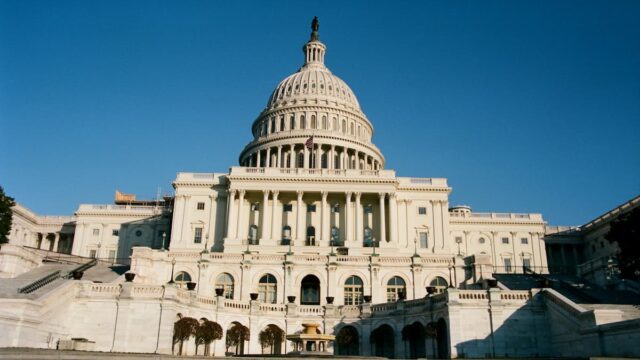
Senator Chris Murphy (D-Conn.) and Rep. Greg Casar (D-Texas) introduced bicameral legislation that would prohibit prediction markets from offering bets on government decisions, military actions, or events where a single individual controls or knows the outcome.
The legislation is co-sponsored by Senator John Hickenlooper (D-Colo.) and Representatives Yassamin Ansari (D-Ariz.), Gabe Amo (D-R.I.), and Rashida Tlaib (D-Mich.).
The Banning Event Trading on Sensitive Operations and Federal Functions (BETS OFF) Act would ban wagering on government actions, terrorism, war, and assassination on platforms like Kalshi and Polymarket. Murphy argued during a Tuesday press conference that they are “fundamentally corrupt markets rife with insider trading.”
The bill would also amend existing illegal gambling laws to block payment processing for banned prediction market platforms. It would impose criminal penalties on U.S. individuals who promote or operate them.
Prediction market operators argue that their platforms function as forecasting tools rather than gambling products and operate under federal derivatives oversight.
Suspicious Betting Ahead of Iran Strikes
Murphy and Casar pointed to what they describe as unusual betting activity on Polymarket in the hours before U.S. strikes on Iran as an example of the risks the bill aims to address.
According to Casar, around 150 accounts placed highly unusual bets the day before the strikes that U.S. military action would begin the following day. Of those, Casar said 109 accounts made over $10,000, 16 made over $100,000. Meanwhile, one individual made nearly half a million dollars.
“Most of those accounts were set up on the day that they made those bets,” Murphy said. He argued the activity suggested that individuals with advance knowledge of the attack may have profited from the market.
Lawmakers also pointed to similar activity ahead of a U.S. operation in Venezuela.
“While working-class kids were getting sent to fight and die in the Middle East, others were cashing in,” Casar said.
Incentives Inside Government
Beyond the potential for profit from insider knowledge, Murphy argued that the markets create dangerous incentives for government officials to shape policy decisions around their financial interests rather than national security.
“There are likely people who have placed bets on whether the United States is going to take a particular military action overseas, and they are giving advice to the President not based on what’s best for national security, but based upon what will make them money,” Murphy said.
The bill would also cover private-sector events where a single individual effectively controls or knows the outcome. That includes bets on what words a politician will use in a speech, or who will perform at a Super Bowl halftime show.
These are types of markets that Murphy and Casar argue are inherently vulnerable to insider knowledge.
Trump Family’s Prediction Market Ties
Both lawmakers also pointed out the financial connection between the Trump family and prediction market companies. Casar noted that Donald Trump Jr. is an investor in Polymarket. He’s also a paid advisor to Kalshi and is developing a Trump-branded prediction market called “Truth Predict.”
“This administration is not going to be cracking down on this form of corruption anytime soon since they’re cashing in on it,” Casar said.
Murphy added that the pattern reflects what he described as a broader culture set by leadership inside the White House.
“When the President is using his office every single day to cash in, he is clearly sending a signal to everybody who works at the White House that they should also use their time close to power to cash in for themselves.”
Bipartisan Hopes, Partisan Reality
When asked whether Republicans would support the bill, Casar acknowledged the challenge.
“This is a really hard issue for Republicans right now because their cult leader is cashing in on these prediction markets,” he said.
However, he said private conversations with some Republican colleagues suggested awareness of the risks posed by the markets, which he described as “inherently corrupt.”
Murphy noted the BETS OFF Act is part of a growing number of congressional proposals addressing prediction markets. Those include separate bills targeting sports betting and election markets.
He described his bill as focusing on what he called the most urgent risk: potential corruption surrounding government decision-making.
Public Opinion Backs the Move
The legislators may also have public sentiment on their side.
New polling from Data for Progress found that 59% of voters oppose wagering on potential government actions. Support spans across party lines, including 60% of Democrats, 61% of Independents, and 57% of Republicans.
Support for barring elected officials from the markets is even stronger. Two in three voters (67%) back banning the president, vice president, and members of Congress from using prediction markets. That includes 63% of Republicans.
Concern is highest around markets tied to terrorism and political assassinations, with 82% and 78% of voters, respectively, saying those markets alarm them.
A Question of Values
Beyond the mechanics of regulation, Murphy closed the press conference by questioning whether certain topics should be tradable markets at all.
“The heavy, weighty public policy questions, whether we go to war, whether people are dying of famine, become empty and corrupted if they just become a money-making opportunity for people.”
Whether the measure gains traction in Congress remains uncertain. Still, the proposal reflects a growing concern in Washington over prediction markets tied to sensitive government decisions.


Gambling Insider delivers the latest industry news, in-depth features, and operator reviews that you can trust. Our team combines rigorous editorial standards with decades of specialized expertise to ensure accuracy and fairness. We are committed to delivering clear, impartial, and dependable coverage across the global gambling sector.