AIBM’s Jonathan Cohen: Solutions for Prediction Market Responsibility Must Be Backed by Data
In a Gambling Insider Q&A, AIBM sports betting policy lead Jonathan Cohen discusses his advocacy group's mission, the deterioration of American trust, gambling’s need for better guardrails, and the “gravitational pull of prediction markets.”

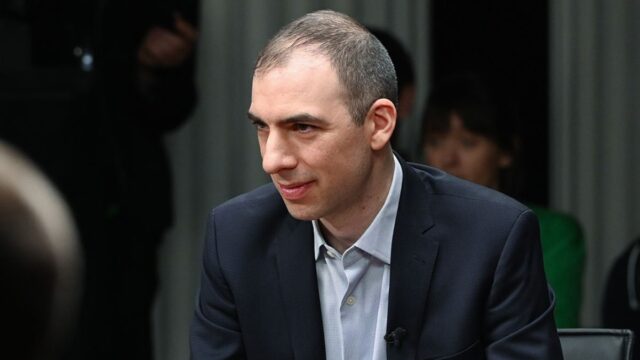
“A regulated [gambling] market is better than an unregulated market,” the American Institute for Boys and Men’s (AIBM) Jonathan Cohen told Gambling Insider during a wide-ranging interview in late April.
While even regulated gambling has its downsides, DraftKings and FanDuel have an accountability that “is far and away better than some of the alternatives” in the black and gray markets, Cohen believes.
“We are trying to set a standard for advocates to care about the illegal market. If you care about the well-being of boys and men… you have to care about Stake and Fliff [examples of sweepstakes operators that have been banned in several states]. Because without a doubt, these offshore or illegal providers are harming young men.”
A few months into a 2-year stint as AIBM’s sports betting policy lead, Cohen is an advocate, an academic, and the author of two books about US gambling policy.
Well-known in the gambling industry, he is increasingly part of mainstream coverage of the US’s exponential gambling growth. In March, Cohen played a featured role in PBS’ Breaking the Deadlock: Gambling With Your Life episode. The Brookings Institution also included him in its first prediction market discussion, alongside former commissioners of the Commodity Futures Trading Commission and the Administration for Native Americans.
With two young children and a doctor-wife, Cohen spends the bulk of his time outside of his gambling policy work juggling family things. Fortunately, during an on-the-clock interview with Gambling Insider, Cohen shared his insights on publishing, gambling policy, and, predictably, prediction markets.
Gambling Insider: Thanks for speaking today, Jonathan. You’ve made several high-profile appearances lately, including PBS’ Breaking the Deadlock and Brookings’ initial prediction market panel. Tell me a little about your background. How did you get here?
Jonathan Cohen: Through luck? Hahaha. My doctoral dissertation, which became my first book, is a history of the American state lottery system. Around the time I was finishing it and doing the initial book press, sports gambling really took hold in public discourse. There was the big New York Times investigative series about sports gambling that came out around that time…
I came to sports gambling from the lottery and observed that something was clearly changing for sports, for gambling. I wanted an excuse to dive in. The way I channel my interest in things is to write books about them. While promoting that book, I also did some advocacy work, working by day at a think tank. Now, as of this past January, I’m merging those two worlds. I’m doing the advocacy, public-appearance-type work I was doing anyway, but now for a small think tank working on gambling policy.
GI: Since you mentioned it, you’ve written two books. You just said you tend to work through things by writing a book about it. Are there any books on the horizon?
Cohen: Not imminently. I was relieved that someone else was writing a book about prediction markets, because it means I don’t have to. I don’t think I wanted to, so I’m glad that someone else is taking that on. I also am facing this existential question: Does anyone read books anymore? And now I have two kids, so I don’t know if another book is in the future. But certainly at AIBM, we’re trying to broaden our aperture of different things. So I’m working on gambling, but my boss has worked on porn. Eventually, we want to work on chatbots, video games, and the like. So I hope that even if it’s not through a book, I have an excuse to dive into the broader fields of well-being and online life.
GI: If it makes you feel any better, I have stacks of books around me.
Cohen: But people don’t have the attention span for longer than seven seconds. It’s a weird set of circumstances, where it seems like fewer and fewer people read, particularly nonfiction books. But books have not lost their status as a credentialing device. I only got to go on The Daily Show because I’d written a book about sports gambling. They don’t just say, ‘Hey, welcome to the Daily Show. Here’s a guy who knows a lot about sports gambling.’ You have to have written a book about it. It’s almost like you have to do it just as a signal. Even if literally no one reads the book, it’s still a sign that you have done the research and done the work.
GI: Since we’re on the topic of books, you edited a book about Bruce Springsteen, so you must be a fan. Do you have a favorite song?
Cohen: Yeah, I would say the Promised Land live in Passaic, New Jersey, September 20, 1978.
Gambling Insider: That’s very specific.
Cohen: The Promised Land is the best song, and that’s the best live recorded version.
GI: Back to why we’re here: Recent AIBM research found that most Americans basically expect corruption in gambling-related verticals. What can the industry learn from that, and is it addressable? Slash, how can it be addressed?
Cohen: I’ll say two things. First, there’s an instinct to make this all about gambling. But it’s actually reflective of broader trends. I’m talking about the deterioration of American trust in institutions more generally. That deterioration came to politics, the media, and higher education. Why should we be surprised that eventually it came for sports? So now that there’s money involved, why should we be surprised that there’s more conspiratorial thinking? On the one hand, that’s not any league’s fault, that’s not a gambling company’s fault, that’s not anybody’s fault. Well, it’s somebody’s fault. But we don’t have to talk about that. That’s not anything to do with gambling, per se.
On the other hand, there’s a poll from the Deseret News. I can’t remember whether it polled people in Utah or more generally, but it found that about 40% of Americans think sports are rigged. But, regardless, the leagues want that number to be zero, and anything over that would be unacceptable.
To me, it should be clear that the pleas to integrity: the insistence that gambling bolsters the integrity of sports, that these data partnerships make it impossible for someone to rig a game. People just aren’t buying what you’re selling. It might all be true and 100% accurate, and I do think detection systems are a lot better than they were before 2018, but it’s also clear that the message just isn’t resonating. I don’t necessarily have a better message, or know what the better message is. But I think that people have to wake up to the reality that their message has not penetrated the American consciousness.
GI: Previously, you’ve referenced a North Star for guiding regulatory and policy frameworks. What is that North Star for AIBM?
Cohen: It would be something amounting to preventing gambling and gambling-like activities from negatively affecting the well-being of users, specifically boys and men. It can travel very well. I’ve yet to meet anyone who won’t say that they agree. Of course, the devil’s in the details… about how you define things like well-being. But that is our ultimate goal with our work.
GI: Does AIBM have the ears of regulators or lawmakers? If so, can you share what those conversations might look like at a high level?
Cohen: These conversations are just starting, in part because I just joined the organization. Overall, the organization is relatively new, and I just joined a few months ago. And obviously, there hasn’t been any gambling news over the last three months. So it’s been a nice, quiet time.
Two conversations are happening in parallel. On the sports betting side, for those who have woken up to the issue, there’s a bit of a reckoning — a bit of wondering what exactly this is, how it got this way, and what we can reasonably do about it. That’s what we are trying to elevate for them. Some of the ideas we think are potentially impactful — not like banning credit card deposits, which is basically just window dressing and a way for a lawmaker to sort of pat themselves on the back for having done something. Which is worse than doing nothing, because you think you’ve done something and you haven’t.
With prediction markets, more so until the last month, there was a baseline education campaign that needed to happen for lawmakers and staff… explaining what these things are, how they are legal, and how many of the questions surrounding them are the same or similar to the ones surrounding sports betting… Those are the conversations we’re trying to have.
GI: You’ve said before that we’ve been playing catch-up on sports betting policy, but we still have time to meet the moment with prediction markets. Would you say we are doing that? Is that window of opportunity closing?
Cohen: I think we’re doing a little, thanks in part to the discourse around the Iran war bets and insider trading, which is naturally elevating their profile. In some ways, that helps the companies. But in other ways, we immediately jumped from the honeymoon phase into, ‘okay, what are we doing here?’
The missed opportunity with sports gambling was that many Americans first heard about it from LeBron James and Kevin Hart in DraftKings commercials. And all they heard was, ‘sports gambling is cool, it’s fun, it’s sexy, it’s easy. You can win money. Free bets, no sweat.’ Blah, blah, blah… That’s not what’s happening with prediction markets.
Whether this is fair or not, it’s apparent that when many people hear about prediction markets, they’re like, ‘Oh, that’s bad,’ or, ‘Why should we do this?’ I don’t fully agree, but I understand. If the first thing they hear is, ‘Oh, someone seemingly in the Trump administration used them to make money on the capture of Nicholas Maduro.’ Okay, yeah. I would probably not like prediction markets either. And I don’t think that’s sustainable.
Related: US Soldier Charged in Polymarket Insider Trading Case Tied to Maduro Capture
GI: You’ve spoken before about how little of the prediction market conversation is rooted in data. What sort of data do you want to see, and how should it be used?
Cohen: There are a couple of areas where I want data. Some of it is back-end stuff about the companies themselves. Like the role of the market makers. What percentage of the trading volume is from institutional investors versus consumers, and so on? That’s always been a bit of a black box.
Then there’s this other bucket of consumer behavior more generally. Other than polling, we don’t have data on player spending by demographic. There’s a lot of discourse right now on Twitter about young people, specifically 18- to 20-year-olds, whom many assume would be the sweet spot for prediction markets. The prediction markets, meanwhile, claim it’s only a small percentage of their volume, but we don’t actually know. And then there’s who’s playing, how they’re playing and why, and how they’re running into trouble. For example, for people who are in trouble, if we want to put on some guardrails, they shouldn’t just be the ideas Jon or Robyn have off the top of their heads. They should be rooted in an understanding of how people actually use these platforms and how they work.
I want data, not just because I’m a greedy researcher who wants data about everything. But I think if we want solutions, they might as well be good ones, ones rooted in a deep understanding of the product, not just a reflexive desire to crack down for its own sake.
GI: Beyond the lower age requirement, do prediction markets present other risks that sportsbooks and casinos do not?
Cohen: I think so, yes, in a couple of ways. The first is the blurring of the line between gambling and investing, specifically with the presence of prediction markets on brokerage apps. That, to me, is preposterous. And that’s actually not anything anyone in Congress is talking about, as far as I know, in their conversations. But it’s something I wrote about with Isaac Rose-Berman in the New York Times back in October. So that’s one clear danger.
This is a little further afield, but again, you can imagine how easily someone could come onto a prediction market, truly thinking it’s an investment platform, not realizing how quickly it moves and how gambling-like it can be…
With sports gambling, everyone knows you’re gambling, right? It’s called sports gambling, and you’re gambling on sports. Okay, we get it. Sports gambling has been around forever. But someone who fits the Kalshi dream model. ‘Oh, I’m interested in Taylor Swift. I know a lot about Taylor Swift. I’m gonna try to leverage my knowledge about Taylor Swift to make money.’ They might not even realize that what they’re doing is hitting the same parts of the brain as gambling, especially if they’re doing it on a brokerage app, and it looks like investing. All of a sudden, we’ve not tricked them, but someone has started doing a gambling-like thing without realizing… At least with sports gambling, everyone’s aware: this is gambling. Whether that’s good or not, that doesn’t matter. But that’s a somewhat different danger posed by prediction markets.
GI: During the Brookings panel, you said prediction markets push the illusion of peer-to-peer. Can you expand on that?
Cohen: The branding of these products and their promise — going back to the original idea of prediction markets — is rooted in a pure peer-to-peer model. And we just don’t know. Of course, market makers and institutional investors provide initial liquidity for some event contracts. But beyond that, some seem to be continuously involved in the trading process. We, or I, don’t know. I think insisting these are peer to peer when we know that there is an aspect that is not… it’s not quite false advertising, but… if it’s not true, then show me.
GI: In Breaking the Deadlock, there was a storyline about a gambling-promoting AI Chatbot girlfriend. People seemed to think that was far-fetched. Is it?
Cohen: It seems far-fetched that the big, legitimate operators would do it, but it’s not crazy to me that some lower-tier operator, a new arrival, would try to make their mark and cross this threshold that the FanDuels, the DraftKings, and even the Kalshis of the world might never touch. I was glad they kept it in, because it completely blows up the logic of this illegal market boogeyman that has defined sort of the political discourse around sports gambling. It’s like, ‘If we don’t do it, the black market will.’ Okay, then you have to do everything. Otherwise, the black market will… That logic only gets you so far. And I think that example actually exposes the absurdity of this political argument.
GI: You also spoke about a lack of friction points or speed bumps in gambling.
Cohen: The reason gambling is negatively affecting the well-being of people, particularly boys and men, is not necessarily anything intrinsic to gambling in and of itself; it is related to the frictionless, technologically supercharged version of sports gambling that we’ve put on cell phones over the last eight years. I’m not convinced that we can’t safely do online sports gambling; as it exists, it just lacks the guardrails that would prevent it from negatively affecting people’s well-being.
GI: Prediction markets, you’ve said, are designed to be manipulated. Elaborate?
Cohen: Nate Silver argues this very clearly in his book. If these are “truth machines,” as [Polymarket founder & CEO] Shayne Coplan has described them, then we should welcome inside information. The people who have the most truth are the ones in the White House or at these companies. And if the goal is to get to the truth as quickly and efficiently as possible, then we should allow insider trading. But of course, you can’t legally engage in insider trading on a regulated financial commodity. So the companies have to say they’re against all forms of insider trading. But again, on paper, the way to make production markets the most useful, as hedging opportunities, is if full insider information were allowed.
Then, of course, there are certain markets designed for rug-pull schemes, as you see in crypto. Specifically, the derivatives market. Polymarket offered, ‘Will the Market for Jesus Christ to Return Exceed 5%?’ That seems designed for some Twitch streamer to manipulate his users and make a bunch of money.
GI: Speaking of ‘truth machines,’ Prediction markets are striking deals with news media companies, and Coplan has called the markets “News 2.0.” Is there a utility there, or is it a legitimacy play?
Cohen: It’s a really good question because it speaks to the heart of what utility prediction markets offer society at large. It does seem like they have marginal utility. Not just in terms of understanding the wisdom of the crowds, but having an indicator for public sentiment, a rapid-fire poll about every issue… I don’t know whether that needs to be part of the news. Do we need people betting the temperature down to a 10th of a degree? Is that worthwhile in our coverage of the weather? I don’t think so. I understand it when it comes to politics, specifically elections. I see the social utility there. But I think the goal of these media partnerships is to legitimize and normalize the product.
GI: Something I’ve always wondered about prediction markets in relation to the wisdom-of-the-crowd claim… overall, few Americans are using them. And it’s typically men, and younger men. How is that the crowd wisdom if you don’t have a representative sample?
Cohen: Not to mention the market makers feature… It’s a good point. And the prediction markets might argue that’s only a better case for getting more people on production markets, which I don’t think is the implication of your point. But you can sort of see it that way. But, I don’t really have much to add. I think it’s a good question.
GI: You’ve said ‘guardrails on sports gambling are woefully inadequate, but at least they exist. And on prediction markets, they basically don’t.’ What do adequate guardrails look like for sports betting, gambling, and prediction markets? I assume they’re similar.
Cohen: I think many are similar. These are preliminary ideas we’re still developing and working out [at AIBM]. But, for example, things like age-based restrictions. We know that young people are highly tolerant of risk, and their prefrontal cortex is undeveloped until their 20s. So if you can’t rent a car, why should you be able to lose its value overnight betting on table tennis? And so, limiting access to people over 21, default limits for anyone under the age of 25, as Flutter has in place in the United Kingdom and Ireland.
And then, across the board, restrictions to limit loss-chasing and accelerated velocity. Or someone placing more deposits than usual, increasing their bet size within a short window, anything that seems like a clear sign of escalating or potentially escalating gambling harm. The kinds of escalation that the companies have enough data and the wherewithal to identify.
Those are the kind of guardrails that would apply pretty equally across prediction markets and sports betting platforms. Right now, all we have are optional tools on OSB that basically nobody uses. And it’s not because we need a better campaign, a better conversation, a better marketing of the tools. It’s because we need to fundamentally change how we think about letting players do whatever they want from the moment they download the app.
GI: You’ve also said there have been a lot of self-interested and/or self-motivated opinions about prediction markets floating around.
Cohen: These products are, in so many ways, such a black box that you can just sort of project whatever you want onto them. It lets you claim that they’re a great hedging mechanism, even though we don’t really have data on who is using them to hedge against what.
There’s a Upton Sinclair quote, ‘You can never teach a man something when his livelihood depends upon him not knowing it.’ (editor’s note: paraphrased)
GI: You have long argued that gambling is a public health concern. That idea seems to be gaining traction. What are your thoughts on how far we’ve come versus how far we have left to go?
Cohen: This is still early days in the discourse, and prediction markets have totally unsettled the tectonic plates of sports gambling. Just when we thought things were sort of settling in, lo and behold, production markets come along and blow up everything.
I think it’d be very premature to say the tide is turning. Polls consistently show people are, to put it kindly, sort of skeptical or don’t feel that sports gambling or prediction markets are “good for society.” Our polls show that, but a lot of other Americans are still voting with their feet and using these platforms. Whether they think they’re good for society or not, they think it’s good for Robyn or they’re good for Jon, so they’re using them. If you put up a ballot measure right now, whether state or countrywide, you probably wouldn’t get people on board with overturning sports gambling or prediction markets. Maybe prediction markets, but you wouldn’t get people on board with eliminating sports gambling.
These things take a lot of time. Think about the fact that it took, really, like, 50 plus years to do anything about tobacco, 20 to 30 years to do anything about social media, 10-20 years to do anything about opioids. Not to compare gambling, per se, to any of those things, but there’s always a lag in terms of regulation and public awareness and litigation. I see a lot of our work as laying the groundwork for when that conversation is more mature… When I don’t have to spend half my time explaining what a production market is.
Gambling Insider: Previously, you’ve noted a warning from almost 30 years ago that urged America to slow its roll, so to speak, with respect to gambling expansion. That hasn’t happened. Are we now living the consequences? How do we reset?
Cohen: This is the classic American story of unleashing a product on the public, consequences be damned, then going back later and trying to clean it up.
And there’s no cabinet-level position for gambling policy. We’ve always let the market decide how much gambling we’re going to have and what it’s going to look like. As long as there’s money involved — and there’s always gonna be money to make from gambling — I don’t see how or why it would slow down. It’s just a matter of regulating each bucket as it comes up, right? Like regulating predicted markets, regulating sports betting, regulating online casinos, regulating retail casinos, and so on.
I do think we’re at a point of, ‘okay, enough’s enough.’ How much gambling do we really need? I know that people will say, ‘Oh, offshore, illegal…’ and so on. But really, do we need iLottery, iGaming, online sports betting, prediction markets, retail casino, bingo, and so on? At what point do you start seeing diminishing returns, not to mention really damaging social consequences?
GI: Prediction markets have said that they want to financialize everything.
Cohen: What could possibly go wrong, right? For the book that I’m not going to write about production markets, I think that’s a great title.
GI: Can you predict the short-term to mid-term future for gambling in America?
Cohen: First of all, for prediction markets, a lot hinges on the Supreme Court, and so much is contingent on that.
Unfortunately for my mother-in-law, I’m not a lawyer, and have no idea how that’s that’s gonna go. With Congress, you should always bet that they’re not going to do anything because they can’t name a post office. But if they’re going to do anything, it seems it would probably center around the insider trading question, specifically national security-related markets. That’s the highest likelihood.
Then so with sports gambling — which, even in this conversation, has sometimes flown under the radar because of the gravitational pull of prediction markets — I think we’re now at a point where advocates are maybe 50-50 on offense and defense. Before, it was pure defense.
Now, there are many states, like Colorado, Maryland, and Ohio, with serious bills to bring some of these things in. I’m not predicting they’re going to pass, necessarily, but to me, the announcement of the [sports betting] super PAC is as much a confession of weakness as a show of strength. It is a sign that they feel it’s necessary… This effort is not just about reducing their tax rate and getting legalization in new states. It is also clearly about challenging lawmakers who threaten the status quo. So I don’t know how that’s going to go, but we’re clearly in phase two or phase three of sports gambling. And politically, I think that’s gonna look a lot different from the honeymoon period of 2018 through 2022.
One last Q: Back when California was voting on whether to allow sports betting, there was a big divide between Native tribes and sportsbooks, with the latter pushing to move ahead despite tribal opposition. When the ballot measures failed, the tribes basically said, ‘We hold grudges.’ Soon thereafter, the sportsbooks launched an apology tour to attempt to repair the relationship. Now they’re forging ahead with prediction markets, and I can’t understand why, given the risk of irreparable damage to industry-tribal relations.
Cohen: The keyword in my book’s title is “reckless”. Although this is not necessarily anything intrinsic to gambling in and of itself, it’s clear that the way we did it has been reckless, and the recklessness is bad for all parties involved. It’s bad for the sports leagues. It’s bad for consumers. In this case, it was bad for the companies because if they had taken a more careful, cautious, methodical approach, we could have had legal sports betting coming to California. But they flew too close to the sun — “all that goodwill that we’ve been cultivating, yeah, who needs it?” It feels like a “move fast, break things” approach from some of these gambling companies. It would be in all of our interests, including theirs, if they took a slower, more careful approach. But that’s just not how they’ve been working.
Gambling Insider edited this interview for clarity and brevity.


Gambling Insider delivers the latest industry news, in-depth features, and operator reviews that you can trust. Our team combines rigorous editorial standards with decades of specialized expertise to ensure accuracy and fairness. We are committed to delivering clear, impartial, and dependable coverage across the global gambling sector.