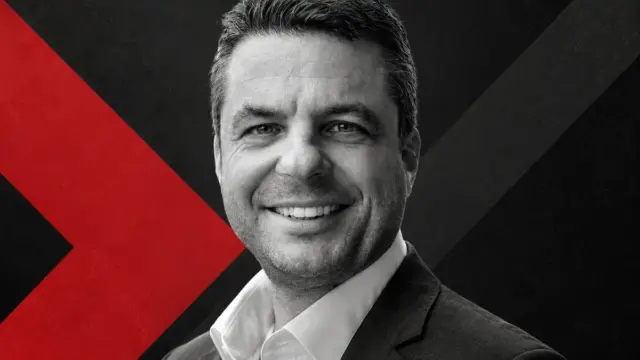
Keith Whyte Weighs in on State of RG in Gambling Insider Q&A
Gambling Insider spoke to responsible gambling veteran Keith Whyte about his career spent advocating for the safety of American bettors.

Keith Whyte‘s career in this industry started in 1995 as director of research for the American Gaming Association. Three years later, he took over as executive director of the National Council on Problem Gambling (NCPG), where Whyte served for over 27 years.
After departing the NCPG in early 2025, he launched Safer Gambling Strategies, a consultancy delivering “strategic advisory and consulting on responsible gambling issues” for corporate, NGO, and governmental clients. In that role, Whyte also shares expert commentary on gambling issues with national and trade media outlets, like yours truly.
In an expansive interview with Gambling Insider, Whyte said he considers himself lucky that clients seeking his help, including FanDuel, RecoverMe and BetBlocker, are such a good match.
“They are coming to me because of who I am and what I do, based on my 30 years in this field,” he said. “I think there are a lot of people that haven’t approached me because they know it’s not a good fit.”
Whyte’s clients also include the Massachusetts Gaming Commission, Birches Health, and the Sports Betting Alliance. Rounding out his active client list are the Rhode Island and Illinois problem gambling councils.
Post-NCPG, Whyte continues to pursue a doctorate in behavioral science at the University of Gibraltar’s Center of Excellence in Responsible Gaming (CERG). There, under the tutelage of director Judith Glenn, he is a part-time student. His doctoral research focuses on the polarization of attitudes in the gambling field. Through that work, he aims to build bridges toward common solutions while pushing back against the harmful rhetoric he says seeks to divide people into pro- or anti-gambling camps.
Shifts During Whyte’s 30-Year Career
Gambling Insider: You’ve been in the gambling industry for over 30 years. What are the biggest changes or shifts seen during your career?
Whyte: One of the biggest, still ongoing, changes is in the way Americans think about problem gambling. There was a popular article when I got into the field called Compulsive gambling and the law: From sin to vice to disease, and now it’s moved from disease to disorder. We’ve seen a big shift in how many Americans acknowledge problem gambling as a disorder. What hasn’t changed, though, is their understanding and sympathy for people with it. There’s still a tremendous amount of shame, stigmatization, and unwillingness to devote funding to problem gambling programs.
Much of my career was spent trying to push people beyond awareness of problem gambling, which we’ve generally achieved, and toward a fundamental change in perception—more like how the public views alcohol. Most people understand alcoholism, and have sympathy for people who develop drinking problems. And they understand the best approach is prevention, treatment, education, and yes, enforcement.
In a true public health approach, they assign responsibility to lots of different sectors. I think that alcohol is a great model for gambling, and a great model for responding to people who have negative alcohol-related consequences, but are not necessarily alcoholics. Still, helping people understand problem gambling as a preventable, treatable disorder is still underway.
What if Responsible Gambling Rules Required Informed Consent?
GI: Recently, you wrote an interesting piece about player licensing or certification. Can you expand on that idea?
Whyte: The concept was introduced by a mentor, Dr. Bill Eadington, at the University of Nevada, Reno. The basic concept is about creating a more informed consumer. A license sounds very heavy. But it could be a series of free internet classes—quick 15-minute webinars you click through; maybe there’s a test at the end. The goal is a formal structure or process that gives the average player the foundation needed to gamble responsibly.
Right now, we say “gamble responsibly,” but we rarely help people understand what that means. So the concept is for certification of demonstrated understanding: Here are the basics you need to know about randomness, odds, protecting yourself, setting limits, and managing money. Packaging that up, making it easy, making it online. I think we can agree there’s a baseline of knowledge the player should have. And it’s incumbent upon us to create a mechanism to provide it.
Once they’ve demonstrated that knowledge, you’ve de-risked that player to some degree.
GI: What would that look like?
Whyte: Maybe a player can’t enter a VIP program, which carries a higher risk, without first getting their certificate. You could target the under-25s. You could do it for high-risk players, or for everybody. I’m a big believer in incentives, and in aligning them to drive positive behavior among all stakeholders. Complete this click-through course, and you get a $50 bonus.
You also want to incentivize the operators. If they demonstrate that they’ve shifted the majority of players into this system, they receive recognition from the regulator. If we really wanted to get operator buy-in, a regulator could grant a reduced tax rate on revenues from players with an RG certificate. There are lots of possibilities.
The other important thing is third-party participation and validation. Currently, most player education is provided by operators, but players may distrust it. There’s a lot of room for an NGO or trusted third party to provide these services in a player-friendly way. And that license or certificate could be accepted by any operator—cross-national, even.
GI: The industry loves to say that restricting regulated operators will send people offshore. This idea could do that too.
Whyte: Yeah, it creates friction. But you can take the reverse too: maybe a regulator says that a player who’s not certified gets automatically limited. They can’t join a VIP or loyalty program until they do. Incentives can work both ways, and regulators have that huge trump card. Yes, you can lose channelization, but you can also build that positive environment.
GI: People often say that, once something is the way it is, it’s hard to change. So, would this be easier for newly legalized states to do?
Whyte: Obviously it’s a digital-first initiative. In the online space, much of this could be done through regulation rather than legislation. Newer states sometimes have an advantage because they don’t have to undo decades of regulation or systems created in a retail environment or for their lotteries. Now we’re talking about online sports betting, and it’s a really different beast.
One of Eadington’s original concepts was that licensing would help with player tracking. One of the big problems now is that player information is siloed. No one has the full picture. If the gambling certificate were tied to a unique identifier, it might allow aggregated information across providers and even verticals. That could be a really powerful tool. And many people who want to get to a single customer view; this may be one way to do it.
Technology’s Role in Responsible Gambling and Player Protection
GI: How can technology help protect players? Whether AI or something else. Though AI is the big one everyone seems hot for right now.
Whyte: I’m a technological optimist. Right now, the AI use case is focused on identifying people with gambling problems, the 2%. I think eventually AI can also help us better understand the 98% and identify, even reinforce, their protective factors.
AI will also help us better assess individual customers. Each person has a unique combination of thousands of biological, psychological, and social risk and protective factors. Obviously, technology should allow personalized interventions. I think the future is personalized de-risk messaging.
The most effective tech-driven responsible gambling messaging will never make you feel like you’re being targeted. It’ll be a slightly different advertising mix, or small nudges towards lower-volatility games. That’s the holy grail, and that’s subclinical. It comes far before people have a problem.
Once a problem develops, there’s exciting stuff coming with telehealth, apps, and blocking software. And full disclosure: those reflect three of the clients I represent, but there are lots of competitors doing similar things.
GI: I’ve never understood why RG tools aren’t mandatory.
Whyte: I generally believe that voluntary is better than mandatory, and the way to get uptake of RG tools is to provide incentives. And this goes back to the gambling license: it would still be voluntary. But if you get it, you get some benefits. If you don’t, you miss out on opportunities.
It’s never black-and-white, but incentives and positive friction can nudge people in the right direction. But at the end of the day, it still comes down to individual responsibility.
GI: A group project.
Whyte: It is! And it’s always a journey. It’s always nudging people in the right direction. It’s building social norms, too. If you talk to most kids about gambling today, they have no education, no literacy, and no incentive to gamble responsibly. Their gambling role models are people like Drake.
Problem Gambling: Whyte Backs a Whole Population Approach
GI: Speaking of Drake… for legitimate reasons, men and boys are a focus when it comes to problem gambling. How do we better address that vulnerability? And, as more women gamble, how do we ensure we don’t eventually face a bigger problem?
Whyte: Yeah, right now we orient much of our attention on men and boys. And a decade from now, we may have inadvertently created another problem by focusing too much on one gender.
On a tactical level, we have to ensure responsible gambling systems are personalized—that means taking gender into account. There are probably RG messages that appeal more to women. And some RG messages will be better suited to men or sports bettors than bingo players. We understand that in theory, but in most cases, with only limited resources, it’s a one-size-fits-all approach for everybody. Eventually we’ll get past that.
There’s one thing we know: gambling evolves at light speed, and technology just accelerates that evolution. So what we’re doing now won’t be the same in a decade. We really have to take a whole population approach. And that’s where you can personalize these messages to the user based on gender, type of gambling, etcetera. On a strategic level, we have to spend as much, if not more, time on population-level prevention, just like we do with alcohol.
We don’t wait till you’re old enough to go to the bar before the bartender sits you down and says, “Don’t drive drunk.” We start that education early, broadly for everybody, from multiple sources: schools, parents, faith communities, TV specials. And that’s eventually the approach we’re going to need with gambling; we’re going to need to mainstream it within all this other risk education.
Prediction Markets: Everything, Everywhere, All at Once
GI: Prediction markets. Rather suddenly, they’re doing everything everywhere all at once. It’s almost like the CFTC opened a Pandora’s box when they permitted election contracts. Now we’re hearing it might be too late to put that back in the box, regardless of what the courts ultimately say. What’s to be done?
Whyte: I’m trying to coin “online financial risk taking.” It doesn’t roll off the tongue, but there’s a whole class of behaviors that are gambling-like, and carry the same risks and consequences. The good news is we have 30 years of research into who’s most at risk and, broadly, how to mitigate that risk. That research will be highly applicable to online traders. Frankly, the Venn diagram of online traders and online gamblers is pretty much just a circle.
We know that young men are at greater risk, and that high volume is a sign of problems. Another thing we’ve learned over the last 30 years is that when you call gambling something other than gambling, risk increases. We learned this with daily fantasy sports and online poker. For various mainly legal and political reasons, proponents classified those activities as ‘not gambling.’ Even though they clearly are, just as prediction markets are.
Prediction markets are the latest means of offering online financial risk-taking, without having to navigate the extensive and expensive hoops of obtaining a gambling license. There have been four major US waves [poker, DFS, sports betting]; prediction markets are the fourth. Like the others, that bubble will eventually burst.
There will still be a robust online prediction market space, just as there are still robust daily fantasy, online poker, and day trading, but nowhere near previous levels. It’ll be a profitable niche, but most gambling will go back into the box, if you will. Not all of it—prediction markets may fundamentally change parts of the industry. But the public’s appetite for gambling on the Oscars is pretty niche. And most people use prediction markets to gamble, and most of that gambling is on sports. And most sports gambling will eventually go back through the state-regulated system.
GI: There’s a lot of talk among US lawmakers about gambling in a broad sense and prediction markets more narrowly. Is this the new normal? Is the concern real, or is it political posturing?
Whyte: That’s an extraordinarily good question. So, as we said at the top, one of my long-term goals has been to help raise public awareness of problem gambling as a societal issue. Largely, I think we’ve achieved that. One way you can measure that change is by watching the discussion in Congress. But much of the discussion on Capitol Hill right now is partisan, political, or posturing. It demonstrates awareness, but awareness alone is not enough; now the goal is to secure funding.
But even within that posturing, there’s an opportunity for advocates and the industry to coalesce around real, needed reforms.
Currently, there are two bills aimed at helping people with gambling problems; one would fund a research agenda, and one would fund a treatment program. It’s the first time in the 30 years there’s ever been more than one such bill, and it’s probably the first time in our history. So, things are happening.
The challenge is for the industry to embrace this pretty sensible legislation.
On Controversy and What’s Ahead for Responsible Gambling
GI: The New Republic published a piece on your move from NCPG to private consulting. It argued that you had shifted your stance on RG issues and insinuated that might be due to who’s signing your paycheck. Some have characterized it as a hit piece. Do you think it offered a fair assessment? Would you say your opinion shifted substantially over the years?
Whyte: No, I don’t think it was fair. And no, I don’t think my opinions have shifted significantly, then or now. I’m saying the same things about responsible gambling, about industry responsibility, about individual responsibility, and governmental role that I’ve said all along. Technology has changed things a lot, but if you go back and look at speeches or testimony I’ve given, it’s remarkably consistent.
GI: Recently, the NCPG welcomed Kalshi into the fold, and the move has received substantial pushback. Some have criticized it as a pay-to-play move that gives Kalshi more legitimacy than it deserves. Is that criticism warranted?
Whyte: I think NCPG will always be the subject of criticism from someone. I experienced that for 27 years. So, as a neutral organization dedicated to working with everybody, anything they did or didn’t do with prediction markets would be criticized. That was par for the course, in my experience.
GI: What about the industry right now gives you hope for the future?
Whyte: A couple of things. One is that most operators are moving beyond thinking about responsible gambling as a charitable cost. More and more, they’re coming to see it as a critical and beneficial part of their operations. They are realizing that sustainability is the key to long-term health for their company and industry. Before, a lot of responsible gambling was lip service; it still is to some extent, but there’s more sincerity, engagement, and investment. And while money isn’t everything, it’s a good marker.
I’m also hopeful that some of the technology—the really cutting-edge stuff — can be deployed in the responsible gambling space, as we’ve discussed.
Thirdly, after online gambling expands, there’s usually backlash. But I think operators are realizing that sincere concerns about gambling, and online gambling in particular, require an actual response.
You can’t just lobby your way out of significant concerns. You have to put in the hard work to build a safer product. Some operators are getting there voluntarily, ahead of the pack. And some will wait to get pushed by regulators, and there are some areas where it will come down to national legislation. But I don’t see many jurisdictions reducing gambling regulations; in most countries, regulation is increasing. So, most progressive companies in the industry have acknowledged the need to engage sincerely on responsible gambling. Problem gambling is a big driver of these concerns, especially in the online space.
Smart companies will engage sincerely to figure out how to minimize costs and maximize benefits for everybody. And that’s a journey that I’m really interested in engaging in and being a part of.


Gambling Insider delivers the latest industry news, in-depth features, and operator reviews that you can trust. Our team combines rigorous editorial standards with decades of specialized expertise to ensure accuracy and fairness. We are committed to delivering clear, impartial, and dependable coverage across the global gambling sector.