Market Focus: Alberta – Understanding the process of regulating online gaming
The Ontarian market has gone from strength to strength since its regulation two years ago, and Alberta is setting up to follow the Ontarian roadmap. How do you believe the two markets may differ once they both reach maturity?

The primary difference will be between who is in the market. More specifically, I think it will lie in the number of operators and the type of games that are provided by the lottery schemes. Alberta is a is a sizable province and, on a per capita basis, probably the wealthiest province. Its population is also skewed a little bit younger than Ontario. Therefore, it’s a different demographic – which will have an influence on what is popular with people. The other part of it is the number of operators that will go into the market. Ontario probably has more operators and more platforms than just about any other jurisdiction. I mean, the UK, with a population much larger, has more operators, et cetera. However, if you look at a population base of around 18 million people, you won’t find one, including the United States, that has the same variety of operators in one place. I don’t think you’ll find that the Albertan market will be as competitive in that sense, because the population base isn’t there.
Having a single voice for the sector to speak to the government is critical
From your experience in Ontario, what can you tell us about the involvement of the Canadian Gaming Association (CGA)?
The CGA is a trade association and a business association. Its function is to advocate for the sector, to provide educational programmes and to develop policies & recommendations to the provincial & federal governments. The CGA, for example, is working with the Advertising Standards Council to develop advertising and marketing guidance and a pre-clearance system. So the CGA is not a regulator, it’s a private sector organisation. From a policy advocacy point of view, it provides educational programmes for governments and develops policies around things relating to government with a broader scope for the sector. However, as it is in the UK and other jurisdictions, having a single voice for the sector to speak to the government is critical. When I was in government, I was general counsel at the Gaming Commission for quite a few years, trust me when I say you want to consult with one or two entities, not 11 or 12. That’s why the CGA is a critical part of the Canadian gaming landscape; because it brings people together to develop a common position that is reflective of the political culture and social culture that exists in Canada.
One of the reasons behind regulating Ontario’s market was to help tackle the black market – is there a similar motivation here?
In a word, yes. I would think it is probably closer to what existed in Ontario, which was around 85% to 90%. There is, of course, a distinction between the grey market and the black market. The black market we view as hardcore criminal activities that are stealing money from customers. The grey market, as I think people see it, is generally people who are not licensed or registered in the jurisdiction in which they are operating, but they’re not out there to steal money from their customers. They pay, have responsible gambling, and are regulated by some entity. That black market, based on my experience, is probably 5% of any market. You’re never going to eliminate the black market entirely. However, that grey market is the bulk. The challenge is moving those players and those companies from the grey market into a regulated, competitive market. They’re already competing with each other, so competition is not something new to them. Further, even if it is just 55% of the market, that’s a significant amount of revenue. I’m sure the Albertan Government is looking for that, too. The other part of it is providing assurances to the public that this product is regulated and done so in accordance with the policies, political and social culture of Alberta. Money is always involved, but it is also about providing the level of protection and regulation Albertans expect.
Can you underline the First Nation’s current role in Alberta’s provincial market, and how you expect that to change following iGaming regulation?
This goes back to the issue around the difference between conduct and management, and the regulatory side of things. Aside from the exemptions we touched on before, under the Federal Criminal Code there is another exemption – the issuance of a licence to a charitable organisation to conduct and manage lottery schemes. Now, under the criminal code, a charitable organisation is limited in what type of electronic games they can operate. A charity cannot operate a slot machine and it cannot operate most electronic gaming machines, which are important parts of the casino industry. Alberta adopted, for its casinos, a charitable gaming market which included First Nations. Not all the casinos in Alberta are on First Nation territory. However, a significant number are. The table games are licensed by AGLC. So, that is how things are developed. It’s regulated. The table games are provided by the charity that is licensed. The operator is a professional operating company that also contracts with the AGLC. That’s the model. What the minister is doing is consulting with First Nations, no doubt to see what their role and function will be.
Can you think of any pitfalls that may have been uncovered over the last two years in Ontario’s fast-developing market that Alberta is looking to avoid?
One thing is the cost of compliance which in Ontario is, at times, significantly more than what it is in other jurisdictions. I believe the AGCO, iGaming Ontario and Ontario Lottery and Gaming Corporation (OLG) are working together to ensure compliance costs are limited. Another part of that is the cost of compliance with the different audits, the amount of time and effort it takes to get registered in Ontario, plus then negotiating the agreement with iGaming Ontario. All the parties are aware of the issue and are working to find a solution that meets public policy objectives and, at the same time, from a financial standpoint makes sense. I think that’s the big one. Then regarding how information is shared back and forth, one of the big issues will be the AML and anti-terrorist financing aspect of it. Something else that happened in Ontario regarding the self-exclusion programme was the province had all the parties do their own self-exclusion, when what we should have is a single self-exclusion programme.
Alberta Gaming, Liquor and Cannabis (AGLC) will not be the provincial regulator. Can you give us any insight as to the process of establishing a new independent regulatory body?
Let’s back up and differentiate between regulation and what is a unique concept in Canada called conduct and management. Honestly, it is a very confusing one. If you look at it from the commercial point of view, the Federal Criminal Code and the criminal code applies across Canada – and the provinces cannot amend the criminal code or act contrary to the criminal code. The criminal code prohibits gambling activities other than some private bets and horseracing, et cetera. However, it does allow exemptions. One of the exemptions is provided if the provincial government conducts and manages the lottery scheme in accordance with provincial legislation. There’s also another exemption that is particularly relevant for casino operations in Alberta, which is for charities that get a licence to conduct and manage. The conduct and manage licence is not regulatory, in that sense. This is where organisations such as the (OLG), or iGaming Ontario, fall. They own, in a sense, the business. It’s on the commercial side. Whereas the regulatory side is down to the Ontario Gaming Commission. In B.C., it’s the Gaming Policy and Enforcement Branch. In Alberta – because of how the political culture is – they went with more of a private-sector operator model rather than the already established AGLC, because it is also the owner and operator of PlayAlberta. The minister will be responsible for the conduct and management of online gaming activities.
The primary difference will be between who is in the market
Looking forward, that’s two of Canada’s more populated provinces soon to be regulated; do you think it is only a matter of time before the likes of B.C, Quebec and the rest follow suit?
I think B.C. is actively interested on all accounts and moving forward with a similar model to Ontario’s. However, it’s in an election cycle, whereas Alberta just finished an election cycle. Therefore, I don’t anticipate that B.C. will make a decision anytime soon. B.C. also reportedly has been a little bit more successful in combating their grey market than Alberta or Ontario have been. That’s also part of the dynamic. Quebec is very different. It’s both a large province and a French-speaking population. French is, at a provincial level, the primary language. English is, of course, a constitutionally protected language in Quebec as well. Although many of the international operators do operate in different languages, including French – but Quebec French is slightly different to French. That’s one thing the province would have to figure out. The other aspect is that a lot of Quebec is already well recognised, unlike in B.C., Ontario pre-regulation or Alberta at present. In Quebec, there’s a higher propensity to favour governmental service when it comes to things like liquor or gambling.
What does the Minister say?
Alberta’s Minister for Service & Red Tape Reduction and the man in charge of Alberta’s online gaming market, Dale Nally, gives his insight into the process of regulation from an inside perspective
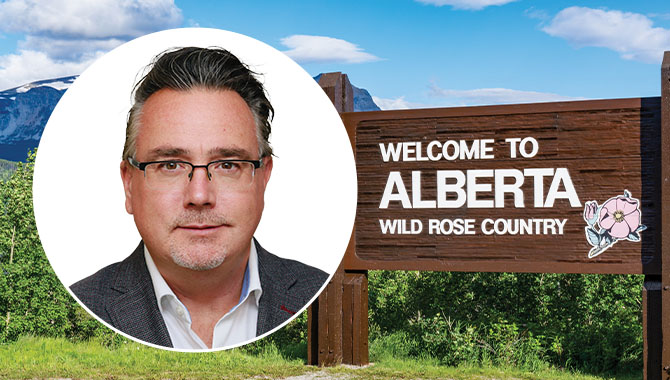
We heard loud and clear from the AGLC that it has a responsibility to PlayAlberta, which is where you can make online bets right now. We also heard loud and clear from operators that they want to participate in an open and free market in Alberta. However, they’re hesitant to come here and provide any of that information to the AGLC as a regulatory body, because they would also be a competitor in the space with PlayAlberta. Therefore, we recently passed a piece of legislation entitled Bill 16. What it does is it gives responsibility to conduct and manage gaming over to the minister, so that we have responsibility to conduct and manage gaming – so we are going to build that regulatory oversight in the ministry. We will be focusing on having a light touch when it comes to regulation. We want to keep the environment safe and responsible, but we don’t want to be getting in the way of operators either. What we want is a very lean regulatory environment. As we follow this path, if we see that we must open another regulator, we can certainly do that down the road. However, right now, we’re not looking to have a stand-alone operator for the regulatory environment. We’re just going to do it within the ministry.
Right now, we also have 46 First Nations, six of them have land-based casinos, and they are essentially in in the driver’s seat. We look at them as partners in prosperity and partners in this process. We are listening to our indigenous partners and asking them what do you want this space to look like? How do you want to play a role? Do you want to be an operator? Do you want to have more of a passive role? As per those engagements, I’ll be bringing forward some recommendations and suggestions shortly to my cabinet colleagues on what the landscape could look like, based on what I heard from our First Nations in an observational capacity on my part.
We say that Alberta leads, and the rest of the country follows. And that’s quite often what we see in many areas. In this case, Ontario got there first. We are happy to join them. We’re thrilled they’re doing a great job. I do believe that the rest of the country is going to start to follow soon. They’re going to see that iGaming is here. We’re not bringing iGaming into the province. It’s already in all the provinces.



Gambling Insider delivers the latest industry news, in-depth features, and operator reviews that you can trust. Our team combines rigorous editorial standards with decades of specialized expertise to ensure accuracy and fairness. We are committed to delivering clear, impartial, and dependable coverage across the global gambling sector.
