Senators Urge Selig, CFTC To Reiterate Ban on ‘Perverse’ Death Markets
Democratic senators have raised concerns with the CFTC about prediction market contracts that “incentivize” injury or death, and their “dangerous national security risks.”

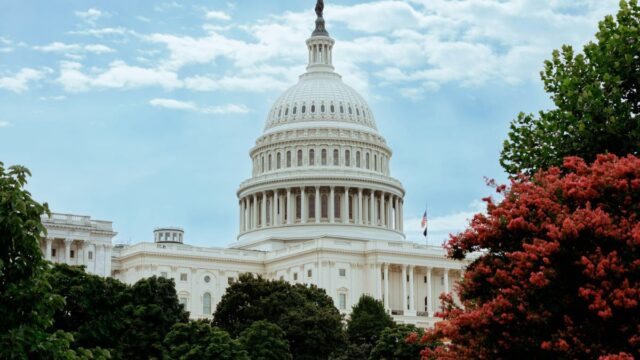
On Monday, six senators, led by Sen. Adam Schiff (D-California), penned a letter to Commodity Futures Trading Commission Chairman Michael Selig, asking the agency to unequivocally ban prediction market contracts dealing in death. Specifically, the senators ask the Commission to “clearly reiterate” it will “categorically prohibit any contract that resolves upon or closely correlates to an individual’s death.”
The letter reads in part:
We are writing to express strong concern with prediction contracts that incentivize physical injury or death, and the grave and perverse moral and geopolitical implications of these contracts. These contracts present dangerous national security risks, including creating incentives to incite violence, foment geopolitical conflicts, and disclose classified information. These concerns have already been realized in recent months as these contracts proliferate on exchanges. Under 17 CFR 40.11, the CFTC categorically prohibits contracts that involve, relate to, or reference terrorism, assassination, war, or similar activity contrary to the public interest from being listed.
You must clearly reiterate that the CFTC will categorically prohibit any contract that resolves upon or closely correlates to an individual’s death—and vigorously enforce the law through oversight and regulation.”
Alongside Schiff, signatories include Sens. Richard Blumenthal (Connecticut), Cory Booker (New Jersey),Tim Kaine (Virginia), and Catherine Cortez Masto and Jacky Rosen (Nevada).
The effort to rein in prediction markets comes as the platforms’ popularity surges amid questions of regulation, gambling addiction, and insider trading.
Letter Says Contracts Cross Ethical Line
The senators’ letter notes that under existing commodity regulations, the CFTC “categorically prohibits” certain contracts. Specifically, the CFTC blocks contracts relating to “terrorism, assassination, war, gaming, or an activity that is unlawful under any State or Federal law.”
The letter references three recent Polymarket contracts that seemingly cross the line:
- A NASA spaceship launch (“Artemis II explodes?”)
- The fate of former Venezuelan President Nicholas Maduro (‘Maduro out by…”)
- Russia’s Ukraine invasion (“Will Russia capture Myrnohad by…”)
The senators suggest that a “reasonable individual would interpret these contracts as likely prohibited under this provision.”
Permitting such contracts, they argue, is evidence of the CFTC’s lack of market control.
“These recent events highlight the lack of internal controls and safeguards to prevent insiders from profiting off of non-public information, and direct profiteering off of human suffering.”
It’s important to note that the US-facing version of Polymarket is still in beta and offers only sports contracts. Polymarket’s international platform, where such markets are available and accessible from the US via VPN, sits outside the CFTC’s purview.
Markets Underscore ‘Dangerous Incentives’
The letter details issues with the noted markets.
In the first case, the Polymarket contract considered whether NASA’s upcoming Artemis II mission would explode. Listed on Jan. 20, the contract’s “Yes” outcome reached 8% before Polymarket opted to rename, then remove it, due to backlash.
“Not only did this contract directly correlate with crewmember death,” the letter says, “it incentivized the failure of the mission and potential insider sabotage.”
In the senators’ second example, the Polymarket contract asked whether outside forces would oust Maduro from power.
On Jan. 5, a trader bought $20,000 of the affirmative: Maduro would be removed by Jan. 31. About two hours later, President Donald Trump ordered the military strike that resulted in Maduro’s capture and transport to the US for prosecution.
Citing a Wall Street Journal report, the letter notes that after Polymarket resolved the contract, the trader gained over $400,000.
The final “unambiguous” example involves Russia’s potential capture of a Ukrainian town by a particular date. Those who traded on the “Yes” earned extraordinary profit.
“In November 2025, Polymarket resolved a contract that the Ukrainian town of Myrnohad would be captured by Russian forces by November 15, and individuals who bet YES profited by as much as 33,000 percent,” the senators note in their letter.
Public reporting later found that a staffer at a DC-based think tank edited its map to reflect Russia’s control of a key area. The change was made, “despite the lack of indications that Russia had made any such advance,” the letter says.
“This is a contract that unambiguously ‘involves, relates to, or references’ war and clearly displays the dangers of listing such contracts.”
These contracts, the senators write, “underscore” dangerous incentives directly or indirectly tied to offering contracts on prohibited categories under the Commodity Exchange Act.
CFTC Must Enforce Law, Fulfill Legal Mandate
The senators warn that those with insider information can “easily” manipulate these markets for personal gain.
“Government officials, regulated entities, consultants who may be in close communication with those effectuating policy change, and other similar parties can easily act on confidential or operationally sensitive information to personally profit in markets that operate with minimal oversight or transparency, or share this information with contacts who can similarly profit. These contracts further risk incentivizing real-world harm by creating financial rewards linked to destabilizing events or physical injury, and by encouraging actors to influence or precipitate those outcomes for personal profit.”
The CFTC didn’t immediately respond to Gambling Insider’s request for comment.
Last week it, filed an amicus brief in a federal appeals case asserting the commission’s exclusive jurisdiction over US derivatives markets.
In a Wall Street Journal op-ed about the filing, Selig wrote:
“The CFTC will no longer sit idly by while overzealous state governments undermine the agency’s exclusive jurisdiction over these markets by seeking to establish statewide prohibitions on these exciting products.”
Whether the CFTC has exclusive jurisdiction may ultimately be for the courts to decide. In the meantime, these senators clearly expect CFTC to uphold existing law.
“The letter and spirit of the CEA’s prohibition on war, terrorism, and assassination contracts is clear,” they implore. “We expect the CFTC to enforce the law, and stand ready to provide the Commission the resources it needs to fulfill its statutory mandate.”


Gambling Insider delivers the latest industry news, in-depth features, and operator reviews that you can trust. Our team combines rigorous editorial standards with decades of specialized expertise to ensure accuracy and fairness. We are committed to delivering clear, impartial, and dependable coverage across the global gambling sector.