CASPR’s Nicholas Reville: Public Policy Misses the Mark on Problem Gambling
In a Q&A with Gambling Insider, CASPR co-founder Nicholas Reville discusses the industry's fixation on post-addiction policies, state legislatures being misled by operators, and compelling anecdotal evidence that GLP-1s can treat gambling disorders.

On March 4, the Center for Addiction Science, Policy, and Research (CASPR) launched Life Savings, an initiative addressing online gambling addiction. Historically focused on substance use disorders, CASPR’s new Online Gambling Research Center came out swinging with a 50-state scorecard, model legislation, and a calculation of revenue outflows from states with legal online gambling.
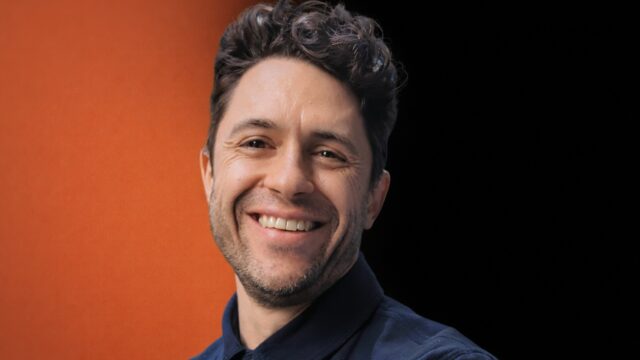
Nicholas Reville, co-founder and executive director of CASPR, is also the author of the group’s Substack Recursive Adaptation, where he writes about the “opportunity to solve one of the most stubborn challenges of modern society: addiction.”
Reville, who is based in Providence, Rhode Island, spoke to Gambling Insider last week for the better part of an hour from the US Virgin Islands, where he was vacationing with his family.
Gambling Insider: How did you end up on this path? What got you interested in substance and behavioral addictions?
Nicholas Reville: I have sort of a winding background getting here. I studied public policy at Brown. I almost went into neuroscience, then moved into policy and advocacy. I started and ran an open-source software organization, co-founded an online rights-and-privacy policy organization, and then started a for-profit company.
About 17 years ago, I met a young man in a juvenile prison in Rhode Island. A friend of mine was running a mentoring program and invited me to be a mentor for the year. His name is also Nick. He was 15 when I first visited him in prison. Both of his parents had died from heroin by the time he was 10 years old. He first went to prison when he was 11. He’s now in his early 30s. I’ve been his only stable adult in his life since we met, and it’s been a very humbling experience. Nick has been in and out of addiction and prison since we met.
Along the way, I realized we just don’t have enough treatment options to help people avoid addiction and stay stable for long periods. Sometimes I’d hear new blurbs like, “Oh, scientists are working on a vaccine for fentanyl.” If that’s possible, why isn’t it a huge national priority? Where’s the Manhattan Project for curing addiction? So I started to dig into that question and became obsessed with the radical underinvestment in novel addiction therapies.
Even with the attention that addiction and overdose sometimes receive, their social costs are still deeply underappreciated. We just haven’t put enough energy into truly solving the problem. There’s been a political tug of war for decades on addiction policy between drug prohibition, decriminalization, treatment, and harm reduction. The most liberal city, the most liberal state in the country, the most conservative city, the most conservative state: nobody’s figured out a way to solve this problem at scale. So I started writing about it on my substack Recursive Adaptation.
Gambling Insider: And this led to CASPR?
NR: My co-founder, Lindsay Holden, read my Substack, and we teamed up to start the organization. She had a very similar experience to mine. She’s an entrepreneur, has worked in Silicon Valley, and has been very successful. And for more than a decade, she’s had someone very close to her who has struggled with severe addiction, and despite her resources and focus, she’s been unable to help them become stable. She experienced firsthand, like I did, how the lack of effective treatments made it virtually impossible for some people to recover. She reached out, and we founded CASPR.
It felt like there were no organizations thinking about addiction from a strategic or structural standpoint. We had seen things in other disease areas where a novel therapy completely transforms a society’s relationship to a problem, like Prozac, Viagra, and Ozempic. You can have a complex condition with multiple layers of psychological, biological, social, and environmental causes, and a single therapeutic transforms the problem.
And that’s what we’ve seen recently with obesity: the obesity rate in the United States is falling for the first time in history. Not because we solved all of the contributing causes, but because we found a way to reduce people’s cravings with GLP-1s. CASPR is really focused on advancing strategies that can be scaled to the population level, and we believe that GLP-1s are our best shot at doing that. We fund and co-run the only two pilot programs in the world providing GLP-1s off-label for folks in addiction treatment, as a demonstration of what’s possible. We also fund some research at the VA, and we do policy work around innovation in addiction medicine that no one else is doing.
Gambling Insider: CASPR just launched its new program focused on online gambling, called Life Savings. Can you tell me about it?
NR: The strategy that works depends on the problem you’re addressing. In substance use disorders, we’ve tried every policy with only modest impacts, and what’s lacking right now is better medicines.
On the gambling side, I think the problem is, in some ways, the opposite. There’s a tremendous amount we can do with policy to prevent gambling addictions from forming, and we’ve been going in the opposite direction. With online gambling, we’ve just thrown open the gates to apps with absolutely no consumer protections. And so there’s an urgent need for organizations that think strategically about policy, politics, and how these companies operate to get involved.
In many ways, online gambling companies work just like any other app business; they try to maximize usage and revenue. But in this case, their product is acutely harmful over a very short time span: these apps will often take a family’s entire life savings in a matter of weeks. And we shouldn’t be surprised that an app designed and A/B tested to be as addictive as possible, and to extract as much money as possible, does what it was designed to do. We need the same basic consumer protections we have for any other risky product, whether it’s car seats, airplanes, or medicines. There are a dozen ways we can intervene before a gambling addiction forms, before a family loses their home. I think there’s a tremendous opportunity for well-designed policy, and the public is really waiting for it.
Related: DraftKings, FanDuel, NFL Sued Over ‘Addiction-Amplifying’ Microbetting Design
Gambling Insider: As part of your program, you published model legislation intended to combat gambling harm before it happens, suggested “pre- vs post- policies” including: a duty to intervene, a credit card ban, and raising the gambling age to 25, among others. This would be a sea change for the industry, wouldn’t it?
NR: The industry has been entirely interested in post-addiction policies, things the government can offer people after they’ve already become addicted and have already lost nearly everything they have. No one calls a gambling hotline before they’ve lost a catastrophic amount of money. No one goes to counseling for gambling addiction before they’ve destroyed their credit and lost their life savings.
But this is all the industry wants to offer to its customers, because anything that actually prevents gambling addiction would reduce how much money online gambling companies make. And every dollar they make is money a customer lost.
But the public wants common sense reforms. If someone is drunk at a bar, it’s actually illegal to continue to serve them. We should have the same rule for online gambling: when someone exhibits signs of gambling addiction, they should have an automatic timeout for a couple of months. When someone’s loss crosses the threshold from fun and entertainment into the many hundreds of dollars, they should pause. When someone tries to connect a joint bank account to a gambling app, we should require their spouse’s permission. These are the most basic kinds of protections, and they would go a long way towards making people safer, particularly young men who are at such high risk of destroying their financial futures with these apps.
Gambling Insider: You’ve also released a 50-state report card that measures how well state policies protect people from online gambling harms and bankruptcies. Notably, the rankings address only legal online offerings, not the unregulated market. Is that an oversight?
NR: This speaks to the core that online gambling companies have tried to sell state legislatures, which is that legalizing online gambling will shrink the black and gray markets.
Instead, we’re seeing the opposite. Even by the gambling industry’s own statistics, offshore gambling has grown as states have legalized gambling. And that’s exactly what you would expect: when you normalize something, put it in the app store, make it easy to connect to your bank account, run TV ads for it, make it culturally normal, you’re probably going to increase its use in all forms.
So, despite this being a false narrative, gambling companies like DraftKings and FanDuel have sold this story to state legislators, trying to convince them that legalizing gambling will have a positive impact on their states. Since online gambling is new, it’s only been legal nationally since 2018, and many legislators have only heard from one side, and the story sounded good. It gave states some moral cover to legalize and get some tax revenue.
Gambling companies tell them people are doing this anyway, so we should bring them into a regulated market to collect some tax money. And then we use some of that money to set up hotlines and counseling services. That sounds like a good story to legislators. The problem is that it’s not a true story. In every state that has legalized gambling, the total rate of gambling, legal and offshore combined, has gone up dramatically.
There are things that can and should be done to address the offshore market, but the vast majority of the harm is coming from these legalized apps.
Gambling Insider: Alongside the report cards and model legislation, you’ve attempted something unique: to estimate the net out-of-state gambling-related revenue flows in online states. Can you tell me more about that calculation?
NR: This is another way that state legislatures have been systematically misled by online gambling companies. They’ve been told they’re essentially getting free money in the form of tax revenue when they legalize these services. If you just look at this from a budget line-item standpoint, you have this online gambling tax revenue appear, which appears additive to the budget. In fact, online gambling apps suck money out of your state that could have stayed local, grown the economy, and generated more tax revenue.
When you build a casino, and I’m not some big fan of casinos, I should add, but when a casino is built, there are restaurants, there’s entertainment, there’s a bunch of ancillary services. There are people working at the casino itself and other surrounding businesses. Some people come to your state to visit your casino. It’s actually generating local economic activity, which generates tax revenue for the state.
Online gambling is just a vacuum: it takes money away from your citizens without generating any meaningful jobs and leaving only a small percentage as taxes. Those outflows are money that would have been spent on local restaurants, services, and other businesses, all of which would have themselves generated tax revenue.
We don’t yet have the granularity to say exactly how much economic activity is being subtracted from the tax base as this money leaves the state. But generally, we can say that the narrow tax revenue from online gambling apps is a huge overstatement of the actual net tax revenue impact, because you’re losing tax revenues elsewhere.
And that’s not even getting to the deeper question of where that money is coming from, who is being harmed. You’re taking that revenue from people who are addicted to online gambling, people who are losing their homes, people who are going into debt, people who are ruining their credit history. And frequently, that’s young men. It’s young men destroying their credit at the beginning of their careers, ruining their financial future before they get started.
If you just step back and ask, what would you want for a thriving community? Or a thriving society. Is there any organization that you’re a part of, a school, a club, a church, where you would go and say to that group of people, “I think it would be really good if we all started doing more online gambling”? Is there any community where you think it would be beneficial to the thriving and success of its members? I think, for almost everybody, the answer is no.
Gambling Insider: As you mentioned, CASPR is involved in various research initiatives. What have you learned so far?
NR: One of the things that, for example, GLP-1s have revealed to us is that you can have multiple substances share some of the same drivers. A lot of addiction research has focused on: what is the nicotine pathway? What is the alcohol pathway? What is the opioid pathway?
But, what we’re seeing, with GLP-1s, is that usually there’s a deeper craving dial that we all have, that you can turn up and down, and that affects your craving for sugar and processed foods and tobacco and opioids and even things like water and even potentially behavioral addictions. I think at its root, addiction can take many forms, and it’s really the same set of neurological and psychological problems.
Gambling Insider: Do you expect to expand GLP-1 trials to gambling disorder?
NR: We don’t yet have any evidence either way about whether GLP-1s can be effective in gambling disorder. But the anecdotal evidence that we’re hearing is compelling. People report that their cravings to gamble, that compulsive urge, often drops dramatically or disappears completely, and they are able to refocus on things that they really care about.
Gambling Insider: Prediction markets are getting a lot of attention these days. One of the policies in CASPR’s model legislation deals explicitly with closing the “‘investment contract’ sports gambling loophole.” Why is that important?
NR: There’s a new coalition, not related to our organization, called Gambling is Not Investing. I think it’s a great name. It really gets to the fact that companies, particularly Kalshi, are presenting themselves as investment products or prediction markets, when in fact the vast majority of their business is sports betting. Kalshi is even integrated into Robinhood, an investment app. Why does Kalshi want to be seen as an investment service? Because investing apps are federally regulated, they can get around the state-by-state rules governing gambling apps.
From just a policy standpoint, this is categorized incorrectly; betting on sports should be classified as gambling and regulated as such.
Every state in the country has an interest in closing this loophole that allows prediction markets to offer sports betting. If you have legal online gambling in your state, and you’re taxing it, Kalshi is offering sports gambling to your citizens without paying any taxes. So you need to bring them into the taxable process. If your state doesn’t allow online gambling — California doesn’t, Texas doesn’t, Utah doesn’t, many others don’t — if you don’t allow it, then Kalshi is providing a service that’s illegal in your state, and you also want that loophole closed.
So these states, wherever they are in this question, are motivated to close this loophole. Thirty-six states have already joined a coalition of attorneys general to try to close it. There are now [multiple] bills introduced in Congress … to close this loophole. And every state government should push its members of Congress to get this done.
Gambling Insider: Are prediction markets inherently bad?
NR: There are clearly positive economic uses for prediction markets, and there are also dangerous ones. There are markets that bet on things like war, which really encourage insider trading and insider betting that impact society in a number of ways. A prediction market is not a neutral observer. The market’s existence also affects the outcome, and there may be harmful consequences.
We should not allow people to bet on markets that incentivize potentially catastrophic situations. So, we should disallow the dangerous markets and regulate the gambling markets as gambling. That will bring prediction markets back to their core, useful economic role.
Gambling Insider: Northwestern Mutual recently released a report that found Americans confronting a nihilistic financial future, especially millennials and Gen Z, are turning to sports betting and prediction markets.
NR: If you create a product, a/b test it, refine it to be as addictive as possible, design it to take somebody’s money as quickly as possible, then there’s going to be some part of the population where the product works as it’s designed, and it takes all their money. There’s no reason to allow that.
And gambling is not the frame by which we want young people to be thinking about money. It’s not how we want them to “invest”. It’s not where we want them putting their energy and focus, because in the long term, it’s not even zero-sum; it’s negative sum. It’s not additive to our economy, society, or communities. But it won’t take much to turn this around; a few commonsense policies can change everything.
This interview has been edited for clarity and brevity.


Gambling Insider delivers the latest industry news, in-depth features, and operator reviews that you can trust. Our team combines rigorous editorial standards with decades of specialized expertise to ensure accuracy and fairness. We are committed to delivering clear, impartial, and dependable coverage across the global gambling sector.