ProphetX Gets CFTC Approval to Operate Prediction Market
Move from sweepstakes comes as questions remain over prediction markets and market share

ProphetX is ready to transform again.
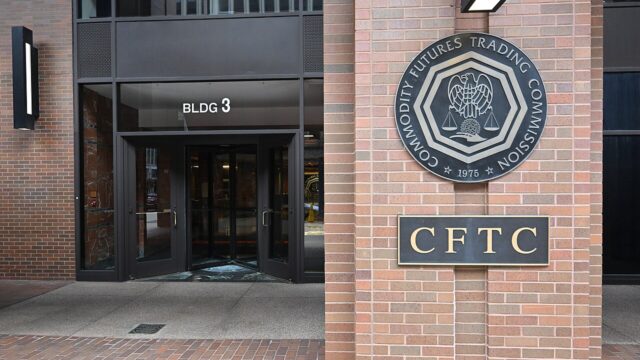
The former state-licensed sports betting operator (then known as Prophet Exchange) that became a peer-to-peer sweepstakes exchange two years ago announced on Thursday it will now venture into the prediction market realm. This comes after the Commodity Futures Trading Commission signed off on ProphetX’s designated contract market (DCM) and derivatives clearing organization (DCO) applications this week.
By making the switch, ProphetX is looking to expand its footprint, as several states have banned sweepstakes gaming apps. Sweepstakes operators allow players to buy tokens that can be cashed out for real money. Currently, the CFTC, a federal agency overseeing such exchanges as prediction markets, is allowing those operators to offer sports markets on their platforms.
In a statement, CEO and Co-Founder Dean Sisun said ProphetX is ready to help shape the future of prediction markets.
“This approval positions ProphetX to become the first sports-native direct-clearing prediction market in the United States,” Sisun said. “We can now expand our best-in-class sports event market offerings to millions of Americans across the country while competing on a level regulatory playing field.”
Uncertain Future for Prediction Markets and Sports
The future of prediction markets in the U.S. remains cloudy at best for the time being. The CFTC released on Wednesday its proposed rules to allow trading in sports markets. Those will appear in the Federal Register on Friday, which will start the 45-day public comment window.
However, even as the CFTC moves forward, several states are taking current operators to court for operating as unlicensed sportsbooks in their jurisdictions. Members of Congress and the Senate have also raised concerns about the legality of federally regulated markets offering contracts on sports.
“The CFTC was created to oversee commodity markets, not to become the nation’s sports betting regulator,” said Mick Mulvaney, a former congressman who now serves as the executive director of Gambling is Not Investing, in a statement Wednesday. “Congress never intended for federal derivatives law to become a backdoor for unsafe sports gambling.”
The question of whether prediction markets can offer sports contracts will almost certainly wind up with the U.S. Supreme Court, either with one or more of the state cases getting there or a potential legal challenge on the proposed rules once the CFTC enacts them.
Launch Expected Early Next Week
The press release did not indicate when ProphetX would make the switch. However, in a Thursday email to ProphetX customers, the operator said it will go offline on Monday to perform the necessary work to convert the site from sweepstakes-based to a “sports prediction market.”
Current customers will not need to do anything as part of the change, the email added. In addition, any cash balance will also carry over to the prediction market platform.
ProphetX likely won’t be the only former sportsbook to make the switch to becoming a federally regulated prediction market. Novig, which operates a similar sweepstakes exchange, submitted its application to the CFTC in late January. A week later, Sporttrade, which had previously operated as a state-licensed sportsbook, filed its paperwork.
According to the CFTC, it received ProphetX’s request on Oct. 31, 2025.
Crowded Market in PMs, Can Sector Grow?
ProphetX will be entering the prediction market business nearly 18 months after the CFTC began allowing those operators to offer contracts on sports. That came shortly after the inauguration of President Donald Trump in January of last year.
Kalshi currently dominates the U.S., with a Bank of America report earlier this year estimating it holds around 90% of the market. It’s expected that Polymarket’s American operation will eventually cut into Kalshi’s market share, as will DraftKings, Fanatics, and FanDuel as their platforms mature.
And while these operators offer markets beyond sports, that’s the sector right now making up the lion’s share of their trading. A Pew Research Report from late last month indicated sporting events cover 80% of Kalshi’s trading volume.
So, if there’s already a dominant player, why get involved in prediction markets? There are a couple reasons for that. First, it opens more doors for operators, allowing them to attract customers in other states. For now, at least, pending the ongoing legal battles.
Second, unlike the country’s sports betting boom of the early 2020s, a dominant operator (or operators) won’t necessarily squeeze out smaller competition. Traders looking for a market will likely gravitate toward the operator with the best price. In addition, having access to multiple operators provides more opportunities for arbitrage wagering.
So ProphetX may not necessarily become one of the bigger prediction market operators, but there should still be space in the market for it and others to make a foothold.


Gambling Insider delivers the latest industry news, in-depth features, and operator reviews that you can trust. Our team combines rigorous editorial standards with decades of specialized expertise to ensure accuracy and fairness. We are committed to delivering clear, impartial, and dependable coverage across the global gambling sector.