California Horse Racing at Stake: Why Santa Anita Tried ‘Racing on Demand’
Bill Nader has the type of job many would envy. For 10 months out of the year, his office as the president and CEO of the Thoroughbred Owners of California is located at Santa Anita Park, a track that opened more than 90 years ago in Southern California next to the San Gabriel Mountains.

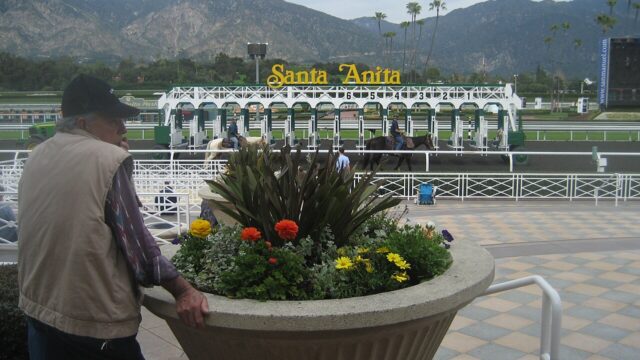
“I walk out and I look over, whether it be the paddock or the racetrack, (the view) is right up there,” he told Gambling Insider earlier this week. “You can do your top five, or you can do your top 10 best racetracks in the world, and this one’s going to be on the list.”
The views from the office may be stunning, but the outlook for the sport Nader’s involved in, a sport he grew up watching, is not nearly as breathtaking in California. It may be the most populous in the nation with one of the world’s largest economies, but when it comes to racing, California lags behind its peers.
Why California’s Behind The Pack
In the sport of horse racing, Santa Anita, along with fellow Golden State tracks Los Alamitos and Del Mar, operate with one arm tied behind its back. Unlike their competition, the California tracks do not have a second revenue stream to supplement purses. As a result, it’s led many owners, trainers, jockeys, and horses to race elsewhere.
Take Friday’s cards for example. Santa Anita is running eight races, and five of those have purses of $36,000 or less. Its top race is a $71,000 allowance optional claimer. Friday’s entries total 55.
Across the country at Aqueduct in New York, four races – half of the card – have purses of at least $42,000, with its highest purse an $88,000 allowance optional claimer. There are 61 horses scheduled to race in Queens.
In Kentucky, Turfway Park canceled due to pending inclement weather, but three of its nine scheduled races were for purses of at least $100,000. Turfway drew 114 horses for its nine races.
Tracks in New York get a boost for their purses thanks to casino gaming in the state. Kentucky uses slot-like historical horse racing (HHR) machines to bolster payouts.
Last weekend, Santa Anita tried to change that by introducing a new HHR format, which it calls “Racing on Demand.” It lasted just a couple days before state officials paid a visit to the Arcadia track and confiscated the 26 machines along with the money inside them.
The track has filed a lawsuit against the state to get the machines back. Whether the track can convince the courts to get the machines back remains to be seen. As a result, the future of California racing looks just as murky as it is for those machines.
HHR vs. Santa Anita’s Historical 3×3
Before we go further, let’s go over the types of HHR machines available in Kentucky and other states and compare that to what Santa Anita tried to offer. Here’s a three-minute video that explains Kentucky’s machines.
Kentucky considers these HHR machines to be parimutuel devices, which is why they’re allowed.
Santa Anita’s machines are not as complex. Track officials there sought have taken an existing live parimutuel wager and incorporated it into historical horse racing. From the pictures I’ve seen, Santa Anita’s machines eschew the slot machine entertainment most HHR games provide.
California has allowed the 3×3 bet for a couple of years. To win the jackpot, bettors must hit three trifectas in the three selected races. Bettors can win smaller prizes if as few as three horses finish in the correct position. Bettors can either handicap the race to select their horses and order, or they can choose a “quick pick,” that chooses for them.
Like other parimutuel wagers, the 3×3 bet includes a takeout, which is a percentage the track withholds to cover expenses, purses and other costs of doing business. With 3×3 live racing, the takeout is 22%. So, if $1,000 was wagered, the prize pool to bettors would be $780, plus any carryover from previous pools when the jackpot was not won.
Looking at the pool sizes from Santa Anita charts, the 3×3 wagers attract a fraction of the money more traditional wagers. It seems unlikely historical 3×3 would perform better. Then again, it beats not having anything.
In a letter last week to California Horse Racing Board executive director Scott Chaney announcing the launch of Racing on Demand, Santa Anita Senior Vice President Scott Daruty called the new product “an important initiative for the sustainability of” California racing. He added the track would work with other stakeholders to ensure its success.
Santa Anita Takes Action
For years, almost anyone involved in California racing would tell you things need to change. Chaney, who heads the state regulatory agency overseeing the sport, told me in a 2023 interview that the model was not sustainable then. It certainly has not gotten better as things remain the same.
In court documents, Santa Anita officials said they had provided the California Department of Justice with “a very detailed legal analysis” regarding the possibility of hosting such machines at track.
For nearly a year, DOJ could not be bothered to reply to Petitioner’s very detailed legal analysis regarding the operation of Racing on Demand tote terminals, and when asked for clarification during the warrantless raid, DOJ could not provide a direct statutory provision that it claims was violated.”
Santa anita park legal complaint against California department of justice
Most parents, including myself, have heard the argument Santa Anita is putting forward. However, there is something to be said about asking for forgiveness rather than seeking permission.
Whether or not Santa Anita gets the machines back, or whether or not you agree with the track’s tactics, you shouldn’t blame Santa Anita for trying something. If anything, what Santa Anita did last week means state leaders must now consider what it can or should do to help an industry that employs thousands of workers.
The track has the support of the TOC, and it has the support of four unions. Earlier this week, the labor groups wrote to state Attorney General Rob Bonta and urged his office to return the machines.
The Possible Impact of Losing California Racing
Horse racing nationally has struggled. Betting peaked around the turn of the century, with annual handles around $15 billion at American tracks. Now, the amount wagered hovers around $11 billion, with the sport reporting decreased activity in five of the last six years.
Most Americans pay attention to racing just once a year, on the first Saturday in May for the Kentucky Derby. There may be a second wave of interest if a Triple Crown is at stake in the Belmont. Aside from that, few pay attention to it the rest of the year.
That’s why it’s important for the sport to remain viable in California. Losing the largest state in the nation would have detrimental effects across the country. Nader estimated about 20% of horse racing wagering stems from California, either on races held in the state or by local bettors wagering on races elsewhere.
“If you lose racing here, you lose a lot of that,” he said. “You have to have that foundation. The foundation is your home.”
But for Nader, who has grown up with the sport and can recount races that happened decades ago, the betting is just a part of what’s at stake. The death of California racing would lead to thousands of people losing their jobs or leaving the state to continue working in the industry elsewhere.
And it would also put the future of properties like Santa Anita and Del Mar, located just a couple furlongs from the Pacific Ocean, at risk.
“The one thing that is really hard to replace are these beautiful racing venues, too,” he said. “I would not leave that out of the equation… These are the kinds of things you don’t want to lose.”


Gambling Insider delivers the latest industry news, in-depth features, and operator reviews that you can trust. Our team combines rigorous editorial standards with decades of specialized expertise to ensure accuracy and fairness. We are committed to delivering clear, impartial, and dependable coverage across the global gambling sector.