Wisconsin Sports Betting Bill Heads to Governor, but Questions Remain
Will requirements for tribal revenue keep national sports betting operators out of the game in Wisconsin?

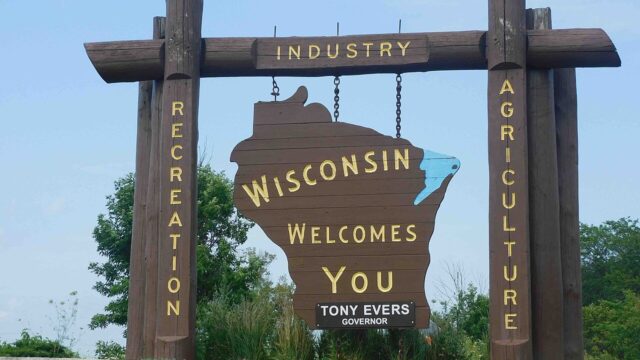
Statewide sports betting in Wisconsin is just a signature away from becoming reality. However, what happens after that, if Gov. Tony Evers signs Assembly Bill 601 into law, remains a mystery.
Wisconsin lawmakers approved a plan that creates a “hub-and-spoke” sports betting model. It’s based on how Florida and the Seminole Tribe agreed to let the latter operate statewide, a plan that overcame a lengthy legal challenge.
Under “hub-and-spoke,” anyone of legal age in the state can download an approved sports betting app and place a wager through it. The operator taking the wager would locate its servers processing the transaction on tribal land, thus keeping it within the bounds of federally approved tribal gaming.
Here, though, is where the uncertainty comes. Whose servers will be processing wagers, should online sports betting become legal in Wisconsin?
Can Wisconsin Sports Betting Work for Operators?
Because the federal government regulates tribal gaming, there are a few different standards in place. Under the Indian Gaming Regulatory Act, which Congress passed in 1988, tribes entering into gaming compacts with states must be the primary beneficiary of the operation.
That’s not to say a tribe can’t partner with anyone. Several tribes have agreements in place with gaming companies to manage the casino and resort operations.
However, casino gaming is far more lucrative than sports betting. The former provides a more consistent and higher revenue stream. Sports betting margins historically are smaller, although operators like DraftKings and FanDuel have enjoyed higher margins thanks to their same-game parlay products.
So, it’s not out of the question that some sportsbooks may choose to forgo entering Wisconsin as the tribes will be the primary beneficiary, i.e., receive the bulk of the proceeds, from online sports betting.
Reports indicate Wisconsin tribes would receive at least 60% of the sports betting revenue. In Florida, Seminole-owned Hard Rock Bet is the only approved statewide sports betting operator. Others could enter, but they would have to agree to give the Seminole Nation a 40% share.
As a result, Wisconsin tribes may end up partnering with companies like Kambi, which can provide online sports betting services. Those platform providers can offer many of the same types of wagers that you see at the well-known brands, but it’s unlikely Wisconsin bettors would see nearly the same amount of promotions and bonuses that national operators offer.
Prediction Markets Give Operators an Option
In the past, sports betting operators did not have another option of entering a state, but in 2026, some sportsbooks are leaning into new federal regulations allowing prediction markets to get into sports.
DraftKings, Fanatics, and FanDuel all have unveiled their prediction market platforms in recent months. Currently, DraftKings and FanDuel have kept sports markets out of Wisconsin. However, that could change fairly easily.
And it’s not like sports betting operators are being casual with their prediction market platforms. Earlier Wednesday, FanDuel was offering a free gas promotion in Tampa, just in time for March Madness.
Something similar could happen in the not-so-distant future in Milwaukee, Madison, or even Oshkosh.
B’Gosh!
If you’ve visited our site recently, you know that whether prediction markets can offer sports contracts is far from a sure thing, as the question is being argued in courtrooms across the country – even in Wisconsin as the Ho-Chunk Nation has filed suit against Kalshi and Robinhood.
Still, don’t be surprised if sports betting operators decide that’s the best path moving forward.
This scenario could also be in play should Evers chooses to veto the bill. According to the Senate Clerk’s Office, the governor will have six days, excluding Sundays, to consider the bill. It will become law if Evers signs it, or if he neither signs it nor vetoes it during the six-day window. Should he veto the measure, lawmakers would need two-thirds majorities in both chambers for an override.


Gambling Insider delivers the latest industry news, in-depth features, and operator reviews that you can trust. Our team combines rigorous editorial standards with decades of specialized expertise to ensure accuracy and fairness. We are committed to delivering clear, impartial, and dependable coverage across the global gambling sector.