Casino Gambling on Overseas Military Bases Earns Big Bucks but Courts Big Problems
US Army Veteran Dave Yeager developed a slots addiction while serving on overseas bases. Now he helps others, while pushing the military to offer more prevention, intervention, and treatment options.

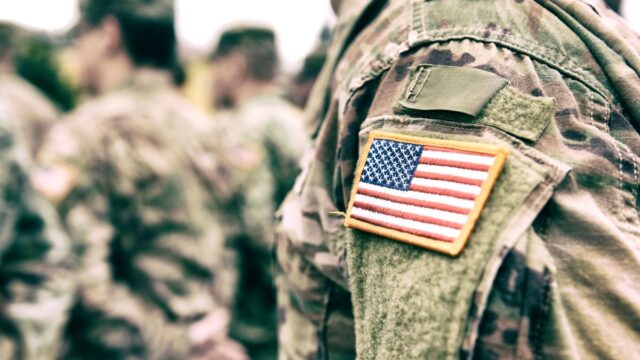
Not long after 9/11 shook America, Dave Yeager landed on the US military base in Yongsan, South Korea.
Yeager was en route to meet his Army unit for a yearlong stint at Busan Naval Base on South Korea’s southeastern tip. But that first night in Yongsan, with his wife and two young children left behind at home, he felt jet-lagged and stressed.
Unable to sleep, Yeager got something to eat and set off to wander. Soon he stumbled upon a casino-style slot room tucked away on the base. Yeager says the find was a complete surprise, since gambling rooms are not part of military infrastructure in the US. In fact, Congress banned gambling devices from domestic bases in 1951.
Relationship Between Military and Gambling Fraught
Evidence suggests veterans and active duty members are more vulnerable to gambling harms than civilian populations. They are also typically more hesitant to seek support, due to fears of losing rank, security clearance, or a dishonorable discharge.
Yet, overseas military bases still host slot and card rooms. For the Army, Navy, and Marine Corps, the Army Recreation Machine Program (ARMP) operates the slot program. Similarly, the Air Force manages its own version. According to Wired, as of last summer, the ARMP alone operated 1889 slots machines in 79 military locations, including bases in Germany, Korea, and Japan.
At their peak, these facilities generated more than $100 million annually. But on-base gambling isn’t regulated like state-sanctioned offerings and lacks the responsible gambling regulations required in most jurisdictions. For young service members, the rooms may be their introduction to gambling. And for some, that exposure marks the beginning of a troubled relationship.
For Yeager, Gambling Addiction Rooted Overseas
Still, as a young man from Eastern Pennsylvania, Yeager had spent time in Atlantic City. There, he told Gambling Insider, he’d “take a certain amount of money, spend it, and then go home.”
That night in Korea, he expected the same; he’d bring some money, play until he was tired, and head back to his room to sleep. That would be it. But as he started to wager, he remembered feeling his shoulders loosen and fall as the stress began to dissolve.
Then he won. With the win, Yeager says all his stress, worry, and anxiety faded away.
It didn’t stay gone, but that moment, he says, planted the seed that would eventually lead to addiction and four suicide attempts. When he relocated to Busan not long after, he soon found that base’s gambling parlor. His disorder took root in that dimly lit room, he says.
Over the next months, what started as a “fun little getaway” became an ever-increasing need. Yeager’s addiction ultimately led to the end his first marriage. Also, after twice being caught stealing from his unit, gambling ended his military career. But even after admitting his theft, he says he doesn’t remember the military acknowledging his gambling, just the resulting lies and the “money thing.”
The military, he says, didn’t know what to do with him.
Road to Recovery Often Bumpy
Fortunately for Yeager, military brass gave him an honorable discharge. That forgiveness allowed him to access services through Veterans Affairs (VA), including its gambling treatment program, which he entered in 2007.
His recovery didn’t happen in a straight line. Once he felt recovered after his initial rehab stint, he largely abandoned his regular Gamblers Anonymous (GA) meetings.
During that time, he reconnected with his high school sweetheart, and they married in 2011.
Soon after, he relapsed. By the end of 2019, he was in “so deep,” and his wife, he recalls, had no idea. After battling a return of suicidal thoughts, Yeager says he “chose life,” came clean with his wife, and returned to the VA’s gambling treatment in early 2020. He completed that second treatment just before the first COVID lockdowns.
These days, Yeager is back in Eastern Pennsylvania with his wife, three kids, and now three grandkids. He works as a behavioral health specialist with Kindbridge Behavioral Health, which provides online therapy for gambling, gaming, and other mental health issues. At Kindbridge, Yeager conducts screenings and intakes and has a caseload of clients—many of whom are military or veterans. He’s also written Fall In: A Veteran with a Gambling Addiction, a book about his experience with gambling disorder, and hosts a podcast focused on service members, veterans, and gambling.
Service Members Have Higher Risk of Developing Gambling Problems
Veterans and service members are known to have more exposure to risks associated with gambling-related harm, including stress and trauma (PTSD). Like men and boys generally, they also tend to exhibit more risk-taking and impulsive behaviors, traits associated with a higher likelihood of gambling harm.
As a result, service members are twice as likely as civilians to develop gambling problems. Research also indicates an association between gambling addiction and heightened suicide risk. Among veterans who seek treatment for gambling addiction, roughly 40% have attempted suicide.
In the general population, gambling disorder has serious consequences for individuals, families, and communities. For members of the armed forces, those consequences include potential impacts on military readiness and national security.
Historic Lack of Federal Problem Gambling Support Finally Shifts
Despite these risks, the government until about seven years ago excluded gambling addiction from federal research priorities, leaving critical evidence gaps in best practices for prevention, intervention, and treatment.
In 2019, Congress started mandating military screening for gambling addiction. But RG advocates say screening without research into best practices for service members falls short of what’s needed. Further, the lack of dedicated funding available for the Department of Defense or VA clinics for prevention and treatment ultimately leaves those affected without adequate support.
Positively, the FY 2026 Defense Appropriations Act allowed federal funding to study gambling addiction in the military for the first time. The funding will be available through the DoD’s Peer Reviewed Medical Research Program (PRMRP).
Advocates, including the National Council of Problem Gambling (NCPG), which lobbied for the inclusion, welcomed the news.
“This is an important step forward,” said Heather Maurer, NCPG’s executive director, in response to the announcement.
“For the first time, federal research funding is being made available to study gambling addiction. This development is especially critical for servicemembers and veterans who face elevated risk and have historically been underserved by research.”
Yeager, who worked with the NCPG on its lobbying efforts and will serve on the program’s consumer review panel, is celebrating the news as a win, telling Gambling Insider:
This is the first ever federal funding for any sort of gambling study, and it’s happening within the military, within the Department of Defense, Department of War, whatever you want to call it.. And to have that available and to be part of the process to help select who does the work. What an honor.”
PRMRP Funding Decisions Expected in Early-Mid 2027
Gambling Insider contacted the DoD’s office of Congressionally Directed Medical Research Programs (CDMRP), which administers the PRMRP, to ask about funding timelines.
CDMRP Public Affairs responded and confirmed gambling addiction will be eligible for funding opportunities that “span the full pipeline of research from basic discovery to clinical testing of potential interventions.”
Timeline-wise, the PRMRP will receive and review applications and submit funding recommendations over the coming months. Later, the program will “release two information papers that provide details on received applications and those recommended for funding under each topic area.”
The first paper will cover two funding opportunities and be available by the end of March 2027, according to the CDMRP. The second will address five funding opportunities and be available by the end of May.
Yeager says although he can’t reveal who, he’s aware of several organizations that have applied for funding under the gambling addiction category.
Good Start, but Military Has ‘Long Way to Go’
While a step in the right direction, Yeager says the military still has a “long, long way to go” to address gambling addiction in its ranks.
“I think that the military has always known that gambling can be an addictive thing. But there’s been this level of deniability because there just hasn’t been enough damage to do anything about it,” he told Gambling Insider.
I’m working with a military service member who is working with me because it’s kind of off the books, if you will. There are no clinicians within the military system who have specialty training in gambling that I’m aware of. And if they did, people would be afraid to go to them because they have to report back to the command.”
In Yeager’s experience, the “super high” stigma around gambling problems in the military is something he calls “the perfect storm.”
In basic training, I learned from day one my job was to take all my problems, all my issues, and leave them at the door because we had a mission to accomplish. It’s not a bad approach to take when you’re in the military. You have a mission to accomplish… I think where we fall short is once that mission’s over… How do you unpack those bags? I think that’s where the opportunity is.”
While the military’s demographics are shifting, he said the culture still largely revolves around young men.
It’s still a predominantly male-driven, competitive group of people who are thrown right into stressful situations and told to suck it up and drive on. To ‘drink water, take a Motrin.’ ..Then you throw in combat, where post-traumatic stress becomes an issue. Even during the transition from the military to civilian life… that alone causes an intense amount of stress.”
Pentagon Encourages Service Members to Seek Support
Gambling Insider emailed the Pentagon with questions related to this story. We wanted to confirm the number of active machines, current revenues, and any partners or suppliers involved in the on-base program. We also asked about potential threats to national security. Although the Pentagon replied, it did not answer those queries.
It did address questions about the support provided to affected members and criticisms that the organization’s culture discourages seeking help.
A Pentagon official told us the Department of Defense encourages any member experiencing gambling harms to visit their nearest Military Treatment Facility for screening and treatment. They also suggested seeking support for addictive behaviors or other mental health challenges through Military Departments or the Department of Veterans Affairs.
Any member doing so would not be penalized, the official added.
They said the Department encourages members concerned about their gambling to access specific resources like Military OneSource for trusted information, resources, and confidential support. Additionally, they suggested visiting a Military Health System Mental Health Hub for virtual or in-person counseling. The official also noted that the TRICARE Health Benefit covers treatment for military family members dealing with addiction.
They also highlighted InTransition, a free, confidential program for active-duty service and National Guard members who need access to mental health care during periods of transition. The program also serves reservists, veterans, and retirees in need of transitional support, which, as Yeager noted, can be uniquely stressful.
Blanket Ban in On-Base Gambling Not the Answer
While Yeager wants the military to do more to offset gambling harms, he doesn’t think the military should outright remove gambling rooms from the overseas bases. When Congressman Paul Tonko recently floated the idea, Yeager publicly opposed the effort.
For one, he says the revenue collected “draws in millions” for the military’s Morale, Welfare, and Recreation program, which supports members while away from home. Also, he says removing the machines would likely just push troubled gamblers into the host country’s casinos, adding another layer of danger.
“If it’s gonna be dangerous, at least keep them on the reservation, if you will,” Yeager says.
Instead, Yeager proposes that the military use one or 2% of the collected revenues to fund education, screening, and treatment.
“You’ll still have plenty of money for the MWR fund,” Yeager says. “But now you’re starting to teach soldiers, sailors, airmen that this can be an addictive thing and that there is help available.”
Yeager also suggests that the military include gambling education in some of the regular training sessions held each year. That, he believes, would help make gambling something that’s okay to talk about.
He also thinks the military should retrain its existing clinician force to teach them the nuances of gambling and how to address gambling problems. In doing so, he thinks people would be surprised at how many members needing support would “come out of the woodwork.”
“Everything moves slowly in the military until it doesn’t,” Yaeger commented.
Ideally, if I were to see something happen within the next few years, it would be an increase in education and awareness. Not only among military service members but also in the clinical community.”
Whyte: Military Functionally a Regional Casino Operator
During an earlier Gambling Insider interview with Keith Whyte of Safer Gambling Strategies, we asked the former NCPG executive director how the military should proceed.
Like Yeager, Whyte doesn’t expect the military to abandon its slots program.
He does, however, believe the military should require the same responsible gambling features that states expect of their operators.
“The problem starts at home, because the United States military is, functionally, a regional casino operator,” said Whyte.
I’m not calling on the machines to be eliminated, but I’m calling for the military to make damn sure that they’ve got extensive prevention educational programs in place. The military slot machine program, which is just a funny thing to say, should have extraordinarily extensive responsible gambling features: limit setting, carded play, etcetera. There’s a lot you can install on those machines.”
Awareness Key to Getting Help for Service Members in Need
For Yeager, his second recovery experience was different because he realized, he says, that he’s powerless unless he stays connected to his recovery. So, he’s dedicated himself to it.
“In January it’ll be seven years since I started this journey of recovery. I’ve never felt stronger,” he told us.
I’m much more transparent about what’s going on in my life. I’m much more transparent about urges. I have three grandkids that I’m actually able to sit with and enjoy the time with them, versus my mind going, ‘What’s next? What’s next?’ I don’t have to lie, and I don’t have to remember what I said because of the lies. So, It’s a different world now. My life is very different today than it was before. I get to use not only my education but my experiences to try to help other gamblers seeking recovery.”
The more that we can raise awareness of problem gambling in the military, Yeager says, the closer we move to getting these men and women the help that they need.


Gambling Insider delivers the latest industry news, in-depth features, and operator reviews that you can trust. Our team combines rigorous editorial standards with decades of specialized expertise to ensure accuracy and fairness. We are committed to delivering clear, impartial, and dependable coverage across the global gambling sector.