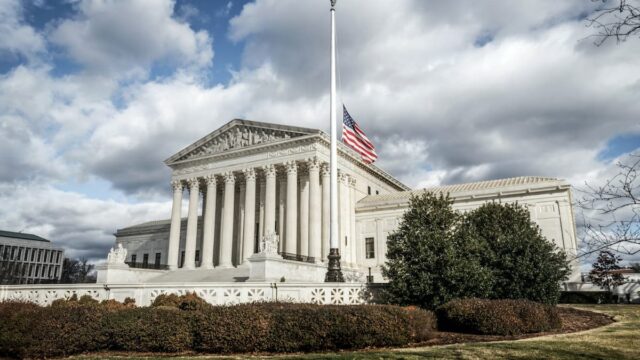
Pennsylvania Supreme Court Rules Skill Games Are Slot Machines
The ruling overturns lower court decisions that determined the machines fall outside the definition of gambling devices. It gives lawmakers 120 days to determine their future.

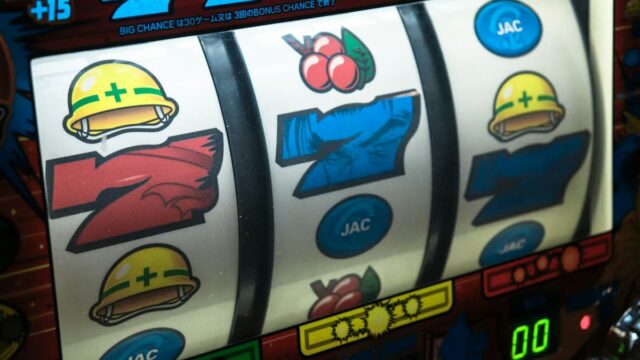
The Pennsylvania Supreme Court ruled Monday that Pace-O-Matic’s Pennsylvania Skill machines are slot machines subject to both the state’s Gaming Act and criminal gambling laws. The ruling overturns lower court decisions that allowed the machines to operate in a legal gray area.
The decision is likely to have significant implications for Pennsylvania’s gambling industry. The state is home to an estimated 70,000 skill game machines, the largest such market in the U.S. For years, lawmakers, regulators, casino operators, and manufacturers have debated whether the machines should be regulated, taxed, or prohibited altogether.
The court reversed a 2023 Dauphin County ruling and a subsequent Commonwealth Court decision that found the machines did not qualify as gambling devices under Pennsylvania law.
The Commonwealth Court’s decisions in POM and Three Devices are the central pillars upon which rests the current state of affairs in this Commonwealth, in which ‘skill game’ devices have been held to fall into a legal gray area outside of the reach of both the Gaming Act and the Crimes Code,” Justice David Wecht wrote in the majority opinion.
Court Rejects “Legal Gray Area” Argument
Wecht said lower courts incorrectly concluded that skill games fell outside both Pennsylvania’s Gaming Act and the Crimes Code. The majority described the interpretation as “deeply flawed” and held that Pace-O-Matic’s Pennsylvania Skill machines are subject to both statutes.
Acknowledging that many businesses relied on the lower-court rulings, the court imposed a 120-day safe-harbor period before the decision takes effect.
We are further mindful of the potential disturbance that our correction of the prevailing case law may cause to business owners and other good-faith participants in the industry,” Wecht wrote.
During that period, law enforcement agencies cannot pursue enforcement actions against the owners or operators of skill game machines under the ruling.
The court also emphasized that the General Assembly remains free to enact legislation addressing skill games before the safe-harbor period expires.
The ruling aligns Pennsylvania with courts in other states, such as Tennessee, North Carolina, and Missouri. Rulings there have determined that skill game machines remain subject to gambling laws despite containing skill-based elements.
The decision also comes days after the Texas Attorney General issued an opinion concluding that skill game machines remain illegal if chance plays any role in determining outcomes.
2017 Gaming Act Amendments Undercut Skill Game Defense
A central part of the court’s reasoning focused on amendments adopted by Pennsylvania lawmakers in 2017.
The majority noted that lower courts had relied on Pennsylvania’s longstanding “predominant factor” test, which examines whether skill or chance primarily determines the outcome of a game. That analysis helped Pace-O-Matic successfully argue that its machines were games of skill rather than illegal gambling devices.
However, Wecht said the Gaming Act effectively rendered that distinction irrelevant.
According to the opinion, Act 42 of 2017 added definitions for both “skill slot machine” and “hybrid slot machine” to the Gaming Act. As a result, a machine can still qualify as a slot machine even when player skill affects the outcome.
If skill predominates, then the device is a ‘skill slot machine.’ If skill and chance both contribute to the outcome, then the device is a ‘hybrid slot machine,'” Wecht wrote.
“In any event, both variants of devices constitute ‘slot machines'” under the Gaming Act.
Justice Christine Donohue reached a similar conclusion in a concurring opinion.
Because chance predominates both the player’s eligibility for winnings and the magnitude of those winnings, the device is a gambling device,” Donohue wrote.
The court said the timing of those amendments was particularly significant because lawmakers added the definitions after courts began finding that skill game devices could operate lawfully under the predominant factor test.
It is particularly telling that, once courts began finding that the ‘skill game’ devices at issue are lawful to operate in unlicensed facilities under the predominant factor test, the General Assembly specifically added the definitions of ‘skill slot machine’ and ‘hybrid slot machine,'” Wecht wrote.
The majority concluded that the case was not about creating new policy but about applying enacted statutory language.
To put it more plainly, how one feels about access to ‘skill games’ or other types of slot machine[s] … is irrelevant,” Wecht wrote. “This is, rather, a matter of straightforward application of existing statutory law.”
Partial Dissent Disagreed on Scope of Gaming Act
Justice Kevin Brobson, joined by Justice Sallie Mundy, agreed that the lower courts were wrong but disagreed with part of the majority’s analysis.
Brobson argued that the machines remain illegal under Pennsylvania’s criminal gambling laws. Still, he said the Gaming Act primarily governs licensed gaming facilities and operators. As a result, he would not have applied certain Gaming Act licensing and taxation provisions to unlicensed operators such as Pace-O-Matic.
Even so, Brobson agreed that the Commonwealth Court erred in concluding that the devices were lawful.
Decision Could Shape Budget Negotiations
The ruling arrives as Pennsylvania lawmakers continue debating how skill games should be regulated and taxed. The issue has become a recurring feature of state budget negotiations because of the potential tax revenue.
Gov. Josh Shapiro has proposed regulating and taxing them at the same 52% rate applied to slot machines.
Several carryover bills from 2025 also seek to regulate the machines with proposed rates ranging from 0% to 35% of revenue. Another bipartisan bill, backed by Pace-O-Matic, suggests a flat $500 monthly fee per terminal. Earlier this month, lawmakers introduced a new bill, albeit without a proposed tax rate.
Unless lawmakers enact a different framework during the court’s 120-day safe-harbor period, the ruling could significantly alter how and where those machines operate throughout the state.


Gambling Insider delivers the latest industry news, in-depth features, and operator reviews that you can trust. Our team combines rigorous editorial standards with decades of specialized expertise to ensure accuracy and fairness. We are committed to delivering clear, impartial, and dependable coverage across the global gambling sector.