Three groups, one market: Inside ESPM’s debate on the past and future of Brazilian betting
Gambling Insider was in attendance at an exclusive event in Brazil that debated the nation's state of gambling marketing, with SPA Secretary Regis Dudena a key speaker.


ESPM, one of Brazil’s most respected business and communication schools, has long been known for producing generations of marketers, advertisers and strategists. But on a Tuesday morning in São Paulo, its auditorium was filled with a very different conversation: on betting, regulation and the consumer.
Even though some may argue the gambling sector shouldn’t be talked about with young students, the event, free of charge, was fully booked within a matter of hours. The auditorium was packed with students, professionals, operators, regulators and legal experts, all eager to dissect a subject that has gone from fringe to mainstream in record time.
The most striking part was seeing row after row of students leaning forward, listening intently to discussions on legality, responsibility and consumer protection, proof that this subject of betting has left the shadows and entered the heart of Brazilian society. After all, like most forms of entertainment, gaming is both fascinating and impactful in our lives, no matter how old we are. Even if only in small ways, we are all exposed to it.
A university steps into the gaming spotlight
Opening up, “Consumer in the betting environment: building bridges for protection” brought together a regulator, an operator and a legal expert. On stage were Regis Dudena, Secretary of Prizes and Betting at the Ministry of Finance; Gustavo Godinho, DPO and legal consultant for Blaze; and Laura Morganti, Director of Consumer Relations at BetBoom, moderated by Eric Hadmann Jasper, Professor of Economic Law.
What made this debate fascinating was the contrast of perspectives: regulators look at betting as a matter of legality and oversight. Operators, on the other hand, see an industry already alive, with consumers who want clarity, safety and fair play. And yet, despite these different starting points, both sides seemed to walk towards the same destination: a healthier, more transparent market. If we may risk a metaphor, it was like watching two rivers flowing from opposite mountains, yet inevitably meeting in the valley.
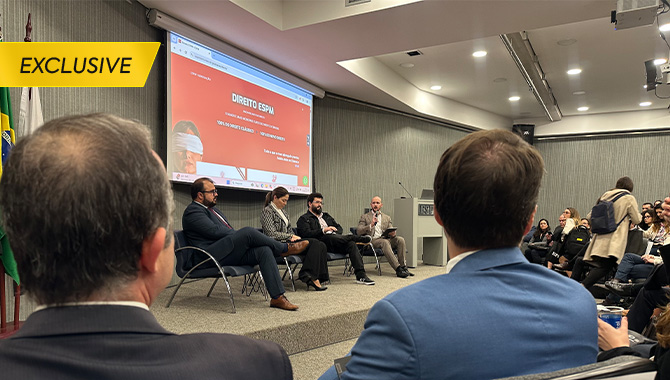
Dudena broke the market’s early years into “three groups.” In his view, operators fell into clear categories: the serious ones who tried to follow consumer law even in the absence of regulation, the opportunists who simply sought a quick buck (or real!) and the bad actors whose practices he described as deeply harmful to the sector today.
In an exclusive comment to Gambling Insider, BetBoom’s Laura Morganti stressed the importance of educating both regulators and players: “Today, many players do not fully understand what they are betting on. It is not a matter of not reading the terms and conditions – they genuinely do not grasp the complexity of the betting sector. Betting, even beyond sports betting, carries a level of complexity that consumers have the right to approach informed.”
The insight hit the core of the matter: if consumers are always the vulnerable party in this relationship, protection has to begin with information.
Advertising under scrutiny
Panel two, “Offer and advertising in digital betting: challenges and perspectives,” tackled the hot-button issue of marketing in an increasingly digital ecosystem.
The panel featured Luiz Orsatti Filho, Executive Director of São Paulo’s consumer protection foundation Procon-SP; Juliana Albuquerque, Vice-President of Brazil’s national advertising self-regulation council (Conar); and Luis Fernando Baby Miranda, Public Defender of São Paulo state; it was moderated by Ricardo Morishita Wada, Professor of Consumer Law.
From a legal standpoint, the message was sharp: betting ads need to stop placing responsibility solely on consumers. Indeed, Miranda stated that phrases like “play responsibly” often shift the burden onto the very party that needs most protection. Instead, advertising must transparently show risks, not just opportunities.

Albuquerque highlighted how influencers have reshaped this landscape. What began as occasional endorsements exploded during the pandemic, when countless personalities began promoting betting platforms. But unlike traditional ads, influencer marketing blurs the line between lifestyle and sales, making regulation harder and reputational risks higher.
The tension is on how to balance consumer engagement with real protection?
Enforcement and accountability
Finally, “Online betting and state enforcement” pulled the focus towards illegality, responsibility and digital platforms themselves.
Panelists included Yuri Corrêa da Luz, Federal Prosecutor in São Paulo and Professor of Criminal Law; Gabriel Hillen, Federal Judge and specialist in economic criminal law; and Fernando Gonçalves, lawyer and MBA from FGV, moderated by Joana Siqueira, Professor of Criminal Law.
Luz set the stage by linking betting regulation to Brazil’s mass adoption of the internet. In his words, regulation here is “neonatal.” Think of a newborn struggling with the side effects of rapid digital growth, from misinformation to harmful content aimed at vulnerable children and teenagers. The numbers are staggering: according to the official, 83% of Brazilian youth use social media and betting ads are now part of their feeds. For groups unprepared to handle the stresses of losing money, the risks extend to depression and even suicide.

Hillen addressed influencer-driven marketing head on, arguing that operators carry responsibility when hiring personalities whose audience is predominantly underage. In such cases, he suggested, there is intent and therefore legal accountability. Closing the debate, Moderator Joana Siqueira gave Gambling Insider an exclusive takeaway: “State enforcement should target not only betting operators, but also other economic agents, including internet providers and digital influencers.”
It was a statement that widened the lens: responsibility cannot be limited to one link in the chain.
Beyond the panels: Reflections on regulation
What resonated after this event was not just the content of each debate, but the bigger picture. Betting is no longer a niche subject whispered about in Brazilian Congress: it is a cultural, economic and technological reality demanding attention from students, policymakers and the private sector alike.
And what ESPM achieved here was remarkable. A half a century-old university, rooted in communication and business, opened its doors to a debate as complex as betting regulation. It felt almost symbolic: academia becoming a bridge between government, industry and the next generation.
The overall lesson of the day: Brazilian gambling (whether by force or choice) is no longer thinking solely about odds or profits. Instead, it is now about society, vulnerability, responsibility and the power of dialogue to bring very different voices to the same valley.



Gambling Insider delivers the latest industry news, in-depth features, and operator reviews that you can trust. Our team combines rigorous editorial standards with decades of specialized expertise to ensure accuracy and fairness. We are committed to delivering clear, impartial, and dependable coverage across the global gambling sector.