Cover feature: Finding the balance between office vs remote working
In 2020, the working world as we knew it ended. From the UK to the US to Malta, Covid-19-enforced bans forced us to stay at home, and so, work came home with us. During the height of the pandemic, working from home (WFH) became critical to the survival of many businesses. If a business couldn’t go remote, they were faced with severe financial blows and uncertainty; look at the casino industry in Macau, as just one example. However, by being online, the iGaming market all but thrived during the pandemic. And, as the iGaming hub of the industry, businesses in Malta had to be on top form – despite the conditions of the pandemic.

In Malta, while there was no nationwide lockdown, mandatory lockdowns were put in place for those 65+ or with chronic illness, as well as restrictions on social gatherings, closure of schools and non-essential businesses, and other restrictions. The final nationwide Covid-19 lockdown in England concluded on 28 March 2021 and, in May, Malta became the first EU nation to open up access to the Covid-19 vaccine for all citizens over 16.
According to research, workers reporting they worked exclusively at home rose from 5.7% in January 2020 to 43.1% in April 2020. Now in the UK, 44% of workers are remote. All that is to say, we are now three years out of the woods of the Covid-19 pandemic, yet despite that, WFH has remained. Why?
Pre-Covid: A job market retrospective
To understand how the job market has evolved since the Covid-19 pandemic, we should first cast our minds back to before the pandemic, to see what the market used to be, and whether this is a market makeup we might see a resurgence of.
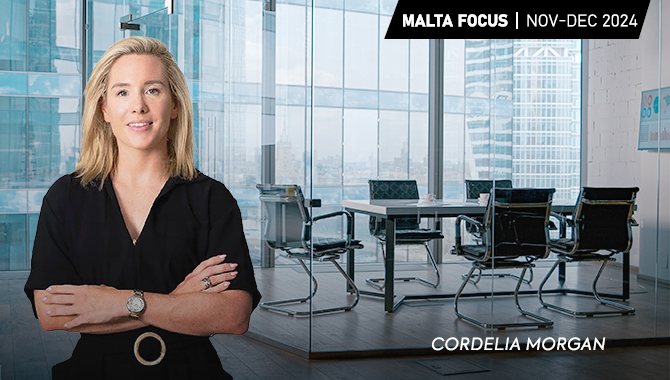
Looking back, Cordelia Morgan-Cooper, Founder of formally Malta-based and now global recruitment firm CMC Consulting, tells Gambling Insider: “Before Covid, everybody was in the office. If I think back to Catena Media, we could work from home if the plumber or electrician was coming. But, otherwise, you would be in the office. We didn’t know anything different. When Covid came, I remember packing up my stuff thinking, ‘I’ll see everyone in about a week’s time.’ I was leading the Talent Acquisition team, so 90% of our work, if we’re not on the phone to candidates, is project based. So, the thought of being able to do an HR project on our own from home was very alien to all of us. But we had to adapt.”
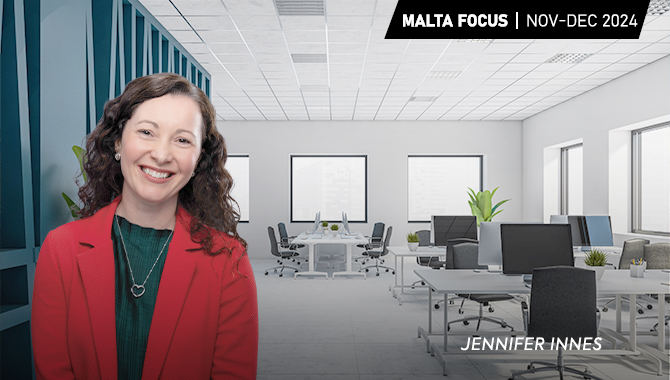
Jennifer Innes, CEO at BettingJobs, highlighted that while some sectors of the industry offered remote work pre-pandemic, for the most part work was done at the office. She says: “There were people that worked remotely. In two areas that has always been the case, mainly game studio candidates and tech candidates; those that can sometimes dictate because of their experience: games mathematicians, games producers, software development staff. Their skills are in such high demand that sometimes they could dictate to the company what their preferences were prior to Covid.
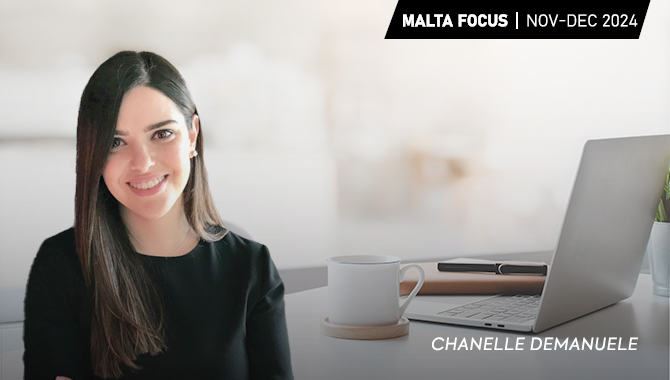
“Pre-Covid, most people were working in an office environment. That was because there was no option for these roles to be carried out remotely. Customer service roles are typically on-site, so are fraud & payments and responsible gaming roles. That’s why you’ve seen a lot of those roles being moved back into the office.”
Chanelle Demanuele, Recruitment Manager at Exacta Solutions, echoed similar sentiments to Innes and Morgan-Cooper. She says: “Before the Covid-19 pandemic, remote or hybrid work in the gaming industry, particularly in Malta, was not as widespread as it became afterwards. Malta has a robust iGaming sector, with many companies focusing on game development and related services. However, prior to 2020, the industry in Malta – like many others – largely favoured traditional office-based work. While some roles, especially in software development or tech, occasionally offered remote flexibility, the broader industry culture tended to emphasise on-site work for better collaboration, compliance and regulatory oversight, as Malta’s gaming industry is heavily regulated.
The shift towards remote work gained momentum primarily during the pandemic, as businesses had to adapt quickly to lockdowns and restrictions.
Post-pandemic, many companies, including those in Malta’s gaming industry, began adopting more flexible working arrangements, including hybrid models, as the benefits of remote work became clearer. However, before Covid-19, it was not particularly notable in the gaming sector in Malta.”
For Morgan-Cooper, having her first role in an office environment was critical for her career development; something she still believes holds value for entry-level staff. “If I think back to when I first started in recruitment; if I had to try and do a sales call from home on my own, I honestly would have talked myself out of it because I would have had no clue where to start. For me, being plunged in at the deep end, having to do my first live sales call on a sales floor office where you could hear people’s conversations, that’s where I learned my pitch. I think it’s very hard in remote businesses to replicate that kind of training mindset.”
But can the market ever return to an on-site ‘only’ model, or has Covid opened a remote Pandora’s Box that cannot go back to being shut?
What does the job market in Malta look like now?
With data supplied by BettingJobs, we can gain a wider perspective on the current make-up of Malta’s gaming industry hiring patterns.
Figure 1 shows a 41% decline year- on-year for remote placements in Malta. This is supported by figure 5, showing this same decline from 2022. Clearly, while WFH still exists on the island nation, it has lost popularity since the pandemic – understandable, as this work style has now become optional for employers, as opposed to mandatory for the business’ survival. Still, in spite of decline, WFH roles still hold a notable place on the market, especially where hybrid roles are concerned. According to Innes: “The overwhelming majority of the positions are hybrid. In 2022, 51% of roles were remote. That decreased in 2023 to 45%. This year-to-date, remote- based working has been 36% of the placements that we’ve made.” Demanuele supports these statistics, estimating a ratio of 75:10:15 (Hybrid vs fully remote vs full office) in gaming roles in Malta.
Of BettingJobs’ statistics, placements in compliance and marketing roles have been on the rise year-on-year, according to figures 2 and 3. Compliance roles in particular have seen a sharp increase in placements, growing 3x year-on- year. When breaking down the types of roles currently available in Malta, Innes explains: “In terms of what sorts of roles there are, the overwhelming majority of roles in Malta have always been marketing and operational positions. What we see now is a lot more on the B2B side. So commercial, account management, sales. Those would be the top categories at the moment.
“In terms of where BettingJobs has always placed the most candidates in a single category, when it comes to Malta, it’s been marketing. But, this year-to-date, 25% of the placements we’ve made have been executive and senior level in Malta.”
Indeed, this statement is supported by figure 4, which shows a sizeable increase in C-level placements in Malta. There are several reasons for this, though one explanation may be the nation’s favouritism towards home-grown talent in a declining remote-work market – after all, as Innes says: “90% of the roles, or people that are taking these positions at the moment in Malta, are those that are already living and working there.”
Homegrown vs global talent
As Innes explains, the majority of roles in Malta are being taken on by those already living on the island. This is despite a major selling point of remote work being the international talent pool it gives employers access to. Innes explains that visas are a major reason for this choice by businesses to work with staff on the island as opposed to abroad. “South African nationals, Australian nationals, even British nationals now have to have a Maltese employer to sponsor the working visa. So they can’t necessarily be in Malta, paying tax and setting themselves up as a contractor quite as easily as EU Nationals can,” she says. Brexit, which was finalised at the end of January 2020, has made hiring British nationals even more complicated. “Post-Brexit, there have been implications for UK nationals. I would say a lot of our clients are of the opinion that they should be able to find someone within the EU, not even looking at British nationals,” she says.
While relocation may be offered in some instances, Innes still holds true that the majority of the time, hiring globally is a minority decision in Malta. Moreover, having remote staff around the globe can be a complicated matter; even if a remote staff member does not need sponsorship from a Maltese business to work with them. Speaking specifically on UK nationals working remotely for a Maltese company, Innes states: “You don’t need [a sponsorship] if you are a British national working remotely from the UK. How that works is you set yourself up as a self-employed contractor and your self-employed contractor business. You share an invoice on a monthly basis to the company and that is an attractive model for some. But I would argue in Malta it’s not the norm, especially when you talk about more operational staff members. Fraud payments, customer support, who may be not used to sharing an invoice on a monthly basis. [Some] prefer a contract that comes with holiday pay stability, a notice period, lunches or even people may relocate there. They want a team.”
Another point to consider is the fact that, for many, Covid meant returning to their home countries and staying there. As Morgan-Cooper tells Gambling Insider: “One of the things that came out of Covid was we all became fully remote immediately. A lot of people left Malta, for example. They moved home. Maybe they decided they didn’t want to come back to Malta. So businesses had an added layer of ‘okay, we don’t really want to be fully remote anymore, but we want keep this person in their role. What do we do?’ They didn’t want to necessarily force people back to the office because, from a cultural perspective and a work environment, to be told you have to do something is not ideal. There was often a scaled back return to work, but for people who didn’t want to return to Malta, things changed quite a lot in a few years. It meant they would most likely have to look for a new role.”
Indeed, moving home meant moving jobs for a lot of gaming industry expats in Malta, re-opening these roles to those remaining on the archipelago. However, just because someone lives in Malta, it doesn’t mean their role cannot be remote.
Remote work: Risk vs reward
But what benefits does remote work offer? Looking beyond the challenges of hiring internationally, even when hiring from within Malta, fully off-site work comes with both pros and cons. Below are just a few points worth assessing.
Remote: An exercise in trust
For staff, the benefits of working from home are clear. Consider a 9-5 workday.
When factoring in getting ready for work and commuting to and from work, that 9-5 can quickly start looking like a 7-7, which when combined with the recommended eight hours of sleep each night leaves just four hours a day for personal hobbies, chores and activities. Working from home gives staff back multiple hours of their day lost to commutes, while also allowing a degree of household chores to be completed during the day, such as putting the washing on during a lunch break, returning even more personal time to staff.
This is not to mention the financial upside of remote work for staff. In London, a journey on the tube is often over £5 ($6.53) minimum. Five days a week to and from work equates to over £50 spent on travel alone – and it is usually far more than this. People outside of London will have to pay even more commuting into the city. Therefore, a percentage of your wages are spent on travel to work, so it’s no shock that people want to avoid this extra cost, especially with inflation. This is the case in Malta and indeed anywhere in the world, whether travel is done via public transport or car; it’s not free, while staying at home is.
For parents and carers, being able to work from home is even more advantageous. In some cases, it may be the difference between putting an aging parent in a care home or putting a child in expensive daycare, because the staff member in question will be able to tend to the needs of their dependents, while also carrying out the work needed to financially support them. In some cases, remote work is the only option. If a business is hiring internationally – rare but not unheard of in Malta – or hiring a distance from the office, that worker obviously cannot commute every day. Similarly, staff with disabilities may be unable to commute, which means if a business wants them, they will need to be accommodating.
Morgan-Cooper runs CMC Consulting entirely off-site. Her reason for doing so is as follows: “Recruitment isn’t a 9-5 job. It is 24/7, if you would let it be. For me, I wanted equal opportunities when it comes to single mums, people that need flexible environments; some of the best salespeople are people who need more flexibility… I don’t ever want it to be that people feel pressured to go in, because sometimes a candidate might get in touch at 10 o’clock on a Friday night. If someone’s been at home all day, they’re far more likely to reply to that message. Those are the interactions I need.
“If someone is at their desk from eight til five, but they finish at one o’clock, they’re just clock watching. Recruitment is all based on results. I would much rather they do the washing, take the dog out for a walk, come back and then do three hours in the evening. That’s also why my business is results-driven; we don’t have fixed work hours. As long as the work is delivered, I don’t mind how it’s done.”
Innes echoed a similar sentiment, specifically pointing to the loyalty and increased retention rates that come with flexible work environments. There are “young mothers that have to drop kids off at school; they can pick up their child and can then log on and do a few hours later in the day. That encourages the longevity and stability of the candidates because they might not get that elsewhere.”
For businesses, such a proposition is a double-edged sword.
In theory, allowing staff to stay at home, look after the kids and fold the laundry during lunch is a positive. But being at home can very easily be a distracting environment. This leads to less time actively working, which may impact productivity daily. Morgan-Cooper adds: “There are, of course, many fully remote gaming businesses, but not so many in Malta anymore that are established large businesses. A lot of that has been down to the perceived, whether it’s correct or incorrect, lack of productivity when people are working at home. For leadership teams, it’s quite an easy rule to make that you don’t want people working from home because you want to physically see them.”
As such, a level of trust in staff to meet expected productivity levels is critical for remote work to be conducted effectively. “For me, as a business owner, it seems crazy that you wouldn’t trust and empower your team,” says Morgan-Cooper. “If you don’t trust the people that work for you, what are they doing working for you?”
Christine Parkhill, Chief Commerical Officer at Just Slots, spoke with Gambling Insider in an issue of GI Friday in August, outlining her reasons for businesses to consider remote work and its range of benefits, especially for start-ups and smaller businesses. Reflecting on this, she says: “I think there is hesitancy from employers to fully acknowledge the benefits that working from home can have, with a key argument being made against the productivity of a worker when not in a traditional setting, like an office.
“Working from home requires mutual respect and a degree of trust from both the employer and the employee, and if this experience hasn’t been a smooth one, then I can understand the hesitancy to fully embrace this ethos. However, by instilling respect from the start as well as hiring people who will fit the company’s values, employees will cooperate with the standards being set and we have certainly seen increased productivity levels across the board with a flexible working pattern.”
Remote: A generational expectation
Remote work is especially important to assess when considering the newest generations entering and leading the workforce. Both Millennials and Gen Z had significant portions of their work and school lives impacted by the pandemic, which seems to have typically made them more adaptable, and even keen, to integrate remote elements into their roles compared to execs who have spent decades in the industry with in-office work as the only option. These individuals are far more likely to see remote or hybrid work as a valid model for work; something seen in trends among Gen Z workers and Millennial-run start-ups.
“If you look at people who’ve been in the industry 10, 20 years, looking at their work life set up, it was totally different to what the world is now,” comments Morgan-Cooper. “But we’re also living in a world where Gen Z is coming through. They expect different things. They’re demanding different things. Businesses have to be able to keep up with what the market demands. It’s okay to say we’re not remote, we’ll never be remote, but if all the developers you want are fully remote and you then can’t get a development team, what do you do?”
Indeed, a demand for remote and hybrid roles from Gen Z has come as something of a learning curve for recruiters. Morgan-Cooper says: “I’ll go to the interview and they’ll say, “Okay, well, what’s in it for me?” and I’ll think wow, that you can feel that empowered, that you can walk into an interview and flip it on its head. Hats off to them.” Demanuele raised a similar idea, stating that Gen Z “values more efficient and valuable work, and to be smarter workers. They are more efficient in their communication and want to work for companies that align with their values, especially in relation to corporate social responsibility and overall company culture.”
This attitude can also be seen reflected in young business owners, says Innes. “A lot of start-ups, esports start-ups, cryptocurrency start-ups from the younger generation, they’re all wholly remote. You wouldn’t really see many of these individuals in Malta, probably: It’s all across the globe.”
That’s not to say all young execs think this way, however. In Malta specifically, where so much gaming industry opportunity is available, according to Innes, there are management staff coming into the industry who “don’t have, compared to other industries… the same exposure or experience of management. They may want people to come in and be with them so they know they are doing their best to manage staff.” However, this is an exception to the rule; typically, the likelihood of in-office work runs parallel to how corporate the business in question is.
A shift in perspective towards remote working is not the only thing these generations bring to the workforce, says Demanuele. “With Millennials becoming leaders, we have noticed significant positive changes, including notably, leaders who are more compassionate and understanding of the importance of employees having a good work-life balance, and that overworked employees are not necessarily more cost-efficient,” she says. They are “also leaders who value continuous employee development, through ongoing training.”
Remote for start-ups: A help or hindrance?
Much of Parkhill’s argument in GI Friday focused specifically on remote work and start-ups, pointing to factors including costs and modern internal operations as reasons for this. Indeed, working remote is usually significantly cheaper for businesses than working on-site, though as Morgan-Cooper states: “Remote is definitely cheaper, it’s just whether in-office is worth the expense. That’s the way to think about it, because having an office is definitely more expensive. But if you’re two founders, for example, and you’re physically based in Malta and you’re building a team around you, then maybe it does make sense to have an office where you’re sharing ideas and collaborating often.”
Interesting, that in Morgan-Cooper’s experience however, start-up businesses seem to lean towards wanting office workers in Malta, as opposed to a remote team. She says: “Most of my clients that are in start-up phase are looking for people to be in the office. The reason for that, if they have a base in Malta, is that rent’s expensive, right? They want their employees to be physically in the offices. But also, for building the culture, it can be quite important to physically have that presence.”
Culture is an essential aspect of any brand’s development.
However, newer brands must work especially hard in this area, to build good public relations with the wider industry by showcasing good workplace culture and brand value. During the pandemic, many brands struggled to maintain their workplace culture when forced to do so from home. As Innes puts it: “There is the whole thing of, can you have that same workplace culture completely remotely? Different people have different opinions on how to build that. During Covid, a lot of our clients were looking to hire, although there were no office managers or HR managers to cultivate or build team spirit when there was no office.”
Of course, most brands were able to find a way around this, though a return to the office may have been a saving grace for some. However, start-ups do not have this pedigree or history in the office to contend with, which may make both options a far more equal playing field.
How is emotional connection impacted?
Another notable point of debate among businesses is whether staff working remotely are as emotionally connected to the businesses they work for when they are remote compared to when they are working in-office. When reflecting on her time with Catena Media pre-Covid, Morgan-Cooper says: “If I look back at my career, some of my happiest years were working from an office in Malta. When I worked at Catena, the whole vibe of working in the head office of a huge, well-established business that everybody wanted to work at was amazing. You would have coffee with your friends, lunch with your colleagues and you could build those relationships much quicker than you can remotely.”
Few will disagree that the office is a primary location for people to establish friendships as adults, with teams often connecting outside of work in various ways.
Indeed, creating a connected and interpersonal workplace environment is far easier done in person than online; something invaluable from both a staff and business perspective.
However, there is a far more nuanced approach that has to be considered post-Covid; namely, that we have now adapted to establishing connections remotely, whereas during Covid, the experience for everyone was new. Demanuele put it as follows:
Potential for emotional disconnection:
- Lack of face-to-face interaction: In traditional office settings, spontaneous, informal interactions like hallway conversations and casual check-ins foster a sense of connection. Remote work can make these interactions less frequent or more formal, potentially leading to emotional distance.
- Communication challenges: Remote work often relies on digital communication, which can lack the emotional nuance of in-person conversations. Misunderstandings, delayed responses or the absence of non-verbal cues can hinder relationship-building.
- Isolation: Remote employees can feel isolated, which might strain their connection with managers who don’t have the same level of direct visibility or access to their team’s day-to-day experiences.
How remote work can maintain or even enhance connection:
- Intentional communication: Managers who are proactive and intentional in scheduling regular check-ins and video meetings can maintain strong connections. The quality of communication can outweigh the lack of physical presence, especially if managers are empathetic and provide support.
- Focus on results, not proximity: Some employees feel more connected and valued in remote settings because the focus shifts from “face-time” to the outcomes of their work. Managers who prioritise trust and performance-based evaluations can foster a stronger emotional connection with their staff.
- Better work-life balance: When employees feel supported in managing their work and personal lives, their engagement can improve. Parkhill presented a similarly balanced take on the matter, noting that while distance can impact emotional connection, this can be mitigated with effective leadership and candidate screening. She says: “Remote work offers a huge range of benefits. However, it is important to be aware that a lack of physical interaction can potentially impact the emotional connection to a company and its mission. This can be mitigated with regular calls and scheduled water cooler chats, as well as fostering an open communication culture. Quality leadership is also vital, as senior staff can also help in maintaining and propagating a friendly and collaborative culture too. Ultimately, though, you need people to be comfortable working in their own space. There is an incredible talent pool available across the globe, and to fully utilise this and create a strong workforce, an employer needs to ensure they are hiring individuals who can not only manage in a strict WFH setting, but also thrive in it.”
What is the right choice?
All these differing perspectives on so many facets of remote and on-site work will leave many businesses scratching their heads on where the correct answer lies. Quite simply, there is not a one-size-fits-all answer; every business both in and outside of Malta has its own needs, ideas and staff demographics, and with that comes a need to both understand where priority for the business lies and where compromise can be made to accommodate the wants and needs of staff.
There are a fair few voices, both in industry and academia, that will point to hybrid as a perfect compromise between the benefits of both systems.
A study in California investigated whether hybrid-working is more productive. In this study, 1,600 employees were randomly given a group for six months with one group in an office, one having a 2:3 split and the other fully remote. It was discovered that the hybrid workers generally had increased job satisfaction and reduced resignation rates, and were as productive as those who worked entirely in-person, as measured by performance reviews.”
Seeing hybrid as a middle ground is also an opinion held by Innes, reflected in the popularity of hybrid roles among her placements in Malta. “As far as Malta is concerned, yes, it is a middle ground because it allows individuals the opportunity to work from home, to balance work, life and family, and the career aspirations they would have in a more corporate working environment.”
“By doing the halfway split, you can also keep a closer eye on productivity,” comments Morgan-Cooper. However, she was also quick to point out that hybrid is not always the perfect solution. She says: “The challenge is that, with a couple of the fully remote businesses I support, the great thing is we can recruit anywhere. We can find an amazing developer that could be literally on the other side of the world. From a cost perspective that’s often better, because in Malta, salaries for developers are extremely high. But it’s a tricky one and I think each business is sure they’re making the right decision.”
Office work – Better than we remember?
With businesses now open to the possibility of remote work – and the desire for its availability among certain talent pools and demographics – it is easy to forget that there was a reason office work worked in the first place. While the benefit of saving on commutes and flexibility are undeniable, as Morgan-Cooper said earlier in this article, working in an office in Malta were “some of [her] happiest years.” Creating emotional connections in person are far easier and often far deeper than online interactions, made possible due to the benefits of body language, immediate reactions and joint experiences. For creating long-lasting teams, a genuine connection is key; otherwise, beyond your salary, what is compelling you to stay?
Training, in a similar vein, also benefits from face-to-face guidance. In roles such as sales, seeing how other salespeople sell in real-time can be exceptionally valuable to pitch development, as opposed to Zoom-scheduled practice sessions. Creative role training can also benefit in a similar way, with staff able to learn the tricks of the trade and gain an understanding of how the production line works, with in-person feedback likely to be more effective than notes given over email. Those who move from remote role to remote role are simply unlikely to unlock their full potential in terms of training and ability, begging the question of whether they can truly be the best at their jobs.
Management roles, while often providing flexibility, also benefit from office environments, especially when the team is also in-office. Seeing managers face-to-face and being able to have in-private conversations about important topics, rather than over a call or message, can be much needed for staff when challenging topics arise. Hirings and firings benefit similarly, with in-person interactions giving far better indication of a person’s demeanour, reactions and emotions to such news. Body language cues are also a must for those in HR, in this sense. “When you’re handling terminations remotely, it’s very different to when you’re physically sat,” Morgan-Cooper says. “It’s easier for the person that you’re needing to unfortunately update with the not good news to be detached. They have the conversation, ‘Okay, thanks. Bye,’ put the laptop down and that’s the end of it. Sat in an office, you can feel someone’s nervous energy. You can feel how somebody is feeling much better. You’ve got those social cues around body language.”
Parkhill admits that “there are certain roles, like in sales or highly specialised technical fields, where in-person training might provide a more immediate experience.” However, this is not to say that remote training is always less effective than in-office training, with Parkhill pointing to “the ability to create a consistent and streamlined training process” and “the inclusion of diverse perspectives and resources that may not be available in a traditional setting” as two examples.

Ultimately, whether people will admit it or not, productivity is also key. A good worker can be effective both remotely and in an office environment. But if a CEO was to sit down and ask themselves: will every member of my organisation give 100% if they are at home? How many would take shortcuts and work less hours, take longer with projects and make out that tasks took longer than they really did? The truth – whether we are prepared to admit it or not – is that there are workers out there that simply will not be productive unless pushed.
On a similar note, immediacy can be pinned as another driving factor behind in-office benefits. You can choose when to answer an email or Teams notification and can even choose not to answer an online call. This is not the case for in-person interactions; if someone walks up to your desk and begins a conversation, it is likely that questions will be answered far quicker. This is especially beneficial in fast-paced environments or close to deadlines, when time needs to be maximised to get the job done.
What’s more, FOMO (fear of missing out) is a concept that’s often used in marketing and is a basic human emotion. But, when it comes to work and the office, people rather conveniently downplay this emotion. If you were close with a team and something exciting happened on a Monday in the office – whether social or completely work-related – you, as a human, would want to be there, rather than being sat at home. Interestingly, this concept also applies to hybrid roles and not just fully remote ones.
It seems, overall, that some roles operate better in an office environment than a remote one. Keeping up with trends is important, especially when it comes to keeping roles competitive (as Demanuele estimated, only 15% of roles in Malta are fully office-based). However, doing so may only cause detriment to a team’s overall performance. As Morgan-Cooper explains: “In my professional capacity, I do consultancy work for businesses that are both in-office and remote… I think in some roles it is trickier to have a remote setup. Sometimes I feel a little bit conflicted because I know all of the benefits of remote working and I’ve seen the benefits for myself. But I’ve also seen quite a few businesses struggle to drive performance in a way that suits their business.”
The future of work in Malta
With off-site work now a mainstay within Malta, it is unlikely we will ever go back to a time when it was not. When asked what she thinks Malta’s job market will look like in five years, Morgan-Cooper says: “I think there’ll still be this struggle of remote/ hybrid/ in office,” though echoing Innes’ earlier statement regarding experienced candidates dictating their experiences even before Covid, saying “I think highly in-demand candidates will still be able to choose the businesses they want to work with based on the benefits they have. I still think a lot of candidates view fully remote as a huge benefit.”
However, Innes’ focus for the future remained optimistic – that regardless of what the future holds, the presence of Malta in the global gaming industry will not be going anywhere anytime soon. “The online gaming industry is forever changing and that’s what keeps it interesting and appealing for the people that work in it,” she says. “What I would say is there have been factors like regulation, Covid, remote based working and Gen Z workers, start-ups, that have led to a somewhat diluting of the importance of Malta. No doubt that Malta will continue to be [important] and there will continue to be roles there, but I’ve seen new pockets of the iGaming industry appearing in Dubai, Cyprus, Bulgaria, Romania and America as well. What the world will look like in five years’ time? It’ll be super interesting to find out. But, I would say Malta will always continue to be the epicentre.”



Gambling Insider delivers the latest industry news, in-depth features, and operator reviews that you can trust. Our team combines rigorous editorial standards with decades of specialized expertise to ensure accuracy and fairness. We are committed to delivering clear, impartial, and dependable coverage across the global gambling sector.
