Gambling Stories to Watch This Week: Maryland iGaming Hearings, Tennessee Sweeps Ban, Iran Prediction Market Fallout
Maryland iGaming hearings, Tennessee’s sweepstakes crackdown, Florida gambling bills, and mounting scrutiny over Iran-related prediction markets headline another busy week for gambling legislation.

The first week of March brings a busy legislative calendar across multiple states, including iGaming and sweepstakes casino bans, as well as a growing debate over prediction markets tied to the U.S. strikes in Iran.
Here’s what to watch.
Scheduled Gambling Bill Hearings
Maryland: iGaming and Sweeps Ban Bills Set for March 5 Hearings
Maryland lawmakers will hold hearings on three gambling-related measures on March 5, including iGaming legalization and a ban on sweepstakes casinos.
The House Ways and Means Committee will discuss HB 1343 and HB 1255, which would establish an online casino framework and require a voter referendum, respectively. The bills mark the latest push for iGaming in Maryland, following four consecutive sessions of failed attempts. In 2024, the House passed an iGaming bill, but it failed in the Senate.
Additionally, on March 5, the House Judiciary Committee will discuss HB 1226, a measure that aims to ban sweepstakes casinos. The measure represents the latest effort to prohibit unregulated dual-currency platforms. Earlier in the session, lawmakers heard two companion bills, SB 112 and HB 295, but did not vote on them.
Meanwhile, HB 1226’s companion bill, SB 652, will be discussed in a Senate committee on March 11, along with separate iGaming and online poker measures.
What to Watch:
- Sentiment among lawmakers on iGaming.
- Whether the Judiciary committee discusses the regulation of sweepstakes casinos rather than prohibition.
- Whether either committee advances any of the proposals.
Tennessee: Sweepstakes Casino Ban and Campus Restrictions
Tennessee’s calendar is active March 2–3, with multiple bills addressing illegal gambling and oversight of sports wagering.
After clearing a committee last week, SB 2136 has been placed on the Senate regular calendar for March 2. The bill would define illegal “online sweepstakes games” as those using “a virtual-currency, dual-currency, or multi-currency system”. It will also give the Sports Wagering Council and the attorney general greater authority to target violators.
On March 3, SB 2136’s House companion bill, HB 1885, will receive its first hearing before the Departments & Agencies Subcommittee. The subcommittee will also discuss HB 1768, a bill that would require sportsbooks to geofence colleges and other public higher education campuses.
What to Watch:
Whether the Senate advances SB 2136, and if HB 1885 moves to the House floor. Late last year, Attorney General Jonathan Skrmetti announced that his office had issued cease-and-desist letters to nearly 40 online sweepstakes casinos operating in the state. As a result, most major operators have already left the state.
The pending legislation would codify and expand that enforcement posture into statute.
Florida: Broad Bills on Illegal Gambling
Florida features two separate but related measures.
After advancing from a second committee, SB 1580 is scheduled for the Rules Committee agenda on March 3. The measure is one of several in Florida that aim to curb illegal gambling in the state by increasing criminal penalties and expanding definitions of unlawful gambling.
At the same time, another bill, HB 189, which has also cleared two committees already, is on the House Second Reading Calendar, but it’s not yet known whether it will receive a vote this week.
What to Watch:
Whether SB 1580 moves to the Senate floor or HB 189 receives a House floor vote. There’s a growing consensus in Florida on tightening gambling statutes to combat illegal gambling, so at least one bill has a good chance of advancing.
Bill Developments to Watch
Indiana: Governor’s Decision on Sweeps, Casino Relocation
The Indiana legislature has sent multiple bills to Gov. Mike Braun’s desk, but two that matter for the gambling industry are HB 1052 and HB 1038.
The former, a broad administrative bill, includes a provision explicitly banning dual-currency sweepstakes casinos. Meanwhile, HB 1038 would relocate one Ohio County casino license to the Fort Wayne area. While the Senate removed a voter referendum provision, it was included in the final bill sent to the governor’s desk.
What to Watch:
Gov. Braun has seven days to sign, veto, or take no action on the bills. If he signs both bills, Indiana will become the first state to ban sweepstakes casinos in 2026, while allowing voters to decide on casino relocation.
If he vetoes any of the measures, the legislature can still override his veto with a simple majority in each chamber. Meanwhile, if he chooses not to act, the bills go into effect anyway.
Virginia: Cross-Chamber Movement and Conference Committee Likelihood
Virginia’s gambling bills continue advancing through opposite chambers after prior committee approvals.
Last week, the House passed SB 609, which would create a new gaming regulator. Like other gambling measures, the chamber amended the bill, so it goes back to the Senate for concurrence. A conference committee is likely.
In addition, other Senate-passed bills heading to the House floor, include SB 118, which legalizes iGaming; SB 129, which regulates daily fantasy sports; and SB 756, which authorizes a voter referendum on a Fairfax County casino.
Meanwhile, a Senate committee advanced the House-passed measures on iGaming, daily fantasy sports, and gaming regulator bills.
As both chambers advance the opposite chamber’s measures, a conference committee is likely to resolve any differences.
What to Watch:
Whether more bills pass the opposite chamber. Whether conference committees are scheduled.
Washington, D.C.: Blackjack and Poker Bill
B26-0379, recently referred to the committee, would allow the District to offer certain casino-style games such as poker and blackjack. The measure aims to recapture revenue lost to residents traveling to Maryland to gamble.
What to Watch:
Whether the committee referral becomes a set hearing date and possible discussions.
Massachusetts: Reporting Deadline Looms for iGaming Bill
Massachusetts’ SB 235, an iGaming measure, faces a March 5 reporting deadline following an extension. In Massachusetts legislative procedure, the reporting deadline means the committees reviewing the measures have requested additional time before issuing a recommendation — whether favorable, adverse, or sent to study.
What to Watch:
Whether the committee reports the bill, requests another extension, or allows it to stall procedurally.
Prediction Markets Under Fire After Iran Strike
Kalshi and Polymarket are facing intensifying scrutiny after war-related markets surged in volume following the U.S. and Israel strikes on Iran.
On Polymarket, “U.S. strikes Iran by…” contracts reached over $529 million in volume. However, headlines were connected to possible insider trading. Multiple accounts were created shortly before the attacks and made profits of hundreds of thousands of dollars.
Meanwhile, Kalshi’s CFTC-regulated “Ali Khamenei out as Supreme Leader?” contract became a flashpoint for a different reason: settlement mechanics.
Unlike Polymarket, Kalshi does not list contracts that settle directly on death. Its rules stated that if death were the cause of a leadership change, the market would resolve at the last traded price before confirmation of the change.
Trading was halted, and fees were reimbursed — but critics argued that, in practice, the outcome was still driven by death, exposing the tension between rule design and real-world events.
This is not the first time Kalshi has faced scrutiny over settlement mechanics. Last month, traders disputed whether Cardi B’s appearance during the Super Bowl halftime show qualified as a “performance” under the contract terms, triggering debate over how strictly event definitions should be interpreted.
What to Watch:
Many critics have pointed to the lack of a CFTC response, particularly on whether war-related contracts violate CFR 40.11, so observers will watch for any official stance from the federal agency.
Beyond the CFTC response, political pressure on oversight of prediction markets will likely increase, with multiple lawmakers questioning insider trading and markets on war. Additionally, new legislation targeting geopolitically sensitive prediction markets could be introduced, as a few states have already done.
Other Developments: Arkansas, Kentucky, Oregon
Arkansas: Will DraftKings and FanDuel Launch?
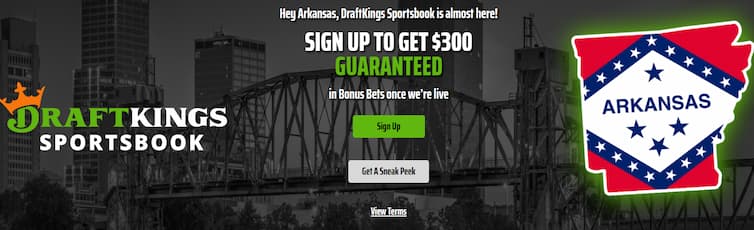
Last week, the Arkansas Racing Commission approved vendor licenses for DraftKings and FanDuel to operate online sportsbooks through existing casino partnerships. The approval allows both operators to begin operating immediately, though neither operator has publicly confirmed a precise launch date.
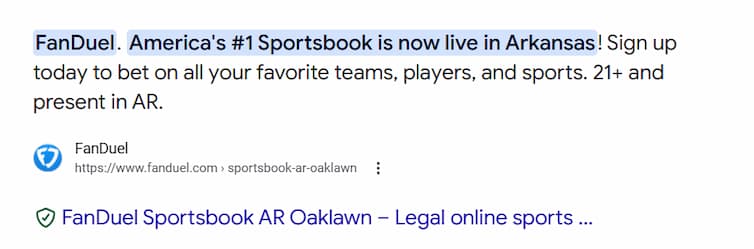
The DraftKings site says the sportsbook is “almost here”. Meanwhile, FanDuel’s metadata on a Google search says “now live,” but the website does not reflect that. Both signals suggest a launch could occur imminently.
What to Watch:
Whether either sportsbook goes live this week, and how quickly app transitions occur at partner casinos.
Session Mechanics: Deadlines and Adjournments
This week marks the bill-introduction deadline in Kentucky — March 2 for the Senate and March 4 for the House — leaving a limited window for any last-minute gambling bills.
Meanwhile, Oregon’s session adjourns March 8, compressing timelines for any remaining gambling-related bills that have yet to advance.
What to Watch:
The introduction of any last-minute gambling bills.


Gambling Insider delivers the latest industry news, in-depth features, and operator reviews that you can trust. Our team combines rigorous editorial standards with decades of specialized expertise to ensure accuracy and fairness. We are committed to delivering clear, impartial, and dependable coverage across the global gambling sector.