Industry ‘Drove Me Out of Business, Took My Ideas,’ WSEX Founder Jay Cohen Says in Gambling Insider Q&A
Jay Cohen maintains he was done wrong by the US government and would fight the same fight again despite being exiled from the country. The former World Sports Exchange CEO also discusses being the first to do in-game betting, what’s wrong with today’s digital products, and the aspects of the legal sports betting environment that make him sick.

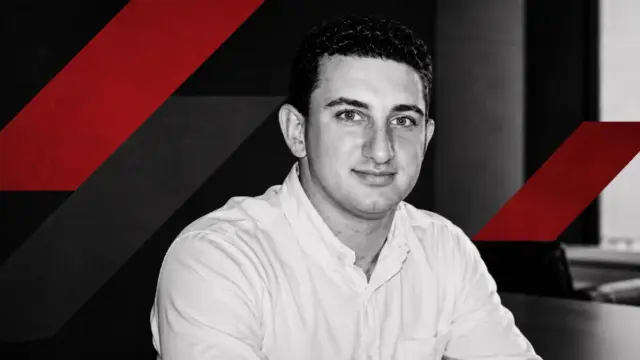
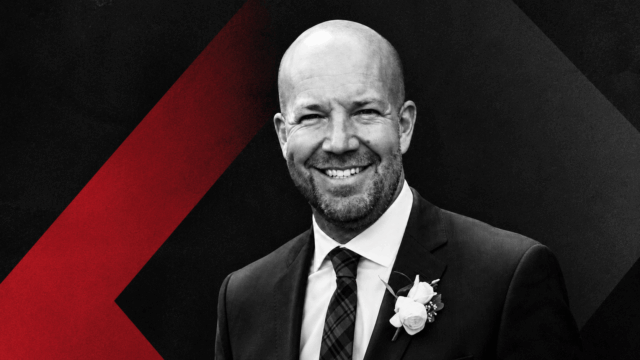
Jay Cohen never imagined himself as an author. But as circuitous as his path had been from semi-serious high school kid on Long Island, to Cal-Berkeley-educated nuclear engineer, to stock trader, to sports betting pioneer and, to his amazement and despite his ardent beliefs, a convicted felon, his became a tale he was convinced to share.
There was a lot to tell, as documented in his just-released memoir, Odds Man Out.
Whether it was discovering his innate ability to distill stock trading into a set of exploitable processes, or how that applied so well to gambling, Cohen knew he was doing something notable back in the 1990s, and thought he’d be doing it for decades.
That changed when the United States Department of Justice in 1998 charged him and his business partners in World Sports Exchange with setting up an illegal offshore sportsbook operation in Antigua, in violation of the Federal Wire Act. Cohen believed then, and still does, that he had followed every applicable rule and checked every box, yet eventually fell victim to a legal system predisposed to protecting the interests of powerful professional sports leagues.
The federal government was equally ardent in its assertion that he was in violation of federal laws by accepting American customers over the Internet.
Cohen could have remained in Antigua and ridden out his legal woes with an exile in paradise. He chose to go home and fight, and as painfully detailed in Odds Man Out, he lost in 2000 despite what he maintains is a miscarriage of justice. After 21 months in prison, Cohen, the first American to be convicted for running a gambling operation in violation of the Wire Act, eventually renounced his U.S. citizenship. In the ensuing decades, he’s attempted to find the next thing, all the while watching – despite trying not to – a sprawling legal sports betting economy sprouted in the U.S., foisting many of his innovations, he claims, as their own.
Gambling Insider spoke with Cohen, who at 58 now lives in Eastern Europe, about the journey that led him to becoming an unwitting author in collaboration with attorney Benjamin Brafman.
Gambling Insider: Why write this book now?
JC: We started about two years ago, but just wanted to tell the story. It’s been a long time. People were prodding me. So it wasn’t so much that I woke up and said, ‘Oh, I need to write a book.’ In the past, I had tried to write everything down, but I came up with 12 pages.
So I guess I needed some professional help. So obviously, there’s a lot more to it than 12 pages today.
(In Odds Man Out, Cohen fervently asserts a conflict of interest between the lawyers for professional sports leagues that brought an initial suit and federal attorneys that eventually prosecuted him. He details the actions and backstories of prosecutors and perceived bias against him in Judge Thomas Griesa in the book.)
GI: Why was it so important to bring receipts as far as adding, basically, the resumes of the prosecutors and judge in the appendix?
JC: There’s no question about it that I feel wronged. But even prior to the trial, the U.S. position was ‘out of our jurisdiction, nothing we can do with it.’ You even had the State Department working with Antigua on regulating [online gambling].
Then because of a few well-connected attorneys in Manhattan, all of a sudden, the entire U.S. position changed, and they targeted me. I’m not saying I’m Deep State Victim Zero, but I’m certainly an early casualty of inside manipulation, it seems to me. I’m not one of these conspiracy guys, but it seems like there’s certainly a revolving door between the law firm of Debevoise and Plimpton and the U.S. Attorney’s Office in the Southern District [of New York].
We made that pretty clear in the appendix.
GI: Is it perversely funny to you at all that professional sports leagues are completely embracing legal sports betting now and enduring scandals while their pursuit of ‘integrity’ led them to sue you in the 1990s?
JC: First of all, I would have been happy to work with them back then on the integrity of their games with things like suspicious activity reports and everything had they welcomed me into the fold 30 years ago. That would have been fine. As far as the stuff happening today, some of these scandals, they happen, they’re going to happen, it’s normal.
You don’t shut down the stock market because insider trading still happens. You’re not going to shut down sports gambling because there are scandals, and they will continue to happen from now until the end of time. The difference is that we were trying to operate in the open, and the way we were doing it, we would have been happy to work with the leagues.
With the current environment, I don’t think they’ve eliminated what I call the corner bookies. That’s still out there. They’re always going to have that.
So you’re always going to have [corruption and black markets], but I don’t see them pulling back and saying, hey, ‘Maybe we should relook at this.’
GI: What do you think about modern-day sports betting platforms?
JC: We tried to have the best technology of the day back then, which back in the early days meant we literally had a giant computer room filled with multiple refrigerator-sized computers, which I’m sure would be much smaller today. I had this kind of rule that we were mission-critical because all the other places that were doing it, they weren’t doing anything nearly as advanced as we were. They were doing much fewer offerings, but they would all jam up on NFL Sunday right before kickoff, and people couldn’t get their bets in.
I would engineer our thing so it had to work at game time. So we would overspend on technology back then just to make sure I never saw a complaint that, ‘Hey, I couldn’t get my bet in at 12:59.59.’ So that’s one thing.
But also, when I designed the whole thing, I really went out of my way to make it what I call idiot proof. I just wanted point, click and bet, and be completely intuitive. And that’s what we built.
There was one time in the beginning where I let one of my programmers build something on his own, and it was a disaster. That’s when I learned I had to be involved every day, double-checking. I don’t want to say micromanaging, but I knew what I wanted the finished product to look like. I knew how I wanted it to be easy. I knew how to test for corner cases to make sure we didn’t have problems in the end.
A lot of places today, they just sub out their programming to God knows where. I don’t think the finished product is as good. That’s just my personal take, not just with gaming, but in life.
I’m constantly on websites, having nothing to do with gaming, where I say, ‘Who designed this? I’m running into a corner here. No one thought this through.’
I used to try to think everything through, so that was one of the things people loved about us. We were super easy to use.
GI: How galling is it to you that your key argument in trial – that the bet happens where the servers reside – was defeated by federal attorneys but supported by the Department of the Interior as the foundation of the hub-and-spoke model the Seminole Tribe uses to hold a sports betting monopoly in Florida?
JC: When we presented that to the judge and the prosecutor said ‘that’s absurd’ and the judge ruled with the prosecutors – like he did with every other motion – I would say it’s no different than directing an offshore banking transaction or anything else offshore.
Yet [in 2023], the feds came down on the side of the Seminoles in the state of Florida, espousing my exact position. That’s the ultimate hypocrisy right there.
Honestly, some of this stuff, I just don’t have the stomach to follow anymore because it makes me sick.
GI: Though your lawyers told you were on sound legal footing, did any confidants advise you that taking WSEX to Antigua and accepting bets in the U.S. was a bad idea?
JC: I mean, honestly, we thought we did everything right. We thought we were operating in a sovereign country. We actually picked up and moved there.
I would tell people, ‘No, we have to be here [in Antigua].’ People said, ‘Why can’t I do this from California while the office is here?’ I said, ‘No, we’ve got to be here.’
We went out of our way to cross every T and dot every I. And in the end, it didn’t matter.
GI: What sports betting features do you think WSEX pioneered?
JC: Well, first we did [in-game] betting. Our name for them was interactives. And we allowed people to trade in and out of bets during the game.
That was all [business partner] Steve [Schillinger], of course. That was his baby, which goes back to him sitting [at San Francisco] Giants games 40 years ago, where he used to sit with the people next to him and say, ‘Hey, I’ll give you a three-to-one, he strikes out.’
Then we had ‘next at-bat’, and we had ‘who will score next’ and ‘what will the next play be’, things like that.
But early on, very early on, in January 1997, it was the live betting. You could bet on the game right until the last second. That was very popular.
It’s kind of sad. I apply to jobs once in a while. I managed a team of live traders, and I get the standard, ‘We need someone with more experience.’ Oh, thank you. It’s like Tesla getting turned down for a job at the electric company.
GI: What was your connection to PayPal?
JC: We used to send checks [to customers for payout], and then it was Neteller and PayPal.
PayPal was really funny. I had already been in trouble – it was after I’d been charged. I was speaking at some gaming conference in Miami, and someone from PayPal comes up to me. I wish I remember his name. He was some senior vice president, and he said, ‘We’re getting in the business, and we’re going to fight. We’re going to fight with you. Don’t worry. We’re going to get this.’ I said, ‘Great. I’m glad to have you.’
So they started [working with us], and PayPal, I guess, did a massive amount of [gambling] business. Massive. It really bumped their numbers, and it was with those numbers that [merged with] eBay.
Then the next day or two, someone puts up an article, [asking] ‘does eBay realize how much of PayPal’s numbers comes from gaming?’ Within a week, eBay announced PayPal was getting out of the gaming business.
(PayPal returned to handling gambling transactions in 2015, even before the reversal of PASPA, with limitations)
GI: Do you regret the decision to come back to the U.S. and fight?
JC: No. No, I don’t. Because, and I still say, I maintain to this day, I did nothing wrong and I fought.
I fought honorably, and I can’t say that for the other side. But no, I don’t regret it. I mean, as far as the decision, at the time I said, ‘I’ve done nothing wrong, I’m going to fight this.’ Why wouldn’t I fight it?
Steve had a different attitude. Steve was kind of like, ‘I won’t let you put me in handcuffs for five minutes for a billion dollars.’ But that was Steve. He had a very big fear of being restrained at all for a minute. So that was him.
I really, honestly, believe I did nothing wrong, and I still maintain I did nothing wrong. Despite the outcome and despite the negative consequences on my life, what can I say?
GI: What did it feel like to be indicted by the federal government?
JC: It was an awful feeling, but I was going to fight it. I believed in the system at the time. I wouldn’t have that same belief today, but I did at the time.
I was young and single with no obligations. It’s a lot easier to be that guy. When I was inside, I met a fair number of people who I said to, ‘Well, it sounds like you had a pretty good case. Why didn’t you fight?,’ and they said, ‘Well, they were threatening my wife and son with charges or this and that.’ OK, I get it.
(In 2005, a World Trade Organization appeals panel ruled that the United States had violated a global trade pact by not applying remote gambling laws the same, allowing remote wagering on horses domestically while making offshore gambling sites illegal. The U.S. was ordered to synchronize its enforcement, which never happened. Cohen believes the WTO ruling sanctioned WSEX to continue offering bets from Antigua.)
GI: Is it frustrating that sports betting became a legal possibility in the U.S. just five years after WSEX shuttered?
JC: Yeah, but after the WTO decision, I was happy to be licensed in Antigua, and that should have been sufficient. That’s all we wanted. We weren’t asking for anything. We just wanted to do our business and [for the US government to mind their] own business. We weren’t asking for a handout or a subsidy or anything. We just wanted to transact with our customers in peace, which is what the WTO ruled.
The WTO ruled that U.S. customers have a right under the [General Agreement on Trade Services], which the U.S. signed, to be customers of foreign gaming entities, particularly in Antigua. That’s all we wanted. That’s what we were looking for.
GI: What’s your lingering impression of the gambling industry?
JC: It’s bad taste. For the most part, except when we started with this book, I really had kind of stayed out of it. I would have relatives sending me an article from [The New York] Times or The Washington Post, saying, ‘Hey, look at this gaming.’
Number one, we did that 30 years ago. Number two, what do you want me to do about it?
I mean, it’s like they drove me out of business and took my ideas. So it’s not fun.
GI: What’s life like for you now?
JC: It’s not fun, not fun at all. I’m moving to Eastern Europe, and it’s hard to get work at my age with my skillset. It’s just not a fun life right now.
But maybe this book will change things. Maybe something will happen for good.
GI: Why Eastern Europe?
JC: I got married and I have a child. I had my first child at 49, my only child. So I got married, and I was doing some work back with … let’s call it Wall Street. I was doing some work for some brokerage company here for a while, and it doesn’t pay much. It’s just horrible local wages.
For a while I was working for a financial education company. You know, like Kaplan with SATs and GMATs and all that stuff. I was working for this other company helping teach those courses for people studying to prepare for those exams. I did that for a bit remotely. That was good until it wasn’t.
But no, I’m not doing all that much these days.
GI: Do you live there because you’re concerned about more legal consequences in the U.S.?
JC: No. I live here because this is where my wife and son live, and I’ve actually applied for a U.S. visitor visa. They’ve turned me down twice now. I’m not afraid to go back to the U.S. anymore, but they didn’t want to give me a visitor visa. I would think if they were after me, they would give me a visitor visa.
I like to say I came here for a three-hour tour and now I can’t get off the island.
GI: What’s the moral of your story?
JC: Moral of the story … I could say, ‘Don’t fight the U.S.’ I could say that’s a moral, maybe, but I don’t believe in it. I still believe in fighting. If you think you’re right, you should fight.
There was an early Simpsons episode where at the end of the episode, they’re all sitting around the basement and Mr. Burns had given them a giant Tiki head or something, bigger than the room. They’re all sitting around eating, and they’re arguing about what’s the moral of the story. And one of them says, maybe there is no moral, it’s just a bunch of stuff that happened.
GI: If you had this to do all over, would you still fight the federal government?
JC: Yes. I thought about this before, obviously, and the answer is yes. Because when I did it, I was a very successful options trader and life was going fine.
When I thought about doing this, I knew this was going to be big one day. I said to myself, “I don’t want to be a guy sitting there in 20 years saying, ‘I was going to do that.’” You understand? I didn’t want to say, ‘I was going to do that, but I didn’t.’
I did it. So my answer is still yes.


Gambling Insider delivers the latest industry news, in-depth features, and operator reviews that you can trust. Our team combines rigorous editorial standards with decades of specialized expertise to ensure accuracy and fairness. We are committed to delivering clear, impartial, and dependable coverage across the global gambling sector.