Caesars, MGM Resorts, Bally’s, Evoke: Gaming Analysts Bender and Beynon Assess What Comes Next
Mergers & acquisitions activity in the gaming sector is heating up, with the latest deal seeing Evoke agree to a takeover by Bally’s for £243 million ($326 million). We spoke to top gaming industry analysts to find out what comes next.

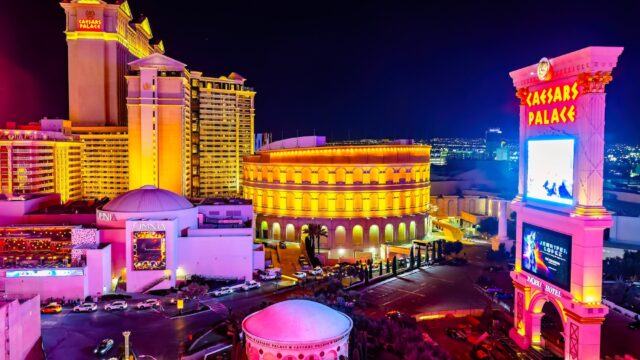
The Evoke acquisition by Bally’s comes hot on the heels of take-private moves on MGM Resorts and Caesars by Barry Diller’s People Incorporated and Tilman Fertitta, respectively.
Fertitta is the US ambassador to Italy and owner of the Golden Nugget, Houston Rockets, plus a portfolio of hundreds of restaurants.
So what is afoot? With Caesars’ enterprise value (EV) of $30 billion ($5.9 billion market capitalization plus $24 billion debt and $887 million in cash) made up mostly of debt, and MGM Resorts’ $17.41 billion EV weighed down by a hefty debt burden of $4.42 billion, what do the suitors see that the stock market is missing?
Evidently, market participants are finding it hard to look past the leverage piled up on the balance sheets. This is especially in the case of Caesars, after a period in private equity hands that proved disastrous and led to the split of the company’s real estate from the rest of the group.
Gaming Companies Have Been Trading at Depressed Valuations For Years, says Citizens’ Bender
According comments provided to Gambling Insider by Jordan Bender, equity research analyst at Citizens, the conundrum is explained by depressed valuations.
“For years, gaming companies traded at depressed valuations, creating a meaningful disconnect between public and private market values,” he explains.
“Recent take-private transactions have largely been driven by the opportunity to capitalize on this valuation gap. We believe this theme could persist across the gaming sector over the medium-term, as strategic buyers continue to benefit from the disparity between public and private market pricing.”
It is likely then, if Bender is right, that the recent M&A activity is no flash in the pan.
Billionaire Fertitta’s interest in Caesars became known in February, but the all-cash take-private deal was not finalized until May 28 at $31 a share, valuing the company at $17.6 billion.
The Carano family took control of Caesars in 2020, and as part of the equity rollover involved in the current deal, Caesars’ debt arrangements remain unchanged, which will save on interest payments. Other more substantive value-unlocking synergies are expected for Caesars, as well as MGM Resorts, as Bender sets out:
From an operational perspective, we would not expect significant changes to the day-to-day management of these businesses, given the strong execution and efficiency demonstrated by existing management teams.”
He adds: “While there are opportunities to realize synergies that could enhance the customer experience, such as leveraging Landry’s customer database and expanding cross-selling across assets, we do not anticipate material changes at the property level.”
Here’s a look at MGM Resorts’ financials:
| MGM Resorts International (MGM) | ||||
| FY ENDING DEC 31 | 2025A | 2026E | 2027E | |
| Revenue ($M) | 1Q | $4,277.1 | $4,454.7A | $4,513.0 |
| 2Q | $4,404.9 | $4,463.5 | $4,614.1 | |
| 3Q | $4,250.5 | $4,316.9 | $4,499.7 | |
| 4Q | $4,605.3 | $4,604.5 | $4,649.6 | |
| FY | $17,537.8 | $17,839.6 | $18,276.4 | |
| EBITDAR | 1Q | $1,201.5 | $1,144.8A | $1,149.7 |
| 2Q | $1,211.9 | $1,196.0 | $1,297.0 | |
| 3Q | $1,070.5 | $1,072.1 | $1,184.4 | |
| 4Q | $1,200.1 | $1,168.0 | $1,243.5 | |
| FY | $4,684.0 | $4,580.9 | $4,874.6 | |
| Source: Company reports and Citizens JMP Securities, LLC. Notes: “A” denotes actual/reported figure (1Q 2026). | ||||
Will All This Activity Spur More Moves on Gaming Stocks?
So are there more insider offers on other gaming stocks to be expected? Could the most recent moves generate hostile takeover interest from competitors in and outside of the sector?
Bender thinks not. “These transactions should not be viewed as catalysts that will suddenly attract a wave of strategic buyers or activist investors to the gaming sector at least in the near-term.
Rather, they establish a valuation framework set by sophisticated capital, with the multiples implied by these offers serving as an important benchmark for the broader industry. As a result, activists, insiders, and potential acquirers now have a clearer reference point for assessing the intrinsic value of gaming assets.
“That said, the current interest rate environment continues to constrain transaction activity. Elevated financing costs limit the ability of public companies to pursue acquisitions in an accretive manner, which remains a meaningful hurdle to broader consolidation across the sector.”
Still, the Bally’s takeover of Evoke (owner of William Hill and 888casino) lands at a 138% premium over the price the day before the UK-based company announced its strategic review on December 9, 2025, and 77% above the last business day before the speculation around an acquisition first surfaced on April 17 this year.
An Opportunistic Time for Value Investors, says Macquarie’s Beynon
In the view of Chad Beynon, Head of US Research and Sell-side Equity Analyst at Macquarie Capital, “this as an opportunistic time for value investors (public/private) to step in. Compared to prior periods, the valuations of companies in this space are near multi-year lows.”
Beynon thinks investors looking for undervalued companies in the gaming sector will be circling for more opportunities.
He told Gambling Insider:
Given the valuations and the strong free cash flow (FCF), we do expect for more deals to occur within the space, particularly for some of the smaller capitalization companies.
“As a reminder, in the last two years, we have seen several of the small equipment suppliers merge or be acquired by private equity firms.”
Private equity firm Apollo Global Management purchased the gaming and digital arms of International Game Technology and gaming technology provider Everi Holdings in 2024-2025. The $6.3 billion merger created a new privately held IGT. Evolution AB’s acquisition of Galaxy Gaming in 2024 and Aristocrat’s buying of Ainsworth Game Technology in 2023 also come to mind.
The Macquarie analyst predicts more states will begin legalizing iGaming, and although he does not explicitly cite this as the primary driver of value investor interest, it is likely a strong factor.
We expect for iGaming legislation to progress as the industry compiles additional data and realizes that the cannibalization onto land-based gaming is low. This remains the biggest reason why states haven’t legalized at this point.
“We believe that when there are tax deficits, there will be progress in several states that introduced in prior periods.”
Key to measuring undervaluation is the revenue and free cash flow that even the most indebted of firms, like Caesars, can generate. In Q1 2026, FCF was $392 million compared to total revenue of $2.9 billion, equating to a FCF margin of 13.5%. That’s a healthy conversion rate of its top-line revenue into cash. The industry average is 8-13%.
The same goes for MGM Resorts, where the FCF margin was 9.28% in Q1 2026 on FCF or $413 million. The offer from People Inc comes at a substantial premium, as a note from Citizens dated June 1 points out:
The $48.30/ps offer (~$18bn EV) represents a 24% premium to MGM’s 30-day volume-weighted average price and more than a 30% premium to its 90-day average trading price.”
People Inc already owns 26.1% of MGM Resorts shares. In the case of both Caesars and MGM Resorts, the offers represent a vote of confidence in Las Vegas’s revenue-generating potential and actuality – 48% of Caesars’ EBITDAR comes from Las Vegas, and 61% for MGM Resorts.
The Citizens note concludes: “Overall, we view the proposal as a strong validation of MGM’s underlying value and as evidence that the co’s assets remain more valuable than recent public market trading levels imply.”
Evoke Takeover Deal is 60% Accretive For Bally’s Shareholders
Back with the Bally’s-Evoke deal, in addition to “operational synergies” — which unfortunately may imply layoffs — Bally’s is gaining geographical diversification and the revenue opportunities that flow from that. As a combined group, the tax and regulatory challenges emanating from the UK become more manageable.
Bally’s Intralot’s move on Evoke shows clearly how the FCF generated by gaming companies is proving an enticing attraction.
Macquarie estimates the deal is 60% accretive to Bally’s shareholders: Bally’s standalone FCF/share of €0.20 versus the new company’s pro forma FCF/share of €0.32. (€0.32 ÷ €0.20 − 1 ≈ 60%). Put that another way, each existing Bally’s share goes from carrying €0.20 of FCF to €0.32 once Evoke is folded in.
The real crux is the share count. NewCo has 2,120 million shares, which is Bally’s 1,868 million + only 252 million newly issued (the “Adjustments” column on the Shares row). Critically, it is not 1,868 + 470. Evoke’s own 470 million shares are extinguished; Bally’s acquires Evoke’s entire €304 million FCF stream by issuing just 252 million new shares.
That mismatch is the essence of the accretion story. Bally’s is buying a cash flow stream that, on a standalone basis, was spread across 470m shares (Evoke’s €0.65 FCF/share), but is paying for it with only 252 million of its own new shares. So existing Bally’s holders absorb a disproportionate share of the acquired FCF per share they hold — hence the jump from €0.20 to €0.32.
If Bally’s had issued shares such that the merged company’s FCF/share equaled its old €0.20, the deal would be neutral. Because it issued far fewer shares than that, the combined per-share figure comes in materially higher, and the ~60% uplift is the result.
| Bally’s / Evoke — Pro Forma Combination (EUR millions) | ||||
| Bally’s | Evoke | Adjustments | NewCo | |
| Revenue | 1,086 | 2,079 | 3,165 | |
| EBITDA | 431 | 416 | 9 | 856 |
| Shares | 1,868 | 470 | 252 | 2,120 |
| Less: Capex | 64 | 112 | 176 | |
| FCF | 367 | 304 | 9 | 680 |
| per share | € 0.20 | € 0.65 | € 0.32 | |
| FY25 Adj. Op. FCF Conversion | 85% | 73% | 79% | |
| 2025 EBITDA | 431 | 416 | 847 | |
| UK tax impact | (130) | (137) | (267) | |
| Mitigations/Synergies | 80 | 196 | 276 | |
| PF EBITDA | 381 | 475 | 856 | |
| Accretion to FCF/share (NewCo vs Bally’s standalone): 63% | ||||
| Source: Macquarie Research, June 2026 · All figures in EUR millions unless noted (per share in €) | ||||


Gambling Insider delivers the latest industry news, in-depth features, and operator reviews that you can trust. Our team combines rigorous editorial standards with decades of specialized expertise to ensure accuracy and fairness. We are committed to delivering clear, impartial, and dependable coverage across the global gambling sector.