Gambling Commission: Local authorities need to be more involved with high street slots
The Gambling Commission cannot be everywhere at once, especially when it already has its plate full – Tim Miller warns, so it is calling on local authorities to oversee activities in their jurisdictions.

Key points:
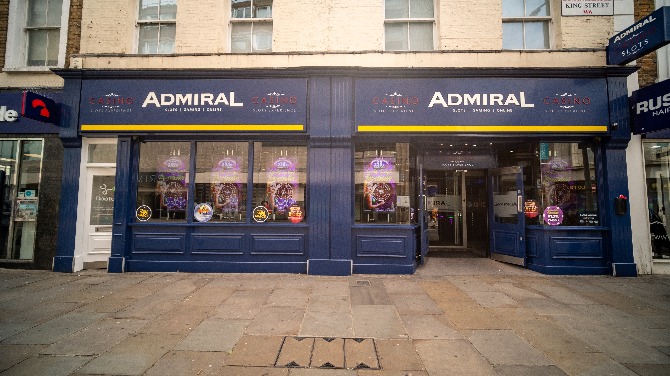
– Less than 50% of local authorities inspecting high street slots
– Miller’s speech at the Gambling Reform Gambling Summit focused on what others can do to help
– He reflected on recent achievements and figures
– Miller concluded that local authorities need to step up in monitoring land-based properties
Tim Miller, Gambling Commission Executive Director, took to the podium at the latest Gambling Reform Gambling Summit on 3 September 2025.
This was an opportunity for him to highlight the different steps the Commission has taken to improve the landscape in recent years, with the obvious highlight being the White Paper Review that dropped two years ago.
Since then, the Commission has implemented changes to direct marketing from operators, tightened age-verification and introduced the controversial financial vulnerability checks.
Besides that, since April this year, the Commission has also issued 344 cease and desists to advertisers and operators, reported 45,674 URLs to various search engines (and seen 30,605 URLs removed as a result), referred 466 websites to the search engines for delisting and disrupted 235 websites so that they have either been taken down or geo-blocked.
But as Miller reflects, “I know that for many people in this room and for others who will read this afterwards, this may not feel enough.”
He was humble in his analysis of the Commission being capable of doing more, but firm in his approach that people should be realistic about what they can and cannot achieve.
“As a fairly small regulator based in Birmingham, the Gambling Commission is not in a position to police every gambling establishment up and down the nations of Britain,” he said. “Any change to that position would require the government to introduce a very different funding model for the Commission.”
Good to know: After the new £5 ($6.73) slot limit was introduced for adults in the UK, slot revenue actually increased despite worries it would damage the sector
Currently, local authorities have the power to grant licences for Adult Gaming Centres (AGCs) and any fees they charge must be used for the sole purpose of funding local regulation – including regular inspections of the locations.
However, many still continue to point the finger at the Commission if these high street slots fail to meet expectations.
“We value our relationship with local authorities as our co-regulators,” Miller explained. “But it can not be the role of the national regulator to fill any gaps left in local regulation when less than half of licensing authorities are conducting any premises inspections, that the licensing fee funds them to perform.”
Ultimately, this could be down to people who are not directly involved with the gambling industry not feeling confident in the regulations and expectations of the industry; or simply a stigma that still surrounds high street slots that deters council members from wanting to physically inspect them.
Either way, the Commission is being clear in setting boundaries around the matter, and hopefully those responsible will begin to step up and assist in ways that support a healthier gambling ecosystem for the UK.


Gambling Insider delivers the latest industry news, in-depth features, and operator reviews that you can trust. Our team combines rigorous editorial standards with decades of specialized expertise to ensure accuracy and fairness. We are committed to delivering clear, impartial, and dependable coverage across the global gambling sector.