CCGP’s Josh Ercole Talks Big Money and Fine Lines in Gambling Insider Q&A
Gambling Insider goes deep with the Council on Compulsive Gambling of Pennsylvania’s Josh Ercole about revenue records, current trends, and walking the fine line of regulation.

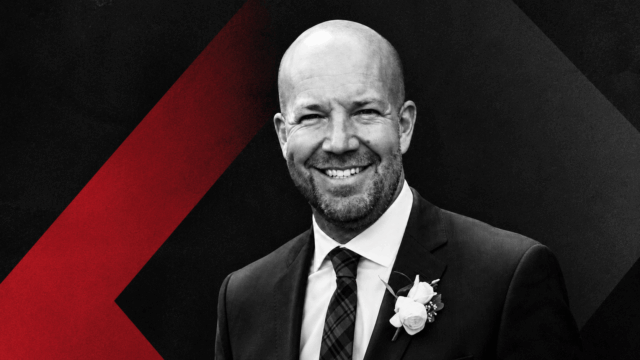
Before he became executive director of the Council on Compulsive Gambling of Pennsylvania (CCGP), Josh Ercole worked as a manager in the printing industry. Ercole says he liked the work overall, but the day-to-day scramble ultimately left him unfulfilled.
Seeking more than just a paycheck, Ercole went back to school for his master’s of social work. However, after a year, with the program in disarray, he decided to pause his schooling and reevaluate.
Around the same time in 2012, two of CCGP’s part-time staff won a grant and left to open the Maryland Council. Ercole’s father-in-law, Jim Pappas, one of CCGP’s founders and its previous ED, suggested that he try picking up that slack.
Ercole told Gambling Insider he was always interested in Pappas’ recovery story (he had developed an addiction in the late ‘70s) and Pennsylvania’s changing gambling landscape. Pappas, he says, had always been interested in his interest. Long story short, Ercole decided to give the council a shot. After Pappas passed in 2018, Ercole stepped into his shoes as executive director.
When not at work, Ercole likes playing guitar and spends a lot of time outdoors: trail running, hiking, camping, and skiing. His biggest non-work interest is his family, and he’s “a huge fan” of his almost 12-year-old daughter. Need proof? He wears a T-Swift-inspired friendship bracelet.
In a recent conversation, Gambling Insider and Ercole went in-depth about big money, fine lines, and the importance of being open to change.
GI: So, Pennsylvania just crossed $7 billion in annual gross gaming revenue. That’s a lot.
Ercole: Yeah, that’s a lot. It’s a big deal. It’s funny though, every year we say that’s a lot…
Next year, you know what we’re gonna say? That’s a lot.
I think in July we’ll see pretty big sports betting numbers. But that’s the thing, with sports betting, you’ve got a lot of folks now that can access the prediction markets. And we’re not going to get any revenue from that. I just saw a report that over a quarter of all sports bets on the World Cup were just through prediction markets. That’s absolutely remarkable.
GI: Considering they only started doing sports after January of last year.
Ercole: And then a few months later, we’re hearing, ‘oh, this new thing: pop culture, weather, sports. You can make all these predictions. Well, that sounds awfully familiar.
But if you look at [Pennsylvania’s] yearly data, we’re seeing revenue increase from three or four billion to 7 billion because we have these new types of attractive forms of gambling available, and they’re popular. But I think there’s a lot there to, like, peel apart when you start looking.
The one thing to look at with sports is not necessarily the revenue, but the handle. That’s likely over $9 billion now over the year. Think about $9 billion being put at risk. That to me is just mind-blowing.
GI: I’m not a big gambler. Every once in a while, I dabble, but just thinking about all the worthwhile things I could spend my money on…
Ercole: That’s one of the things, right? Revenue goes up. We went from 3 billion up to 7 billion. That’s a question to ask: society-wise, where is that money going? Or coming from? Because revenue translates to one thing, and that’s people losing money. Where is it not being spent?
That’s where we hear about medications and mortgages and long-term savings, gas and cars, food…
And that’s where it changes from being an interesting number to a concerning one.
GI: What trends or issues have you been seeing at the council this year?
Ercole: Pretty much more of the same. I don’t know that we’ve seen any significant shifts.
We’re trying to track prediction markets. But people just don’t know what they are. So when we ask if they’re placing sports bets on a prediction market, they just say they’re sports betting. Sometimes we find out that they’re actually talking about a sportsbook, not a prediction market, or vice versa.
We are also seeing a small increase in folks reporting day trading, which is good because typically that’s related to prediction markets.
But largely, people are saying, ‘It’s not sports betting. I’m predicting.’ That’s where my problem is.
Otherwise, we’re seeing sports remain high. And still seeing a lot of younger folks call the helpline. Except for a month here and there, the highest representation is from the 25 to 35 range. But percentage-wise, we’re seeing a big increase among 18-to 25-year-olds. That’s probably directly correlated to one thing: the availability of online options, most specifically sports betting or prediction markets.
GI: That might be a canary in the coal mine or for future problems?
Ercole: If, in five years, you’ve seen a shift that dramatic. I don’t think it’s shocking. Ot that anyone didn’t expect to see it, but I think that’s where the conversations need to go.
That’s where a lot of the focus lies in the Gaming Control Board’s proposed regulations and the Joint Commission study. They talk about minimizing in-game betting, advertising restrictions, and the like.
GI: The Gaming Control Board’s proposed regulations and the Joint Committee report touch on many of the same areas
Ercole: They do, but a little differently. The Gaming Control Board is much more conservative.
GI: What do you think about the proposed regulations and the report?
Ercole: Both are really great. I think a step forward is to be celebrated.
The Gaming Control Board is looking at this now as more of a public health issue, rather than just saying gamble responsibly… It’s more of a collaborative approach, and that’s good and important.
There are some areas [of the proposed rules] that could use improvement, like mandatory limit setting. But I’m always very aware of potential friction.
A credit card ban sounds great on paper. And I don’t think it’s a bad idea. But if other sites are more convenient because they accept credit cards and are not regulated… that might be attractive to somebody, and that’s a concern. If you’re going to put that type of legislation in place, it should be in a prepared and logical way. One that’s not overly cumbersome for the player. Otherwise, we might find ourselves with these unintended consequences.
GI: We often hear that if they ban credit, people will use their debit card and put bills and groceries on credit.
Ercole: Right. And everybody’s situation is different. Some people may have a very finite amount of money accessible by their debit card, which may protect them from significant financial damage. But what is that going to push them to do? And what about if folks don’t have a finite amount? They could still lose an exorbitant amount of money. It’s putting a Band-Aid on a much bigger issue.
GI: You mentioned mandatory limit setting; what needs improving there?
Ercole: The Gaming Control Board is making the shift to self-imposed limits, but they’re still not making them mandatory. That’s a big step that can provide a positive benefit without being overly restrictive.
We have approximately 150,000 self-imposed limits in Pennsylvania. Sounds really good, right? That represents about half of a percent of all account holders.
An easy switch that doesn’t become overly intrusive or overly preventive is making 100% of accounts have a deposit and time limit, maybe a loss limit, with the ability to remove or change them as they wish. I am convinced that many will say, “I don’t like this, but because I can remove it, I’m going to stay,” rather than it push them into the unregulated world.
GI: A lot of people probably won’t do anything at all.
Ercole: Even if they do, I’m fairly certain it’s not going to be 99 and a half percent. Even if it’s 75% of people, that’s still better. That’s absolutely going to put us in a better position.
The commission mirrored our thoughts on this, but the Gaming Control Board still sees it differently. So that’s one of the things that we’re putting into our comments to the Board.
GI: Would it not also lead to an ideological shift where it is “normal” for everyone to have limits?
Ercole: Yeah, you’re absolutely right. And, in fact, limits are not for people with gambling problems. They’re for everyone. They’re actually more to help prevent gambling problems before they start. But the way they’re perceived is, “oh, that’s for problem gambling, I don’t have that.” It would be a sea change in terms of ideological shift.
GI: You mentioned that was one of the comments you were gonna make towards the rule changes. Is there anything else that that stands out that CCGP has strong feelings about?
Ercole: I’m still brainstorming. I’m trying not to sound critical, because I don’t want it to be lost that it’s a really good thing that they’re finally doing this.
But as far as self-exclusion, I’d like to see the removal processes unified.
The self-exclusion for casinos right now is an active removal process, meaning you have to intentionally say ‘I don’t want to be on this program anymore.’ That puts people in a much better protected position because they don’t have to think about it. In 2006, we had people sign up for one-year self-exclusion, and they never returned. That’s really beneficial.
With iGaming and the other newer [gambling] forms, they’re all automatic removal. So after a year, if the excluder doesn’t renew, they’ll be removed. Then they’re at risk of receiving advertisements and being able to access the online platforms.
A couple of years ago, the Gaming Control Board proposed changing the casino program to match online. We rallied the troops and sent like 50 letters to the Gaming Control Board from counselors, people in recovery, legislators, and the industry, all saying this is not the way we should be moving.
Ultimately, they didn’t make that change. But since then, we’ve been vocal about shifting the other programs to match the casino program. There hasn’t been any movement yet, but this is a good time to revisit it. We have situations now where if somebody signs up for casino and online exclusion, only the online exclusion expires after a year. But if they walk into a casino, they’re going to be identified and escorted out. They could even be arrested and cited for criminal trespass. That’s potentially very confusing.
GI: Turning back to prediction markets: Rep. Tarik Khan recently introduced a state bill to regulate them, HB 2711.
[Editor’s note: Introduced in July by Pennsylvania Rep. Tarik Khan and backed by over two dozen co-sponsors, HB 2711 would create a regulatory framework for prediction markets without a tax component]
Ercole: It’s interesting because it’s still an activity that the Gaming Control Board is looking at much differently. They don’t want prediction markets in Pennsylvania at all… Obviously, the Gaming Control Board is going to follow the legislation. Still, they’ve been very vocal that operators actually run the risk of losing their license if they’re partnering with prediction markets and offering those games here.
The big legal battle is when or how states will determine what regulations, protections, or rules prediction markets are going to have to play by when it’s federally regulated. I don’t know what that’s going to look like.
I don’t think we’re going to see this pass as it is, but I could see a lot of this language ending up somewhere else.
GI: Is there concern with not having a tax levy in this bill, with a portion going to prevention and treatment?
Ercole: In truth, very little of any regulated gambling or legislated gambling is going towards that. In Pennsylvania, it’s .002% of overall terminal revenue. That equates to a lot of money, but not nearly what we see going to things like substance use issues.
GI: On to an entirely different topic: DraftKings sued Philadelphia to end an enforcement probe and block a local consumer protection law.
Ercole: That’s probably legit… It’s just the public perception. It looks really bad when a casino or an online operator says we’re gonna sue a city because they want to make more protections available. There’s just no way that looks good. When, in essence, I think there’s a lot to look at.
But it’s not a good look when someone is suing somebody who’s trying to make things better. At least, that’s what the headline reads.
To me, that’s clickbait. I’m not sticking up for DraftKings, but their responsible gambling department is robust and dedicated to doing as much as they can to create tools to help people. But they’re also part of a larger organization that has folks looking at the bottom line.
Not that it was DraftKings; it was FanDuel, but the Bryce Harper thing. That may not align with what another department is working to achieve.
GI: Bryce Harper, that was a wild story.
Ercole: I don’t know all the ins and outs yet. But everybody was immediately judging what happened. Then a few days later, Harper came out with a statement that changed the narrative a bit.
Based on everything that I know, I’m not sure if, under the current regulations and legislation, anyone at FanDuel did anything wrong. That sounds icky, but if they didn’t, and people have an issue with that, then this is a great opportunity to have a conversation.
It’s like that saying, ‘don’t hate the player, hate the game.’ If they’re playing within the rules, maybe the legislation or regulations need to change.
GI: What are the biggest gambling-related issues facing Pennsylvanians right now, or even Americans as a whole?
Ercole: We need to amp up prevention on all levels. Not just at schools, all levels.
We need to have an increased awareness about the risks of gambling. I don’t mean that gambling is bad or good. But gambling is an activity that, for most people, is fun. If it’s fun and entertaining for 75%, 90%, or whatever, it’s hard to call it bad. But when the problems start, that’s when it’s really important. People say, I didn’t see it coming; it just snuck up on me.
That’s where the industry and folks who are working in the field all have a collective responsibility. If somebody’s noticing, ‘geez, I’m spending more time doing this.’ Well, there’s somebody else that knows you’re spending more time doing it, and that’s whatever platform you’re on.
It comes down to what we are doing to citizens in Pennsylvania and across the country. If we’re putting them at risk of developing problems when we have tools to help available, but they’re not being used in the capacity they could be, that’s a huge missed opportunity.
GI: Recently there’s been a trend of jurisdictions having regret about legalizing or regulating gambling.
Ercole: They want to put it back in the tube.
We won’t see it leave areas where it exists. I don’t see how that’s possible. Regulatory involvement provides the greatest potential for the overall protection of people.
If regulated properly, [gambling] can exist and offer people fun and entertainment. But there’s also a robust set of protections, tools, and resources to help prevent and address any problems that might develop. That’s kind of like the perfect recipe.
Because it’s going to be here, there’s going to be gambling. Sports betting’s not new to Pennsylvania. Legal sports betting’s new. Well, it’s not exactly new anymore, but you know what I mean.
As a kid going to Eagles games, I remember seeing the line of men at the payphones placing bets. That was 1985. This is new. If we want to keep people safe, the best way to do that is with some type of regulatory oversight. It can’t be overly restrictive, but it has to be restrictive enough, or protective enough.
It is a fine line. And that’s where conversation and reevaluation come in. The Gaming Control Board is already looking at the next round of changes. You’re not looking at the next round of changes if you think you nailed it… That’s a good thing. We have to do it, see how it works, and then take a step back and consider: what do we want to change?


Gambling Insider delivers the latest industry news, in-depth features, and operator reviews that you can trust. Our team combines rigorous editorial standards with decades of specialized expertise to ensure accuracy and fairness. We are committed to delivering clear, impartial, and dependable coverage across the global gambling sector.