Magic mushrooms: A new field of gaming addiction research
What determines whether a drug is licensed for medical use? Does efficacy trump side effects? Clearly, it’s a sliding scale. A pill giving you earache isn’t going to preclude it from clinical approval if it cures deafness. There is a sifting and measuring of benefits that goes on, and sometimes there is compromise, because ill people do not have all day.

To imagine that those decisions are made utterly clinically is wrong. Or at least, approvals are not free from ‘clinical risk’. But for the public, it can feel like a personal offence when uncertainty is visible in the equation. Think of the outrage when two recent Alzheimer’s treatments weren’t deemed cost-effective for the NHS. Healthcare is emotional, and where it is emotional it will become politicised. Long-term effectiveness vs clinical risk are particularly uncertain metrics, and the Covid-19 vaccines are prime examples of how paying off that uncertainty with effectiveness can breed outrage and social division. Medical sectarianism should be an intrinsic impossibility, and yet…
Psilocybin, or the Magic Mushroom, has been, in equal parts, researched and baulked at as a medical device since the 1950s. In the ‘60s, political posturing and puritanical outrage saw it confined to a scientific ghetto. But in the ‘90s, that particular field of research was resown.
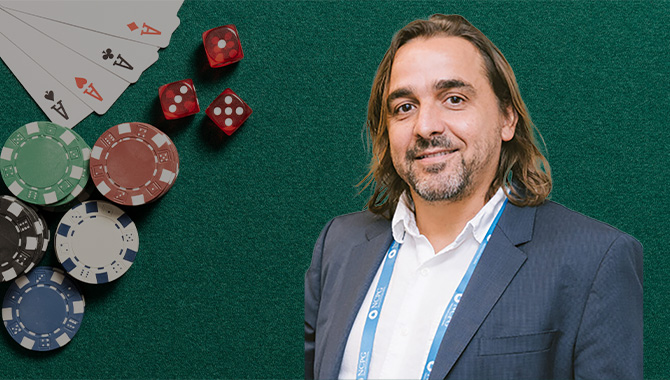
Pedro Romero epitomises the increasing curiosity in the manifold medical applications of classic psychedelics. But he, unlike some predecessors, is not out on his own. In the UK, the NHS, with Imperial College London, has commissioned a pilot study into that very topic. So, putting both politics and the Grateful Dead to one side, where are we scientifically-speaking? We put it to Romero that, thus far, the pay-off between effectiveness and uncertainty hasn’t convinced despite promising early results. In one study treating subjects with major depressive disorder, a single moderate dose combined with psychotherapy led to an absolute decrease in symptoms compared to the placebo, with 54% of those tested meeting remission criteria 14 days later. But the effectiveness of medical grade doses of psilocybin vanquishing mental disorders beyond six months is still very debatable.
It can take a lifetime of controlled study to know with anything resembling certainty, what long-term effects a treatment has, and though as Romero’s paper claims, classic psychedelics are “generally considered physiologically safe,” this claim might not be all that it seems either. Some critics might say conflating physiological health with overall health is a deceptive workaround. There are plenty of non-psychoactive past-times that can create a dependency and disrupt your life, and subsequently mental health, in a way that isn’t physiologically traceable.
The thing is, six months without major depressive disorder from one dose would be an outstanding result, particularly considering the questionable smorgasbord of mind-altering drugs that have been prescribed over the decades for mental health complaints. Romero also has a compelling rebuttal to fears of dependency: when a person faces down the demons of their addiction in the dreamlike state induced by the exercise, it can be deeply healing, but it is no joyride. What a regulated, medicinal use of the drug can do is create guard rails, but the process of confronting the roots of trauma and addiction still represents a trial of our humanity. It can be overwhelming, and it can alter minds in the long term as any powerful moment in our lives can, but moreish it is not. And the question marks themselves again seem small and foolish when we think of the addictions caused throughout history by over-the-counter pharmaceuticals.
Of course, we discuss the resistance, even from sympathetic parties, to engage with what is still, in most quarters, seen as a countercultural symbol. Within gambling, Romero feels that stigma all the more. There aren’t many in the industry that want to add psychedelic drugs to the list of ‘vices’ they’re professionally involved in. This Autumn, ‘Heroic Hearts UK’ is running a fully funded gambling research retreat in the Netherlands and is currently searching for participants. It will take a lot of research rocket fuel to help this branch of medicine break out of the academia and ‘hippy science’ biospheres. But this retreat, Romero hopes, will mine some of that research, and encourage potential spokespeople to emerge from “the psychedelic closet.”
Romero’s final appeal to me describes both the seriousness of the research and his frustration better than we could. He tells us that he is a clinician, he wants to help people, and please could we avoid the mocking tone that pervades some of the coverage of this field of research. On that front, we apologise for namechecking the Grateful Dead.



Gambling Insider delivers the latest industry news, in-depth features, and operator reviews that you can trust. Our team combines rigorous editorial standards with decades of specialized expertise to ensure accuracy and fairness. We are committed to delivering clear, impartial, and dependable coverage across the global gambling sector.
