Oklahoma and Utah Escalate Crackdown on Sweepstakes Casinos in 2026
Two of the nation’s most gambling-restrictive states — Oklahoma and Utah — have introduced 2026 legislation that would target sweepstakes casinos and dual-currency gaming platforms, which regulators and lawmakers across the U.S. increasingly view as unlicensed gaming.

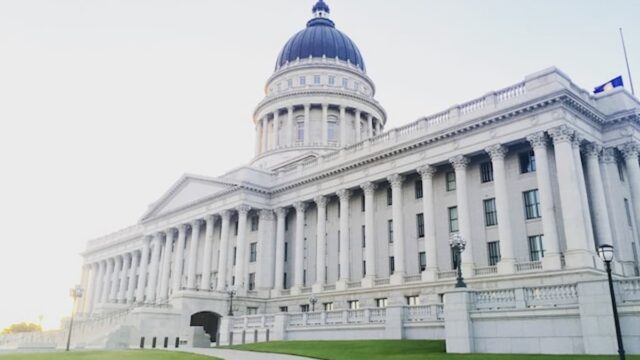
A prefiled criminal law bill in Oklahoma directly outlaws online casino games and the dual-currency platforms. Utah, meanwhile, has introduced a pair of bills that would give state regulators and prosecutors multiple new tools to pursue sweepstakes operators under both gambling and consumer protection laws if they deem them illegal.
Oklahoma Moves to Criminalize Sweepstakes Casinos and Their Entire Supply Chain
Oklahoma Senate Bill 1589, sponsored by Sen. Gollihare, amends the state’s criminal gambling statute.
The bill creates a new statutory definition of “online casino games.” It defines it as any gambling game that allows a person to access the internet or a mobile device and, “upon risking any representative of value,” simulates slot machines, lotteries, bingo, or other prohibited gambling games.
More significantly, SB 1589 redefines what counts as “representative of value” to cover virtual coins used at sweepstakes casinos:
“any and all currency used as part of a dual-currency system of payment that allows a person to exchange such currency for any prize, award, cash, or cash equivalent, or any chance to win any prize, award, cash, or cash equivalent.”
The bill also extends liability beyond operators. SB 1589 applies not only to anyone who “opens” or “conducts” an online casino game, but also to any “geolocation provider, gaming supplier, platform provider, promoter, or media affiliate” who “deals or provides support” for those games.
Violations would be punished as Class C2 felonies, with fines of $500 to $2,000 and potential imprisonment.
Oklahoma’s 2026 legislative session begins on Feb. 2. If enacted, the bill would take effect on Nov. 1, 2026.
Utah Builds a Two-Track Enforcement System Against Sweepstakes Casinos
Utah has introduced two bills that do not specifically ban sweepstakes casinos. Still, they give authorities more power to target them through both criminal law and consumer protection enforcement.
HB 243 Redefines “Fringe Gambling” and Strips Sweepstakes Casinos of Legal Carve-Outs
House Bill 243, sponsored by Rep. Joseph Elison, rewrites Utah’s gambling definitions. Under it, sweepstakes-style and dual-currency casino platforms fall under illegal “fringe gambling.” The bill defines “fringe gambling” as:
“any de facto form of gambling, lottery, fringe gaming device, or video gaming device that is given, conducted, or offered for use or sale by a business in exchange for anything of value or incident to the purchase of another good or service.”
While the statute excludes “a promotional activity that is clearly ancillary to the primary activity of a business” and the “use of an amusement device,” HB 243 then sharply narrows both of those categories.
An “amusement device,” under the bill, must not allow a player to:
“enter into a sweepstakes, lottery, or other gambling event” or “receive any form of consideration or value, except an appropriate reward.”
The bill limits “appropriate reward” to toys, novelties, or non-monetary prizes. It explicitly excludes money, gift cards, store credit, or any other item redeemable for cash.
HB 243 also narrows the definition of a lawful promotional sweepstakes. It bans any system that simulates casino-style games, requires the purchase of something of value, provides delayed or discounted prizes, or utilizes slot, poker, bingo, or chance-based video game mechanics.
With these provisions, sweepstakes casinos are neither lawful promotions nor amusement devices. Therefore, they count as “fringe gambling” under Utah law.
SB 38 Gives Utah Regulators New Consumer-Protection Weapons
Senate Bill 38, sponsored by Sen. Todd Weiler, expands the authority of the Utah Division of Consumer Protection over prize-based promotions, inducements, and consumer-facing digital platforms.
SB 38 empowers the Division to “administer and enforce” a broad group of statutes that govern consumer promotions and prize offers. These include the Prize Notices Regulation Act, the Ticket Website Sales Act, the Automatic Renewal Contracts Act, and others.
The bill also gives the Division new leverage tools to compel compliance and publicly identify operators that refuse to cooperate with investigations. SB 38 authorizes the Division to establish:
“a public list that identifies a person that
(i) violates a chapter described in Subsection (2);
(ii) without proper legal justification, fails to comply with an order, subpoena, judgment, or other legal process …; or
(iii) breaches a settlement agreement, stipulation, assurance of voluntary compliance, or similar instrument signed by the person and the division.”
The bill provides Utah regulators with a civil law pathway to pursue sweepstakes casinos if they deem them illegal, even when criminal gambling charges are not immediately brought.
A Growing National Trend
Oklahoma and Utah represent the latest states to look at closing loopholes regarding gambling used by sweepstakes casinos.
While the sector grew at an impressive rate after the COVID-19 pandemic, lawmakers are increasingly turning their attention to the unregulated platforms. In 2025, six states enacted legislative bans, while multiple others targeted sweepstakes casinos through regulatory efforts.
With the 2026 legislative session beginning across the nation, several additional states have introduced or prefiled ban bills. They include Indiana, Florida, Maine, Mississippi, Virginia, and now Oklahoma and Utah. Additionally, according to local reports, a bill is expected in Iowa.
In these states, lawmakers are rejecting the idea that sweepstakes casinos are merely promotional games — and are moving to treat them as unlicensed online gambling.


Gambling Insider delivers the latest industry news, in-depth features, and operator reviews that you can trust. Our team combines rigorous editorial standards with decades of specialized expertise to ensure accuracy and fairness. We are committed to delivering clear, impartial, and dependable coverage across the global gambling sector.