New Jersey Leans on Massachusetts Ruling to Strengthen Case Against Kalshi
New Jersey is the latest state to cite the Massachusetts ruling against Kalshi in support of its own legal case. In Massachusetts, Suffolk County Superior Court Judge Christopher Barry-Smith approved the Commonwealth's request for a preliminary injunction on January 20 to block Kalshi from operating in the state because it lacks a sports betting license.

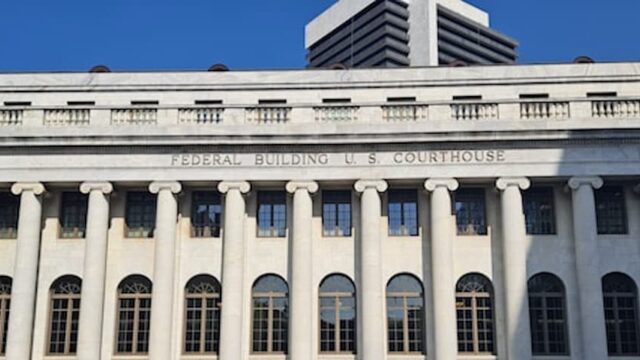
New Jersey’s Acting Attorney General Jennifer Davenport formally submitted that decision to the U.S. Court of Appeals for the Third Circuit on January 22 as supplemental authority under Federal Rule of Appellate Procedure 28(j).
New Jersey is urging the court to consider the ruling as it reviews Kalshi‘s request to maintain a federal injunction shielding it from state gambling enforcement.
The Third Circuit is currently reviewing a lower-court ruling that barred New Jersey regulators from enforcing state gaming laws against Kalshi while the case proceeds. New Jersey is asking the appeals court to dissolve that injunction.
Pointing Out Flaws in Kalshi’s Case
Thursday’s letter from New Jersey states that the Massachusetts court rejected Kalshi’s federal preemption argument. Citing the Massachusetts decision directly, New Jersey emphasized that Congress did not intend to:
“displace traditional state police powers, such as gambling regulation—particularly in the absence of the express language so stating.”
The letter also quoted the Massachusetts court’s conclusion that “Congress chose to explicitly preempt only some state gaming laws,” reflecting “an intent to limit the scope of preemption to only those expressly stated areas.”
New Jersey also stressed that the district court ruling under review now stands alone. It told the Third Circuit that it is “the only court in the country to accept Kalshi’s attempted federalization of the multi-billion-dollar gaming industry.”
The letter warned that requiring Kalshi to obtain state licensure would not conflict with federal derivatives regulation. It quoted the Massachusetts court’s finding that such requirements would:
“neither displace federal derivatives regulations or enforcement efforts, nor frustrate Congress’s purpose in consolidating regulatory power in the CFTC.”
Other States Following a Similar Approach
As highlighted by gaming attorney Daniel Wallach, New Jersey’s letter also mentions previous rulings in Nevada and Maryland. These courts have already rejected Kalshi’s claims that federal law protects it from state regulation.
New York was the first state to cite the Massachusetts decision. The New York State Gaming Commission (NYSGC) was quick off the mark. It filed the ruling as supplemental authority in its own federal case against Kalshi, just hours after the announcement.
Shortly after the NYSGC action on Tuesday, Tennessee regulators cited the Massachusetts decision in a footnote while opposing Kalshi’s motion for a preliminary injunction. Nevada later filed the Massachusetts decision as supplemental authority in its Ninth Circuit appeal.
With multiple courts now rejecting Kalshi’s federal preemption argument, the Massachusetts ruling is emerging as a central reference point for states in their legal battles over sports event prediction markets. Wallach expects Connecticut and Ohio also to reference the decision.
The Third Circuit’s decision is likely to determine whether states can enforce their gambling laws or whether Kalshi’s federal shield remains intact.


Gambling Insider delivers the latest industry news, in-depth features, and operator reviews that you can trust. Our team combines rigorous editorial standards with decades of specialized expertise to ensure accuracy and fairness. We are committed to delivering clear, impartial, and dependable coverage across the global gambling sector.