Virginia House Passes iGaming Measure, Still Must Confer With Senate Over Final Version
Differences over spending priorities, iLottery concerns, and 2027 reconsideration remain after Virginia lawmakers meet deadline

One day after the Virginia Senate needed a second vote to pass an iGaming bill, the state’s House of Delegates also needed a re-vote Tuesday to approve its version of legislation that would bring online casinos to the Old Dominion.
While it is noteworthy that both chambers of the state’s General Assembly have passed iGaming measures, it’s not time to start downloading casino apps from Caesars, DraftKings or other operators. That time may not come until next year, if at all.
The vote to approve House Bill 161 on Tuesday fell on the “crossover” deadline, the date established by the legislature for bills to clear their chamber of origin. Now, either the Senate or the House could approve the other chamber’s measure. However, the more likely solution will be a conference committee to try to reach a final version acceptable to both chambers.
There is still significant work ahead to reconcile the House and Senate versions and get this across the finish line, but the momentum and the facts are clearly on the side of a safe, regulated marketplace,” said John Pappas, the state advocacy director for the iDevelopment and Economic Association (iDEA), a major proponent of online gaming legalization.
Differences Between Virginia iGaming Bills
According to the fiscal impact statements for the Virginia iGaming bills, both measures would give the Virginia Lottery, which already oversees sports betting and land-based casinos in the commonwealth, oversight authority over iGaming.
In addition, both would require land-based operators that wish to offer online casino gaming to pay a $2 million fee, and online operators would pay an initial licensing fee of $500,000. Both also have 20% tax rates on adjusted gross revenue and an additional 6% “economic development fee” that would be set aside for a “hold harmless fund” for the land-based operators.
There are some minor differences in how the casino gaming hold harmless fund would operate. Senate Bill 118 states that the money would be used to offset any casino operator that loses revenue due to iGaming. HB161 calls for each casino to receive equal payments through July 2032, and after that, money would only go to casinos showing a loss.
Both the House and Senate disagree on how to spend the tax revenue. HB161 calls for 5% to go to the state’s problem gambling fund and 89%, through 2036, to go to the general fund. Senators want 3% set aside to regulate iGaming, 2% for problem gambling and 95% to go to education.
House proponents also want the platform fees paid by casinos to go toward the creation of a state gaming commission.
House Pushes for Fund to Cover Virginia iLottery Losses
The biggest difference between the House and Senate bills is that the House wants to set aside iGaming money for potential losses in lottery revenue.
HB 161 creates an Internet Lottery Hold Harmless Fund that, through 2036, would allow the state lottery to recoup any losses its online gaming platform would incur due to the iGaming expansion. That fund would come from 6% of the gaming tax the state collects.
That fund would sunset in 2037, with the general fund then getting 95% of the tax revenue.
The House’s fiscal note cites an Eilers & Krejcik study that “suggests” iGaming affects iLottery sales.
Legalization of iGaming will create new tax revenue from that activity, but is not projected to outpace the reduction in revenues from iLottery profits and taxes on casino gaming,” the House fiscal note stated. “Reduction of transfers to the Lottery Proceeds Fund could have a potential impact to the general fund. Due to limited data, preliminary estimates of profit lost to the Lottery Proceeds Fund based on the current iLottery platform performance and the impact of iGaming on iLottery platforms in other jurisdictions are expected to range from $77 million to $163 million per year.”
Further, the note said: “iLottery accounts for over half of the Lottery’s sales and therefore even modest impacts to iLottery sales will have meaningful impacts and the increased casino revenue may not make up for the loss in iLottery sales.”
Virginia House Wants to Reconsider iGaming Next Year
Besides the iLottery hold harmless fund, the other big difference between the proposals is when iGaming would take effect.
SB118 sets the effective date of July 1, 2027, with lottery officials developing regulations by Jan. 1, 2027. However, the Senate’s fiscal note indicates that if the General Assembly approves the creation of a gaming commission, then it could delay creating the iGaming regs.
The House’s bill, if approved, would require the legislature to reconsider iGaming again next year. That would delay any online casino launch until the start of 2028.
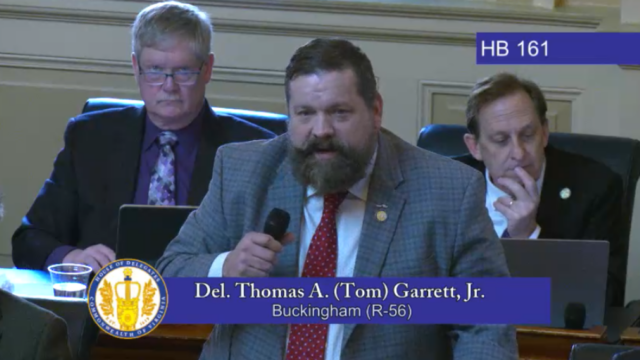
Reconsideration would give lawmakers like Del. Tom Garrett Jr. (R-Goochland) more time to sway his colleagues to reject iGaming. He spoke against the bill prior to its initial defeat in the House on Tuesday, but he noted that iGaming died in committees and on the Senate floor before finally getting approved.
All we want to do is tax and regulate it,” said Garrett, who previously served in Congress but left after one term, after admitting struggles with alcoholism in 2018. “Well, let me talk about some other things really quickly that already exist in Virginia. Should we tax and regulate human trafficking? Should we tax and regulate heroin? Do we need money so bad that we should tax and regulate fentanyl?”
House members rejected HB161 by a 46-49 vote after Garrett’s speech. Just more than an hour later, the chamber followed the Senate by passing the bill 67-30.
How Much Time Remains for Virginia iGaming in 2026
Beginning Wednesday, 24 days remain in the 2026 Virginia General Assembly session, which will end March 14. With the crossover deadline now passed, the General Assembly will spend much of its remaining time in session on the state’s budget.
Lawmakers would return to Richmond on April 22 for the start of the reconvened session where they will take up bills the governor vetoed or sent back with recommendations.


Gambling Insider delivers the latest industry news, in-depth features, and operator reviews that you can trust. Our team combines rigorous editorial standards with decades of specialized expertise to ensure accuracy and fairness. We are committed to delivering clear, impartial, and dependable coverage across the global gambling sector.