Hawthorne Race Course Files for Chapter 11, Owes Fanatics Sportsbook Nearly $9 million
Hawthorne's former online sports betting partner is track's top unsecured creditor

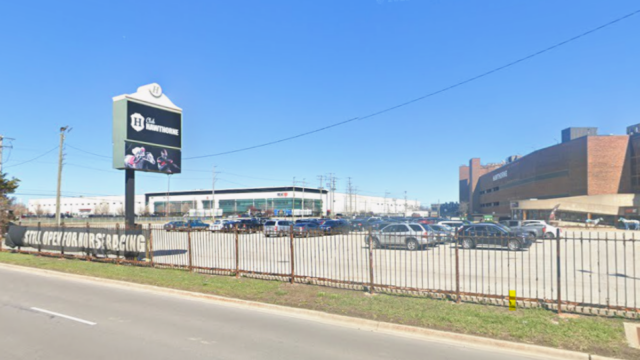
Documents filed in a federal bankruptcy court Friday by the owners of Hawthorne Race Course show the Chicago-area track owes Fanatics nearly $9 million, making Hawthorne’s former online sports betting partner the largest unsecured creditor.
After much speculation, Hawthorne officials finally moved forward voluntarily with plans to reorganize by filing for Chapter 11 in U.S. Bankruptcy Court for the Northern District of Illinois. The filing showed Hawthorne holding assets worth between $50 million and $100 million. It also indicated debts between $100 million and $500 million.
In a statement, track officials said they hope “to attract a buyer or investor willing to recapitalize Hawthorne and restart operations of the racecourse while maximizing recovery to the company’s creditors.”
Relationships with Creditors Soured
Filing for Chapter 11 became necessary when the track’s relationship with its lender and other creditors “materially eroded.” That forced Hawthorne to cancel its harness racing cards, starting in January when horsemen complained their checks for purses bounced.
On Jan. 27, the Illinois Racing Board suspended Hawthorne’s harness racing license, citing financial difficulties. The board’s move did not affect the track’s license to offer thoroughbred racing.
That same day, Fanatics notified its Illinois customers that it changed its online sports betting partnership to the Argosy Casino in Alton. Fanatics still maintained brick-and-mortar sportsbooks at Hawthorne’s track in Cicero and its four off-track-betting parlors, located in the Chicago area.
According to the filing, Fanatics has an unsecured claim of $8.75 million. The contact listed for Fanatics is Andrea Ellis, who serves as the CFO for Fanatics Betting & Gaming. The filing did not include details explaining why the track owed Fanatics the money.
Hawthorne owing money to its one-time mobile sports betting partner seems, on its face, a bit unusual. When Illinois lawmakers legalized sports betting in 2019, they required sportsbooks seeking immediate access to the state to partner with a casino, racetrack, or professional sports venue in order to get a license. Typically, in those kinds of partnerships, it’s the sports betting operator that agrees to provide a share of its revenue in order for access.
Fanatics became Hawthorne’s partner in April 2024. It was part of a deal the Florida-based sports retailer giant made in 2023 to purchase the U.S. assets of PointsBet. The Australian-based sportsbook served as the track’s initial partner.
A Fanatics spokesperson told Gambling Insider on Saturday the company had no comment at this time.
Casino Problems Derailed Hawthorne
Earlier Friday, Hawthorne President and General Manager Tim Carey met with representatives of both the Illinois harness and thoroughbred horsemen’s associations and the state’s racing and gaming boards to go over the track’s reorganization plans.
Hawthorne is one of the country’s oldest race tracks. It’s also the only one known in the U.S. to run both harness and thoroughbred racing. It was tasked with being the primary track for both sectors after Arlington International Racecourse shuttered in September 2021.
Seven years ago, Illinois lawmakers opened the door for tracks in the state to operate casinos in order to help them fund purses and bolster the state’s racing product. Hawthorne applied for and received a license from the Illinois Gaming Board in 2020.
However, there are no slot machines or table games yet at the Cicero track, as Hawthorne’s owners have struggled to get the project off the ground. Unfortunately, while Hawthorne faced problems, additional casinos opened up in the Chicago area. Those venues chipped away at the track’s already declining customer base.
The Debtors have faced substantial financial hardship in recent years, driven by challenges affecting the horse racing industry in Illinois, initially due to the expansion of casino gaming and later compounded by an increasingly competitive sports betting market,” Carey said in the Hawthorne statement. “As well as other industry-wide issues, including rising costs and increased regulatory fees related to simultaneously running a troubled business and building a new business.”
Further complicating matters have been liens filed by contractors for the casino project. Those issues led to the financial problems the track faced, eventually forcing owners to file for reorganization.
Hawthorne’s listing of its the 20 largest unsecured creditors include two contractors that filed liens for nonpayment. Aria Group Architects has a claim for more than $5.6 million, and W.E. O’Neil Construction has one listed for nearly $5.1 million. Track officials, though, dispute that claim.
Hawthorne Bankruptcy Hearing Scheduled for Monday
The track is also in arrears with both harness and thoroughbred horsemen, but Hawthorne has a plan to pay the owners, trainers, and jockeys the money owed to them, as well as the track’s employees, regulatory fees, utilities, and other expenses needed to reopen. Court documents show Hawthorne has negotiated $16 million in debtor-in-possession financing with Chicago-based JDI Loans, a private-equity lender.
Hawthorne’s proposed budget calls before the bankruptcy court for the track to cover $1.4 million in returned checks to horsemen and another $2.4 million for other unpaid purse money. Track officials expect to pay those during the first week the DIP financing is available.
“Actual payment subject to negotiated settlement with” the Illinois Racing Board, the budget states.
The proposed budget is among various items that will be discussed at a hearing set for Monday before U.S. District Judge Deborah L. Thorne in Chicago.
Illinois Horsemen Cautiously Optimistic
In Hawthorne’s statement announcing the bankruptcy filing, Carey talked about the importance of saving Hawthorne. It’s currently the only track in Chicago, which was once a thriving horse and harness racing market. However, it has seen two harness tracks and Arlington shutter in the past decade. Not only does the track employ more than 250 people, but there are hundreds more who work and live along the backside.
The families live rent free and receive medical and dental care funded almost entirely by Hawthorne,” he added. “These families are part of the community, supporting local businesses, attending church and sending their kids to local schools. Currently there are approximately 100 children, age 18 or under, living on the premises.”
In a statement on its website, the Illinois Thoroughbred Horsemen’s Association said Carey “expressed confidence” that a thoroughbred meet would take place this spring. Further, the ITHA said it would support Carey’s efforts to manage a reorganization that benefits racing.
The organization, though, did note that when a company enters bankruptcy, it “is no longer in control of its own assets.” ITHA leaders expect to know more in the coming week after the initial hearing.
“All of this information, at this time, represents a plan and not a certainty,” the ITHA statement read.
How Hawthorne Bankruptcy Filing Impacts on Illinois Harness Racing
While thoroughbred horsemen hope they will run at Hawthorne sometime this year, the clock ran out on the harness horsemen. That meet was scheduled to conclude on Feb. 15.
Jeff Davis, president of the Illinois Harness Horsemen’s Association, told Gambling Insider that the Hawthorne bankruptcy court filing “will finally bring some transparency for horsemen.” He added the money owed to him and other harness owners, trainers, and jockeys goes beyond just purse money.
For example, in December, when Hawthorne ran the first part of a scheduled claiming series (NOTE: owners put horses in such races and agree to sell the horse to anyone willing to put in a claim ahead of the race), Davis went in with a group to claim a participating horse. While they secured possession of the horse, the previous owners have not received the money.
I know one guy who put money in – you have to have money in the account to claim a horse – and there were multiple claims on the horse,” Davis said. “He didn’t get the horse, and the money got frozen.”
Without an Illinois track to race, Davis said his members have few options. Some just race locally. Harrah’s Hoosier Park in Anderson, Ind., began its 2027 meet earlier this month, and he said he sent a few horses there. Minnesota’s harness track is dark until May, and while Ohio has harness racing, Davis said that state’s tracks have a preference for horses based in the Buckeye State.
It’s uncertain whether Hawthorne will host a harness meet later this year, but Davis said there are plans in place to give Illinois harness horsemen two tracks. One would be located in Decatur, in the central part of the state. The other would be in Chicago’s southern suburbs. Both would be eligible for casinos, which would supplement the tracks’ purse money.
That would allow thoroughbreds to race at Hawthorne and Fairmount Park Casino & Racing in Collinsville, near St. Louis.
A bill for the Decatur track passed the Senate last fall, but it still needs House approval. Davis expects that will happen before the session concludes in May.
“We do anticipate it,” he added. “I mean, for the love of God, at this point, if they can’t pass something to fix it, then they’ll never pass something.”


Gambling Insider delivers the latest industry news, in-depth features, and operator reviews that you can trust. Our team combines rigorous editorial standards with decades of specialized expertise to ensure accuracy and fairness. We are committed to delivering clear, impartial, and dependable coverage across the global gambling sector.