March Madness 2026: Record Betting Meets Scandal and a Growing Policy Fight
The 2026 March Madness begins with record-breaking bets, rising controversy, and a spotlight that stretches far beyond the court.

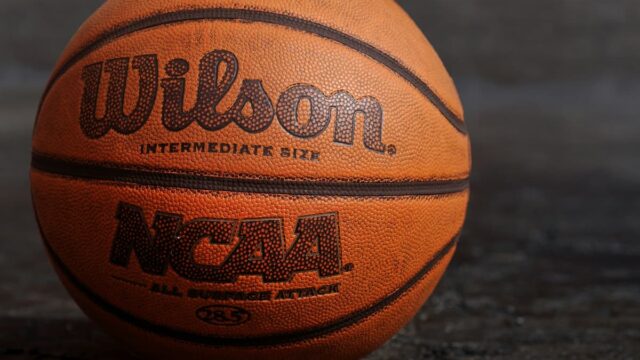
The 2026 NCAA March Madness college basketball tournaments tip off this week with 68 men’s teams and 68 women’s teams chasing a national championship against a backdrop of record betting activity, integrity concerns, and intensifying regulatory debate.
The legal sports betting industry is projecting a record $3.3 billion in wagers. At the same time, a fresh federal point-shaving indictment involving more than 39 college players and legislative battles across the country are shaping what types of markets sportsbooks can offer.
March Madness has always been America’s biggest gambling event. Office bracket pools, friendly wagers, and barstool arguments over point spreads have defined the tradition for decades.
However, since the U.S. Supreme Court struck down the federal ban on sports betting in May 2018, that tradition has transformed into a massive, regulated digital marketplace. Today’s mobile sportsbooks allow bettors to wager on everything from a player’s first-half rebounds to live three-pointers seconds before the next possession begins.
That change is generating massive revenue for sportsbooks, states, and the broader economy, but it’s also pushing the industry toward a tipping point after several high-profile scandals.
Big Money on the Line
The American Gaming Association (AGA) projects that Americans will legally wager about $3.3 billion on the 2026 March Madness. That represents a 54% increase from just three years ago. The AGA attributes this growth to the continued expansion of state-regulated sports betting markets and growing consumer familiarity with legal platforms.
Legal engagement with the tournament has reached record levels for a second consecutive year, with additional trading volume also expected on prediction market platforms such as Kalshi.
The regulated sportsbook industry and prediction markets are increasingly competing for visibility and users, creating a divide in advertising across digital channels. Digital ad impressions for traditional online sportsbooks dropped nearly 14% in 2025, according to AGA data compiled using Sensor Tower analytics.
At the same time, prediction market platforms operating under federal commodity trading rules, not state gambling frameworks, have rapidly expanded their advertising presence.
Kalshi has generated approximately 5.2 billion digital ad impressions by early 2026, compared with roughly 2.9 billion for FanDuel.
About 43% of the digital sports betting ads shown to U.S. consumers in January and February 2026 lacked the responsible gambling messaging required by state regulations, according to the AGA. Most of those ads were tied to prediction market operators rather than traditional sportsbooks.
Television ads for traditional sportsbooks have also declined 50% since their 2021 peak. The sector now accounts for less than 1% of total U.S. TV ad spending, compared to nearly 14% for pharmaceutical ads.
Sportsbooks’ Early Favorites
On the court, oddsmakers have been relatively clear about their preferences. Duke secured the number one overall seed after finishing the regular season with a 32-2 record. Most major sportsbooks list the Blue Devils as the outright favorite at around +325 to win the national championship.
The Blue Devils’ odds have shortened from +700 to the current price over the past month. That’s largely driven by an eight-game winning streak that included a neutral-court win over second-seed Michigan on Feb. 21.
Michigan sits at about +340 to +350, depending on the book, and remains the closest challenger. Analysts note that the Wolverines rank near the top in almost every advanced rating system and bring size, depth, and experience into the bracket.
Arizona and defending champion Florida, the other two No. 1 seeds, round out the top of the board. Florida is listed at +650 and Arizona at +900 as the South Region favorite.
Several storylines are drawing attention. The No.4 seed Kansas is emerging as a possible value bet thanks to Darryn Peterson, widely viewed as a potential top-five NBA draft pick.
The East region, headlined by Duke and UConn, is the toughest draw of the four regions. UConn, champions in 2023 and 2024, sits at +2200 despite its talent and Dan Hurley’s coaching pedigree.
On the women’s side, UConn leads as the heavy favorite, followed by UCLA, Texas, and South Carolina.
The Shadow of Federal Indictments
The tournaments tip off just two months after federal prosecutors in Philadelphia announced criminal charges in a wide-ranging point-shaving scandal.
Prosecutors allege that six fixers, along with several current and former players, conspired to manipulate 29 regular-season games during the 2023-2024 and 2024-2025 seasons. Players allegedly accepted between $10,000 and $30,000 each to ensure their teams failed to cover the spread in the first half or full game, while fixers placed wagers on those outcomes.
Investigators noted that some players came from low- and mid-major programs, where Name, Image, and Likeness (NIL) earnings tend to be lower, making outside payments more tempting. The NCAA separately banned two additional players following its own investigation.
NCAA Managing Director of Enforcement Mark Hicks told the Associated Press (AP) that the organization monitors over 22,000 contests annually and extends that vigilance into the postseason. He emphasized that the NCAA’s “antenna is up all year-round,” noting that even championship games aren’t immune. Hicks also said he has received direct reports of athletes being approached for point-shaving schemes.
For the first time in 2026, the NCAA now requires all tournament teams to submit availability reports before each game, a move designed to reduce bettors’ incentives to seek inside information from players or their associates.
The Prop Bet Battle
College player prop bets remain one of the most heated policy debates in sports betting. These wagers focus on individual performance, points, rebounds, and assists, and have drawn increasing scrutiny.
The NCAA has pushed state regulators since 2023 to eliminate them, intensifying its efforts following the January indictment announcement. NCAA President Charlie Baker also formally urged the Commodity Futures Trading Commission (CFTC) to suspend college sports prediction market contracts in January.
Louisiana, Maryland, Ohio, and Vermont have already banned individual college athlete prop bets since 2024, while other states are considering similar legislation in 2026.
Kentucky’s House Bill 904, the Wagering Consumer Protection Act, would ban prop bets on in-state student athletes, raise the betting age from 18 to 21, and tighten rules around daily fantasy sports.
Minnesota’s Senate File 4139 would legalize online sportsbooks through tribal partnerships while banning player props. Colorado lawmakers are weighing a full ban on prop bets, and Louisiana is considering further restrictions through Senate Bill 354.
Washington state recently passed legislation expanding college betting access, allowing wagers on in-state teams like Washington, Washington State, and Gonzaga through tribal sportsbooks. The bill still prohibits player prop markets. The bill now awaits Gov. Bob Ferguson’s signature and won’t take effect before this tournament.
Sportsbook operators are pushing back. They argue that regulated markets provide the most effective tools for detecting suspicious betting patterns and warn that stricter rules could drive users toward unregulated offshore platforms.
Where You Can Bet
Legal online sports betting is now live in more than 30 U.S. states, though rules around college betting, especially player props, vary widely.
States like Arkansas, Kentucky, Michigan, Nevada, North Carolina, West Virginia, and Wyoming allow college betting without major restrictions. Others, like Arizona, Colorado, Florida, Indiana, Pennsylvania, and Tennessee, permit game-level betting but restrict player props.
Several states, such as Connecticut, Iowa, Maine, Massachusetts, and Vermont, limit betting on in-state teams, citing concerns over access to insider information.
New York bans both in-state college betting and all player props, while Virginia prohibits wagering on in-state teams entirely. Oregon doesn’t allow any college sports betting, and New Jersey restricts bets involving in-state schools or games held within the state.
BetMGM data cited by AP shows that only nine states allow college player props without restrictions. Meanwhile, 14 allow them in some form, and 17 ban them outright. Pending legislation in multiple states could shift that balance ahead of the 2026-2027 season.
Athletes in the Crosshairs
At the center of this debate are 18- to 23-year-old student athletes, who are increasingly facing abuse from frustrated bettors.
Signify Group, which monitors social media messages sent to athletes on behalf of the NCAA, reported a decline in abusive messages in 2025 compared to 2024, partly credited to the NCAA’s “Don’t Be A Loser” campaign. Still, about one in ten messages sent to men’s tournament players in 2024 involved gambling.
Big Ten Chief Medical Officer Dr. James Borchers told AP that social media access makes it impossible to fully “insulate athletes from the effects of gambling,” adding that the “genie is out of the bottle.”
A Tournament at a Turning Point
Fans still hope the 2026 tournament will be remembered for the basketball, whether it’s upsets, buzzer-beaters, Cinderella runs, or blue-blood dominance.
But this year’s March Madness also represents a critical inflection point for the U.S. sports betting industry. The industry has grown too large to ignore, too lucrative to roll back, and too intertwined with college athletics to leave unregulated.
Record betting volume, ongoing legislation, federal indictments, and debates over player props and prediction markets will extend well beyond April 6. For now, the brackets are set, and billions of dollars are riding on every game.


Gambling Insider delivers the latest industry news, in-depth features, and operator reviews that you can trust. Our team combines rigorous editorial standards with decades of specialized expertise to ensure accuracy and fairness. We are committed to delivering clear, impartial, and dependable coverage across the global gambling sector.