DraftKings Eyes Micro Betting Prediction Markets Expansion Amid Growing Scrutiny
DraftKings is doubling down on the future of betting, with executives viewing fast-paced micro markets as the next major frontier in sports prediction markets.


DraftKings President of Operations Paul Liberman believes that fast and dynamic micro betting markets will soon enter sports prediction markets. The executive made the comments on Monday at the Milken Institute Global Conference on a panel moderated by Dan Primack.
During the discussion, Liberman highlighted how quickly prediction markets have innovated and expanded categories. He said:
In sports, we’re gonna see faster, more dynamic micro markets appear that don’t exist yet.”
He also emphasized that significant innovation still lies ahead.
The comments arrive as DraftKings continues investing heavily in micro betting and prediction markets. At the same time, the broader industry faces increasing scrutiny over whether sports-event contracts are becoming functionally indistinguishable from sportsbooks.
The company acquired Simplebet in 2024 for nearly $200 million, underscoring its belief that in-play betting will drive the next phase of sports engagement. Liberman’s remarks suggest the company may further integrate micro markets into its prediction products.
DraftKings Doubling Down
DraftKings launched DraftKings Prediction in December and now offers seven contracts across 48 states. That includes sports contracts in 18 states where its sportsbook cannot currently operate.
Liberman reaffirmed that traditional sports betting remains the company’s core product. He explained that customers in regulated sportsbook markets still prefer to place bets through sportsbooks. Internal surveys show that DraftKings can deliver a more engaging experience within its sportsbook ecosystem.
Liberman acknowledged the strategic value of prediction markets, especially in states such as California and Texas, where DraftKings cannot offer legal online sports betting.
He also emphasized that data increasingly flows between both verticals.
There’s a lot of data coming out of the sports prediction markets that is helping us as a sportsbook operate,” Liberman said.
Earlier this year, DraftKings introduced a “Super App” that combines all verticals, including sports betting and prediction markets, into a single app.
Railbird Exchange Moves Clearing to Bitnomial
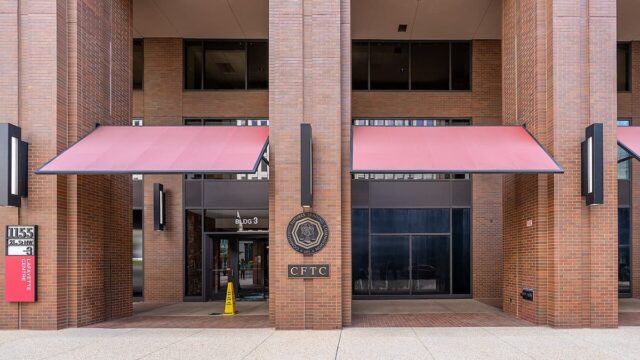
While Liberman spoke at Milken, infrastructure tied to DraftKings’ prediction market operations continued to evolve in Washington. The Commodity Futures Trading Commission (CFTC) issued a supplemental no-action letter on May 4 after reviewing a joint request from Railbird Exchange and Bitnomial Clearinghouse.
The update allows Bitnomial to take over clearing responsibilities for Railbird’s contracts. It replaces QC Clearing, which previously handled clearing tied to DraftKings’ prediction market operations.
The CFTC also removed a restriction that had limited futures commission merchants from managing customer accounts on Railbird.
The decisions reflect how prediction market operators continue to expand their infrastructure and operational capabilities as sports-event contracts grow.
Legal Clouds Over Microbetting
DraftKings sees micro markets as a major growth opportunity, but legal pressure is building. In March 2026, the Public Health Advocacy Institute filed a product liability lawsuit against DraftKings, FanDuel, the NFL, and Genius Sports, as well as individual VIP hosts.
The plaintiffs claim that microbetting products directly contributed to severe gambling addiction. They argue that operators used AI and machine learning to design systems that amplify addictive behavior. One plaintiff reportedly lost $175,000, while another lost more than $1.8 million.
The lawsuit argues that microbetting mimics slot machine mechanics through rapid cycles and constant feedback, allegedly pushing users into a “trancelike state called ‘dark flow.’”
It also claims that the NFL’s relationship with Genius Sports, its real-time data provider, links it to the ecosystem enabling microbetting. Reports indicate that Genius Sports generated over $126 million in microbetting-related commissions in 2025.
Lawmakers are also stepping in. A New Jersey Senate committee advanced a bill to ban micro bets, defining them as wagers on the next play or action. Legislators cited concerns around addiction and sports integrity, making New Jersey one of the first states to directly challenge the format.
Prediction Markets and Sportsbooks Continue Converging
Panelists at the Milken conference repeatedly acknowledged the ongoing regulatory uncertainty surrounding sports-event contracts and prediction markets.
Robinhood Chief Investment Officer Stephanie Guild pointed out that without a clear federal ruling or a decision from the U.S. Supreme Court, the legal status of sports event contracts remains vulnerable to political shifts.
Liberman also echoed the need for federal clarity and acknowledged the increasingly blurry line between sportsbooks and prediction markets from the consumer perspective.
Liberman said the end user does not distinguish between the two:
Whether they’re putting a bet on the sportsbook or whether they’re doing a trade on the Celtics here, they definitely feel as though it’s the same.”
DraftKings’ dual role as both a sportsbook operator and a prediction market participant gives it flexibility, particularly in states where online sports betting remains unavailable.
However, as lawsuits, legislative proposals, and broader scrutiny around microbetting continue to mount, the overlap between sportsbooks and prediction markets may face increasing legal and political pressure.


Gambling Insider delivers the latest industry news, in-depth features, and operator reviews that you can trust. Our team combines rigorous editorial standards with decades of specialized expertise to ensure accuracy and fairness. We are committed to delivering clear, impartial, and dependable coverage across the global gambling sector.