Minnesota Legislature Passes Prediction Market Ban in Omnibus Public Safety Bill
The Minnesota lawmakers approved a public safety omnibus bill that includes a ban on prediction markets, potentially setting up another legal clash between states, the CFTC, and prediction market operators.

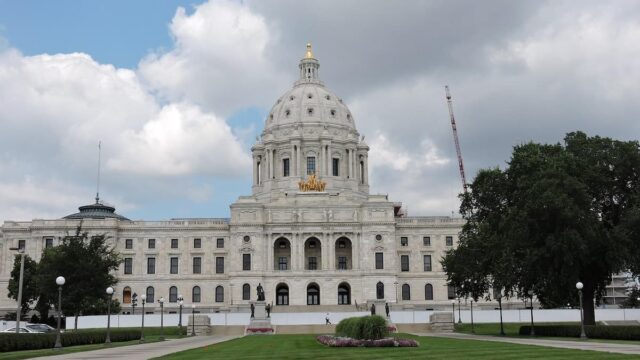
The Minnesota Legislature has passed SF 4760, an omnibus public safety bill that includes broad restrictions on prediction markets, including felony penalties for operators, facilitators, payment providers, and advertisers tied to certain event-contract platforms.
The original bill did not include language on prediction markets, although the Senate had separately passed standalone legislation targeting prediction markets earlier in the session.
The House later amended SF 4760 to include prediction market provisions before passing the bill. When the amended version returned to the Senate, lawmakers refused to concur with the House amendments, sending the measure to a conference committee.
Last Friday, the committee approved compromise language retaining the prediction market ban, sending the bill back to both chambers for final approval. The Senate later repassed the amended bill 57-9, while the House approved it 100-32.
Minnesota Prediction Market Ban Targets Operators, Facilitators, and Advertisers
SF 4760 creates a new section of Minnesota law titled “Prediction Markets.”
The legislation defines a “prediction market” as:
A system that allows consumers to place a wager on the future outcome of a specified event that is not determined or affected by the performance of the parties to the contract.”
The definition includes wagers tied to:
- Athletic events and esports,
- Elections and government actions,
- Legal proceedings,
- Weather events,
- Public health crises,
- Wars and national emergencies,
- Assassinations and mass casualty events,
- Popular culture outcomes,
- And “whether a person will make a particular statement.”
Under the legislation, a person commits a felony if they, “for consideration and as part of a business”:
- Create a prediction market
- Operate or manage a platform used for prediction market wagering
- Intentionally facilitate prediction market activity.
The bill targets the entire prediction market ecosystem, covering entities that provide geolocation services, payment processing, money transfer services, event data and verification services, or other supporting services. The legislation also criminalizes the advertisement and promotion of prediction markets.
The bill also modifies Minnesota gambling statutes to clarify that commodity and securities contracts are exempt from gambling laws “except as provided in section 609.7615,” the newly created prediction market prohibition section.
In addition, the measure grants regulators authority to issue cease-and-desist orders and seek injunctions for violations of the prediction market provisions.
The provisions would take effect Aug. 1, 2026.
Minnesota Could Become the Latest State Facing Prediction Market Litigation
If signed into law, Minnesota could become the latest state pulled into the growing national legal battle over prediction markets.
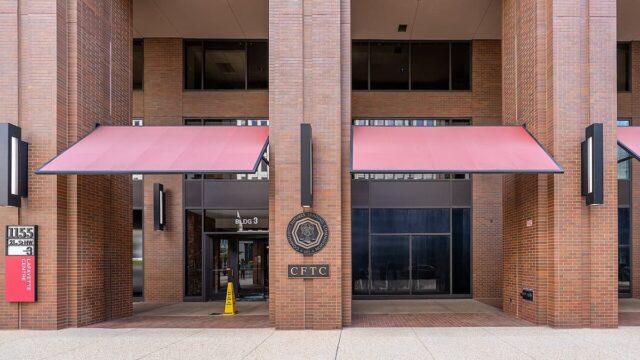
The Commodity Futures Trading Commission (CFTC) has already sued multiple states, including Arizona, Connecticut, Illinois, New York, and Wisconsin, after those states pursued enforcement actions against prediction market operators. The agency has argued that federal law grants it exclusive jurisdiction over event contracts.
At the same time, operators such as Kalshi have filed multiple lawsuits against states attempting to block sports event contracts.
Last week, a Semafor report suggested the CFTC is monitoring developments in Minnesota, with a possible lawsuit under consideration.
Minnesota lawmakers openly discussed the possibility of litigation during debate over the bill. Senate Minority Leader Mark Johnson (R) warned that a lawsuit was “almost a guarantee” given developments elsewhere.
Still, while some Senate Republicans resisted the measure, most have agreed that prediction markets operate in a gray legal area and that loopholes must be closed.
Separate Minnesota Sweepstakes Casino Ban Faces Long Odds
The Minnesota Senate has also passed SF 4474, a bill targeting sweepstakes casinos, specifically their dual-currency systems.
However, since crossing over to the House, the measure has not advanced further. It currently sits in the Public Safety Finance and Policy Committee, whose posted schedule does not currently include the legislation.
With Minnesota’s 2026 legislative session ending on May 18, the measure appears increasingly unlikely to advance to reach final passage before adjournment.


Gambling Insider delivers the latest industry news, in-depth features, and operator reviews that you can trust. Our team combines rigorous editorial standards with decades of specialized expertise to ensure accuracy and fairness. We are committed to delivering clear, impartial, and dependable coverage across the global gambling sector.