Inverness, BetGoodwin, and British Football’s Gambling Sponsorship Divide
Inverness Caledonian Thistle’s new BetGoodwin shirt deal comes just as Premier League clubs prepare to drop gambling shirt sponsors, highlighting a growing divide in British football.

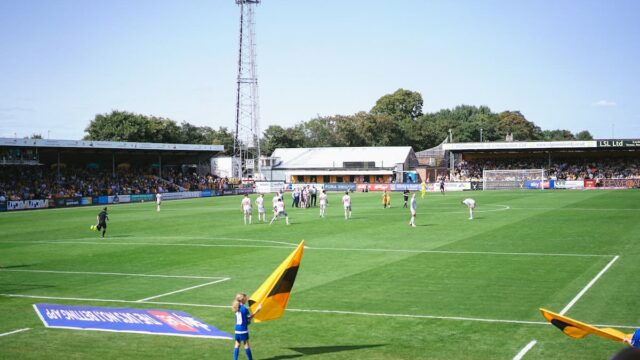
Less than a year after entering administration and fighting for survival, Scotland’s Inverness Caledonian Thistle has secured a new front-of-shirt sponsorship agreement with online sportsbook BetGoodwin running until May 2028.
The deal gives the newly crowned Scottish League One champions a “significant” commercial partnership before they return to the Scottish Championship.
It is also the kind of sponsorship that English Premier League clubs, by mutual agreement, will no longer display on the front of their shirts from this August onward.
The contrast highlights a growing divide within British football. While the Premier League can afford to move away from gambling sponsorships, many clubs lower down the pyramid still rely on them financially.
The Bottom of the Pyramid
The financial reality of lower-tier British football is grim. Deloitte’s most recent Annual Review of Football Finance found that English League One clubs averaged pre-tax losses of £5.2 million in 2023/2024.
Even in the Championship, which sits directly below the Premier League, clubs recorded aggregate operating losses of £411 million. They carried a total net debt of £1.5 billion.
In Scotland, the numbers are smaller but proportionally worse.
The Begbies Traynor Football Distress Survey, published in December, found that financial distress concentrated in League One and League Two, with four clubs still showing serious signs of strain. Average attendances at Scottish Championship and lower-league grounds range from 1,000 to 6,000.
Inverness fits this pattern. The club entered administration in October 2024 after talks with potential investors collapsed.
Manager Duncan Ferguson, who had donated wages to a fan-led crowdfunding effort, left the day after administrators arrived. The club laid off five players in the following days. Its accounts for 2023/2024 showed losses of £1.7 million. No buyer submitted an accepted offer by the formal sale deadline of March 2025.
Only the financial commitment of former chairman Alan Savage, worth roughly £1 million throughout the season, allowed the club to remain operational. That is the financial backdrop against which BetGoodwin’s logo will appear on Inverness shirts next season.
Why the EPL Ban Won’t Reach the Lower Tiers
The English Premier League’s withdrawal from gambling shirt sponsorships marked the first move of this kind by any U.K. sports league. Betting brands were front-of-shirt sponsors for 11 of the 20 EPL clubs at the start of this season.
Analysts at The Sponsor estimate that those deals carry a collective value of about £90 million per year. An EPL team’s commercial director told them that the next highest non-gambling offer they received for a shirt sponsor was less than half what betting operators pay.
For now, the restriction applies only to the Premier League.
The English Football League (EFL), covering the Championship, League One, and League Two, has no such restrictions. Sky Bet sponsors all three divisions under a contract running to 2029 and worth £40 million annually. Six Championship clubs entered the season with gambling operators on the front of their shirts.
The Scottish Premiership also declined to follow. Celtic remains partnered with Dafabet, Rangers with Unibet and 32Red, and Dundee United with QuinnCasino. SPFL Chief Executive Neil Doncaster has repeatedly said that the league has no plans for a league-wide ban.
Ampere Analysis found that Scottish Premiership viewers bet more than Premier League viewers. That makes gambling sponsorships in Scotland more commercially attractive. Deals in Scotland average almost four years compared to roughly two in England.
For clubs operating on far smaller revenues than even the Premier League’s lowest earners, long-term gambling sponsorships remain difficult to replace.
A Replacement Market That Doesn’t Exist Below the Top
Even the Premier League’s wealthiest clubs have struggled to replace gambling money on a like-for-like basis. Bournemouth moved its stadium partner, Utilita, onto its shirt in a lower deal.
Everton and Fulham are in late-stage talks with financial firm CMC Markets in deals reportedly worth up to £50 million over three years. Some clubs, such as West Ham, are moving gambling partners onto sleeve sponsorships, where the rules still allow them to feature.
The keyword is “Premier League.” Those replacement opportunities are largely limited to clubs with global reach and Premier League-level exposure. Global brands are unlikely to pursue sponsorship deals with a Scottish Championship club or a League Two side averaging a few thousand fans per week.
For many lower-league clubs, gambling operators remain among the few sponsors willing to pay premium rates for front-of-shirt visibility.
BetGoodwin is a case in point: Goodwin Racing, a family-run UK-licensed firm with horse-racing roots dating back to 1997, owns it. The online platform only launched in 2022. A Scottish Championship shirt represents one of the biggest sporting investments it has ever made.
The Uncomfortable Link— and the Unanswered Question
Anti-gambling advocates have argued for years that gambling sponsors on jerseys normalize betting, especially for younger people. The Big Step, a campaign led by recovered addicts and bereaved families, seeks a total ban on gambling advertising in football.
The recently created Independent Football Regulator in England is considering stricter rules. The U.K. Government launched a consultation this spring on banning unlicensed gambling operators from sponsoring British sports.
This comes as the Betting and Gaming Council forecasted that, by the end of 2027, offshore-based unlicensed operators could account for over half of all U.K. sporting sponsorship deals.
The ethical case for restricting gambling sponsorship is real. So is the financial dependence many lower-tier clubs still have on that money.
Removing gambling revenue may be manageable for the Premier League. For clubs emerging from administration or operating on thin margins, however, the impact could be far more severe.
The Premier League’s ban is a statement of values it can afford to make. Inverness, a club that nearly folded and was saved by one man’s personal commitment, is entering exactly the kind of deal the top flight just walked away from.
Any serious push to expand that ban needs to answer, first, what replaces it.


Gambling Insider delivers the latest industry news, in-depth features, and operator reviews that you can trust. Our team combines rigorous editorial standards with decades of specialized expertise to ensure accuracy and fairness. We are committed to delivering clear, impartial, and dependable coverage across the global gambling sector.