Inside Trump’s Prediction Market Support: Politics & Public Debate
Donald Trump's support for prediction markets has become a flashpoint in the conversation around legality and politics behind these visible competitors to traditional betting markets. The President’s presence in prediction markets and his administration’s support raise questions about regulation and public perception of whether these markets might meaningfully influence traditional democratic voting outcomes.



Key Insights
- Prediction markets are increasingly referenced right alongside polls and forecasts during US elections.
- Donald Trump’s high-profile visibility amplifies attention but doesn’t change underlying market mechanics.
- Even with high-profile attention from Donald Trump, prediction markets mostly reflect sentiment rather than shape voter behavior.
- Fears about election influence are largely overstated.
US Prediction Markets in the Context of Politics Betting
Prediction markets allow a yes-or-no contract to be bought or sold based on the likelihood of some future event. This can include political outcomes. In the context of US election betting, this means a contract will pay out based on a simple binary outcome, whether the candidate wins/loses the election. Until very recently, these were not bets you could find at US online casinos.
Politics betting can be complicated by legal definitions and insider information in certain instances, though. Polymarket eventually had to pay out on a bevy of bets on “Maduro out by 31st January?” that were made just hours before the US forces captured the Venezuelan president, resulting in winnings of more than $400,000 for a single trader.
Polymarket refused other bets that would have paid out on a US invasion bet, angering users both with the obvious insider trading by some well-informed bettors, as well as Polymarket going to some lengths to stretch definitions of “invasion.”
In any case, these markets are framed as information aggregators. Prices on election contracts, for instance, should fluctuate based on things like polling data, media narratives, and macro political developments. We shouldn’t expect ideological preference to play a role.
Typically, a poll would show who someone is planning on voting for, while prediction markets are geared to show perceived probability and real-time belief in who people think will actually win.
Why Donald Trump’s Presence in Prediction Markets Matters
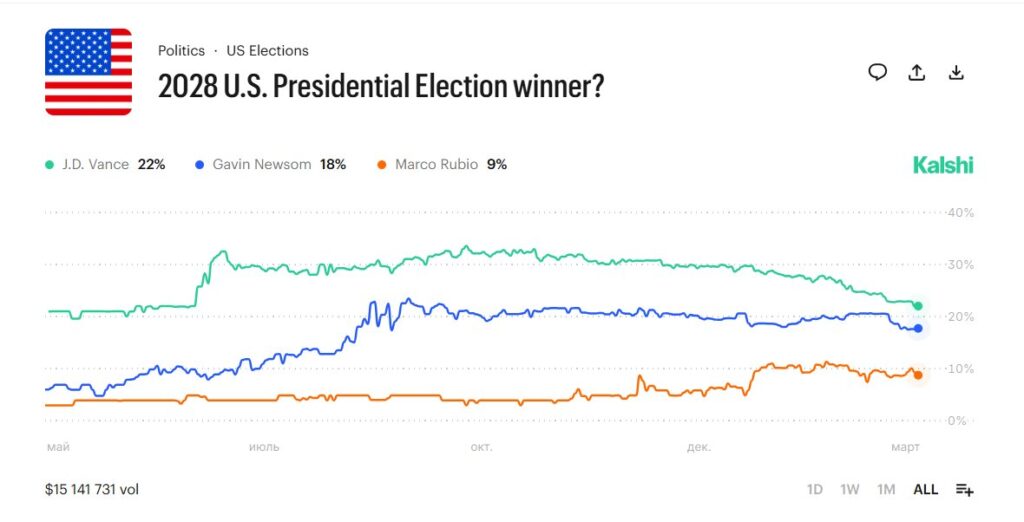
Donald Trump’s appearance in prediction markets carries a lot of symbolic weight. There may never have been a more divisive politician in American history, and certainly none who has attracted comparable attention. Any market movement caused by Trump’s actions is likely to be magnified far beyond the betting platforms themselves.
But that shouldn’t change how the markets themselves are designed to function. This increased visibility, volume, and volatility should be seen as a feature and not a bug. They reflect dynamic price discovery, even when media coverage portrays Trump-related odds and market volatility as a proxy for political momentum.
Key impacts might include:
- Increased liquidity around Trump-related contracts.
- Heightened scrutiny from regulators and the media.
- Broader consumer awareness of political betting trends.
Visibility could certainly affect short-term sentiment, but the wisdom of crowds is unlikely to let this turn into sustained market distortion.
According to the latest data, prediction platforms achieve headline accuracy rates of 90% to 95%, with accuracy rising as events get closer. When it comes to Brier scores, which measure how close the market’s probability was to the final outcome, prediction markets average around 0.09. Lower scores indicate better accuracy, which means prediction markets show higher accuracy results than other betting markets, expert forecasts, or polls.
!function(e,n,i,s){var d=”InfogramEmbeds”;var o=e.getElementsByTagName(n)[0];if(window[d]&&window[d].initialized)window[d].process&&window[d].process();else if(!e.getElementById(i)){var r=e.createElement(n);r.async=1,r.id=i,r.src=s,o.parentNode.insertBefore(r,o)}}(document,”script”,”infogram-async”,”https://e.infogram.com/js/dist/embed-loader-min.js”);How Prediction Markets React to High-Profile Candidates?
One possible side effect of Trump-related attention might be increased participation by the public. All of that visibility could easily draw first-time users to prediction markets like Kalshi or Polymarket or even more familiar names like DraftKings and FanDuel, which are now launching prediction-style markets of their own.
Jordan Bender, equity research analyst at Citizens, said the wave of new prediction market launches in late 2025 has been about platforms “essentially trying to compete and match their product to what Kalshi has.”
Bender told Gambling Insider:
It is also our expectation that, over time, the traditional sports betting companies like DraftKings and FanDuel will probably be among the top three or four players when all is said and done. They built the mousetrap; they know what sports bettors want to bet on.
Jordan Bender
Social platforms have been playing a significant role in drumming up market narratives, and Twitter and Reddit are often full of screenshots of shifting odds, or the so-called Trump surges. These can even find their way into the newsfeeds of those unfamiliar with prediction market betting.
Potential participation trends might include:
- Younger, more digitally native users who explore these prediction markets for the first time.
- The more politically engaged user, looking for alternative forecasting tools.
- And of course, the more casual observer drawn by a headline or a meme.
While this may help grow volume in the political side of prediction markets, increased participation rates don’t necessarily equate to either pro or anti-Trump political influence.
Kevin Lentz
The Regulatory Scene: What Is Allowed & What Isn’t?
While it may seem like the Wild West with bets on almost anything allowed from almost anywhere, prediction markets in the US do actually operate under a relatively complex framework, and are primarily overseen by the Commodities Futures Trading Commission (CFTC).
Strictly speaking, they make decisions on what is a legitimate forecasting tool and what might fall under a prohibited bet. And like many other government agencies, their ideas on what that might be change with the administration currently in power.
After Donald Trump took office in January 2025, the policy toward prediction markets warmed in the US. President’s son, Donald Trump Jr., said Kalshi “achieved the impossible feat of becoming the first legal prediction market in the US.”
Donald Trump Jr.’s venture firm, 1789 Capital, has reportedly invested a double‑digit‑million sum in Polymarket, and Trump Jr. himself has joined the company’s advisory board.
Meanwhile, Trump-appointed CFTC chair Michael S. Selig’s recent announcement that they will aggressively fight opponents of prediction markets was met with quite strong reactions.
For example, California Governor Gavin Newsom’s Press Office quote-tweeted a post about Donald Trump Jr.’s involvement with Polymarket and Kalshi alongside Selig’s video with a single word, “corruption?” Meanwhile, Utah Governor Spencer Cox said prediction sites are “destroying the lives of families and countless Americans,” and stated that he’s ready to oppose Selig in court.
While Trump-related activity might draw some extra level of scrutiny, the CFTC seems to have not ever met a contract it didn’t like. These include outright bans on contracts involving things like wars, terrorism, and assassinations that should still be banned under federal law but have yet to see much regulatory action from the agency.
Many people also call into question these markets’ compliance with responsible gambling standards, especially regarding some of their advertising. This is an avenue that state district attorneys, as well as some federal legislators, seem eager to explore in the months ahead.
The Risk of Market Manipulation & Misinformation
Critics have also been quick to raise concerns about coordinated trading or misinformation campaigns meant to influence market sentiment. While possible, these actually face some very practical limitations.
- First and foremost, with rising popularity, it takes a serious amount of capital to even begin to meaningfully move the price.
- This manipulation would be easily visible and traceable.
- Worse, there are likely to be other traders hungry for the chance to capitalize on the other side of exploitative mispricing.
That is not to say that there aren’t some key challenges here. We need to distinguish between sentiment trades and strategic trades. We need to separate out media narratives on all sides from actual probability shifts, and traders in these contracts, especially newer ones, need to understand the dangers of misinformation and the harm it could do in trade like this. But none of these risks are radically different from other markets and exist across most speculative financial instruments.
Kevin Lentz
Do Prediction Markets Influence Voter Behavior?
Research into voter psychology suggests that prediction markets might help shape expectations, but evidence that they change voter intent remains elusive. Most voters rely on heavily entrenched political beliefs, long-term party affiliation, or media narratives rather than voting odds.
And although prediction markets tend to yield more accurate forecasts than polls, Justin Wolfers, the author of the research on forecasting elections, said there is a great difference when people are asked the following two questions:
- If the election were held today, who would you vote for?
- Regardless of who you plan to vote for, who do you think will win the upcoming election?
We find robust evidence that polls probing voters’ expectations yield more accurate predictions of election outcomes than the usual questions asking about who they intend to vote for.
Justin Wolfers
Meanwhile, media outlets may mention or reference prediction markets as they seek to illustrate some point or change in momentum, but it is only marginal to the influence already created by those very same media outlets.
- Markets most often reflect sentiment, not dictate outcomes.
- The so-called bandwagon effect, at least so far, is notably weak when discussing prediction markets.
- Media framing has a much more sustained influence than any prediction platform.
This means that in everyday terms, prediction odds influence is more of a myth, one far outweighed by social media, television, and influencers.
Kevin Lentz
Implications For Future US Elections
With the Trump administration unlikely to change the current acceptance of prediction market betting, at least not for the next three years, it’s entirely possible that the whole concept of wagering on political races may become commonplace and seen as trivial. Many times more money is traded on sports contracts in any case.
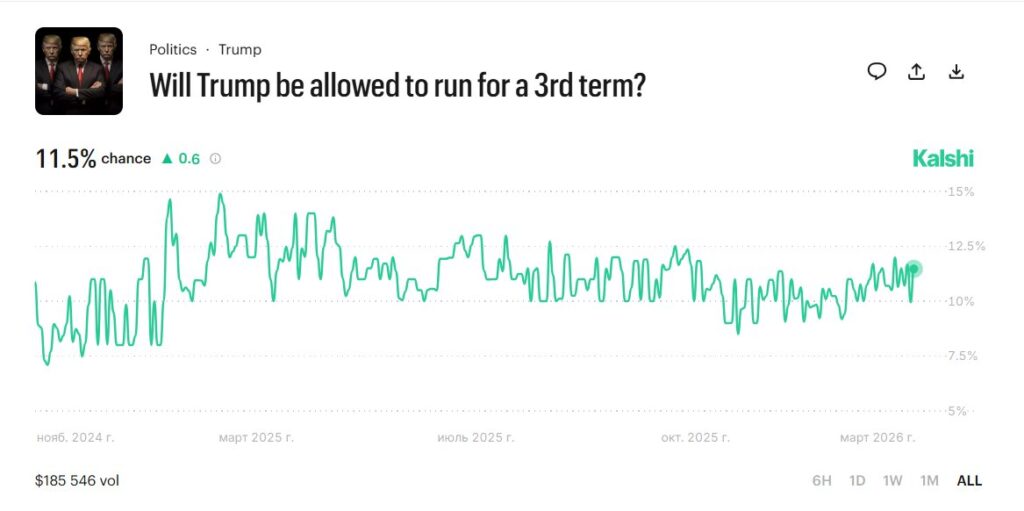
Current odds on Kalshi are 11.5% that the Twenty Second amendment will be amended or reinterpreted to allow Trump to run in 2028, but failing that, a new administration, even a Republican one, may take a much narrower view of the lackadaisical, hands off approach to a multi-billion dollar betting market that allows anyone in any of the 50 states to place a bet on their next Senator, let alone whether the Ottawa Senators might finally win the Stanley Cup.
The 2026 midterms will prove a test case for future election betting and how it might be used both by investors to hedge risk and by the media to shape election coverage. It’s also possible that a misstep or failure by the prediction markets with what one assumes will be the whole world watching might endanger any chance they have going forward.
In any case, look for:
- Enhanced media reliance on any and all market-based indicators.
- Campaigns not only monitoring but officially announcing market probabilities incorrectly as indicators of sentiment.
- And slow, incremental clarification from the CFTC as we edge closer to election season rather than sweeping reform.
The Role of Tech & Data in Prediction Markets
Hardly a week goes by without someone from RobinHood to Interactive Brokers to Fanatics to Donald Trump junior announcing a new prediction market launch.
New operators and stiff competition mean that the role of tech becomes absolutely vital to proper contract pricing, spotting those trading with inside information, and even ensuring that Know Your Customer (KYC) and Anti-Money Laundering (AML) laws are being closely followed.
Citizen’s Bender said:
I’d say the other company to watch is Robinhood, with its massive database and a very easy way to cross-sell its players.
Jordan Bender
Some markets even integrate AI-driven models, algorithmic trading tools, and real-time sentiment analysis into the platform to help traders/gamblers assess pricing and probability. And the crypto world, which has long been a proponent of prediction markets, continues to pioneer new tech.
Speaking on whether prediction markets, with all the new tech, could “outforecast” experts, Sean West, Co-Founder of Unruly Corp. and the author of Unruly: Fighting Back when Politics, AI and Law Upend the Rules of Business, said:
I remember when I forecasted US politics, I would be asked to take a view on stories I knew a ton about like fiscal policy and also things I knew very little about, like military strategy. It’s hard to tell clients who pay your retainer that you want to sit out a question where you have no edge, so you do your best. But doing your best doesn’t create an edge.
Will AI be the big unlock to political forecasting? I am optimistic but not yet convinced.
Sean West
Ethical Considerations & Public Trust
Ethical debates have swirled around prediction markets since they began, and their entrance into election markets only kicked up a more intense firestorm. Does monetizing election results undermine democratic values? What are the optics of odds on a candidate winning? Does it impact how others vote? Do these contracts increase transparency and insight by allowing the public to more closely monitor when real-world events change a candidate’s odds?
Other questions that should be considered, especially ahead of the coming mid-term:
- Are futures contracts on election outcomes similar to polls or are they fundamentally different?
- Is there always a clear and distinct separation between attempting to forecast a result and advocating for one?
- Can prediction markets be trusted to answer these questions and offer responsible safeguards?
What This Means For Prediction Market Platforms
It’s often said there’s no such thing as bad publicity, and when it comes to Donald Trump, it boils down to simply loving him or hating him. This means that burgeoning prediction markets in 2024 were given a huge opportunity to showcase their product as they saw huge increases in traffic and liquidity.
While Trump isn’t strictly on the ballot in 2026, it would be an understatement to say that he and his policies will be at the heart of this midterm.
Ahead of what is likely to be intense interest, in a perfect professional world, Kalshi and others would ensure:
- Enhanced compliance and reporting with the CFTC and the Federal Election Commission.
- Dramatically improved education and explanations for new users.
- Much stronger monitoring systems that ensure integrity and public trust.
Unfortunately, many of the newer and brasher prediction markets, especially those led by the whole cadre of younger tech bros, seem to think that words like compliance, education, and integrity are downright socialist, so it will be an interesting year ahead.
Look for more experienced operators like DraftKings, FanDuel, and Fanatics to offer a more resonated and thought-out approach to the election market as we enter into the summer.
Kevin Lentz
Conclusion
Realistically, other than driving interest, Donald Trump’s presence in the US election debate is highly unlikely to influence election outcomes.
Media, both legacy and social, already exert a much greater influence, and even now, with billions pouring in to build these markets, they remain limited in scope, especially when it comes to election betting.
So far at least, most fears around political betting appear exaggerated, and seem to measure perception much more than actual verifiable impact.
FAQs
A: Yes. Many prediction markets operate legally under federal regulatory oversight from the CFTC.
A: There is little current evidence that shows that these markets measurably change voting outcomes.
A: They make useful clickbait and generate interest by providing a real-time snapshot of the sentiment of outcomes, though not individual voter intent.
A: No. Informal betting goes back to the country’s founding, and academic betting has been taking place for decades as research.
A: Manipulation of any market is possible, but today it would be costly, highly visible, and short-lived as other market actors stepped in to take advantage of mispriced contracts.
References
- ‘He’s jumping in all the way’: A Trump financial regulator backs prediction markets in their clash against states (POLITICO)
- Prediction markets draw fresh scrutiny after massive Maduro bet (The Hill)
- A Fierce Debate With Polymarket: Did the U.S. ‘Invade’ Venezuela? (The New York Times)
- Commodity Futures Trading Commission (CFTC)
- Donald Trump Jr. Reportedly Investing Eight Figures In Polymarket (Yahoo Finance)
- Kalshi names Donald Trump Jr. as strategic advisor (Kalshi News)
- Governor Cox on X (X)
- Forecasting Elections: Voter Intentions versus Expectations (Brookings)
- Will Trump be allowed to run for a 3rd term? Odds & Predictions 2028 (Kalshi)
- The 2026 Midterms: Key Dates and Events (Bipartisan Policy Center)
- CAN BETTING MARKETS OUTFORECAST EXPERTS? | Sean West (LinkedIn)



Gambling Insider delivers the latest industry news, in-depth features, and operator reviews that you can trust. Our team combines rigorous editorial standards with decades of specialized expertise to ensure accuracy and fairness. We are committed to delivering clear, impartial, and dependable coverage across the global gambling sector.